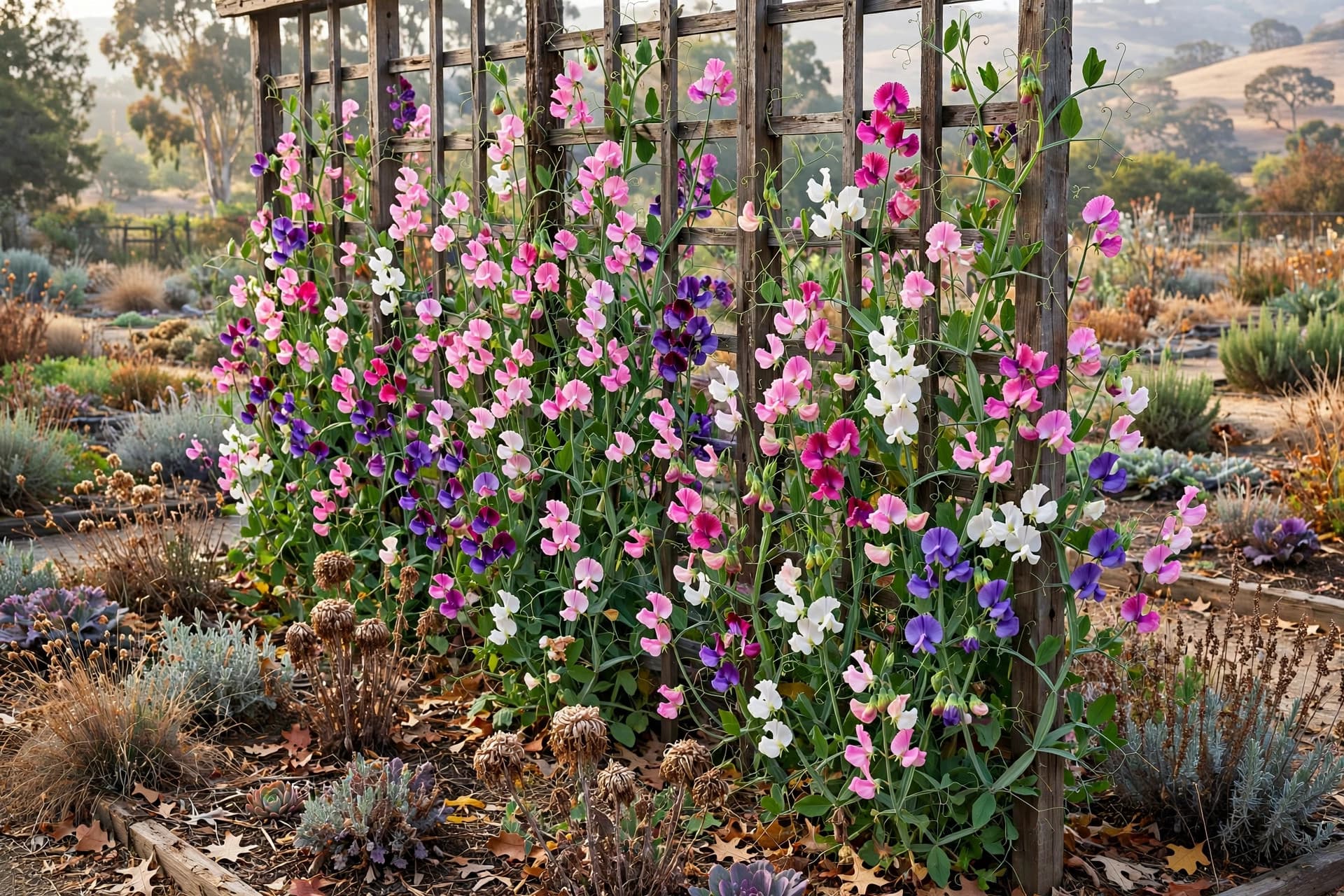

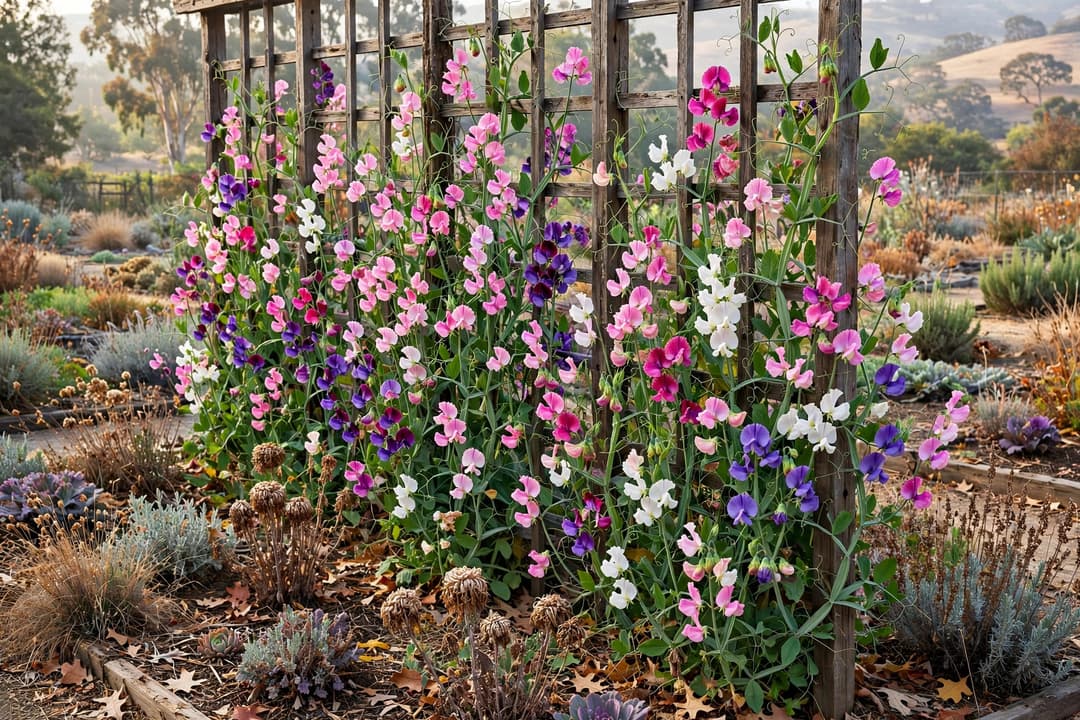
In mild-winter California, plant sweet peas in fall — October through November, which means right now. The University of California Master Gardener sweet pea fact sheet gives inland valleys and desert gardens a window of early fall to earliest winter, and UC Master Gardeners of Napa County put it plainly: where winters are relatively mild, sweet peas can be sown in late fall — one Napa gardener they spoke with planted his seeds directly into the ground in October. That cited window is written for inland valleys, desert gardens, and mild-winter valleys like Napa: if your garden sees hard freezes, check your local frost and microclimate before sowing, and hold seed for a sheltered start instead.
Sophie: "Plant flowers in November? Everything else in my garden is shutting down."
Sprouty: "Exactly — while everything else sleeps, sweet peas are quietly growing the roots that make spring explode."
Why fall, not spring
Sweet pea (Lathyrus odoratus, family Fabaceae) is a cool-weather annual native to the Mediterranean — Sicily, Cyprus, southern Italy and the Aegean Islands, per UC Master Gardeners of Napa County — and North Carolina State Extension describes it the same way: a cool-weather annual in the bean family that prefers full sun, rich, fertile, well-drained soil, and cool conditions. It blooms from spring to early summer and then quits when summer heat arrives. A fall sowing works with that calendar instead of against it: the plant spends the cool, moist months growing roots and a sturdy vine, so when days lengthen in spring it is already climbing and ready to flower, rather than starting from a seed packet in March. UC Napa sums up the plant's preference in one line: sweet peas are happiest with their heads in the sun and their roots deep in cool, moist soil. November gives them exactly that.
One baseline to be honest about: NC State's general advice is early-spring planting. The fall window in this article is the mild-winter California exception to that rule — fall-sown plants get cool months to build roots before summer heat, which is exactly what a spring-sown plant cannot get. There is also a fragrance payoff worth naming. Sweet peas became a Victorian sensation — UC Napa notes that English gardeners fondly call the sweet pea the "Queen of Annuals" — and they are fragrant flowers. In the Victorian language of flowers, a bouquet of sweet peas meant "goodbye" or "thank you for a lovely time." Treat that as lore, not botany: it is the cultural story wrapped around the flower, not a claim about what a bouquet means today.
Sow them this week
The UC fact sheet names climbing types such as 'Old Spice Mix' and 'Royal Family' and a bush type, 'Supersnoop' — pick the form that fits your space before you buy. Pick a sunny spot — UC Master Gardeners advise a minimum of 6 to 8 hours of sun — and prepare the bed the way UC Napa prescribes: a thick layer of compost and a natural fertilizer mixed well into a well-drained site, because sweet peas are heavy feeders that need a little more attention to produce abundantly. Then sow:
- Soak first. UC Master Gardeners recommend soaking seeds overnight in water; any seed still unswollen after soaking can be chipped gently with a knife through the seed coat. Unsoaked seeds do germinate, but slowly — one UC gardener reports waiting a long time for direct-sown, unsoaked seed.
- Sow by one of two UC methods. Direct-sow into the prepared bed, then thin or transplant to the final spacing below. Or start indoors by UC Napa's method: two seeds per deep four-inch pot, poked half an inch into potting soil — deep pots matter because sweet peas produce abundant roots — then transplant outdoors when plants are 2.5 to 3 inches tall.
- Thin or transplant to 6 to 8 inches apart down the row in their final bed, per UC Napa, and water them in well.
- Expect emergence in about 10 days, sometimes two weeks or more, per UC Master Gardeners — do not dig seeds up to check on them.
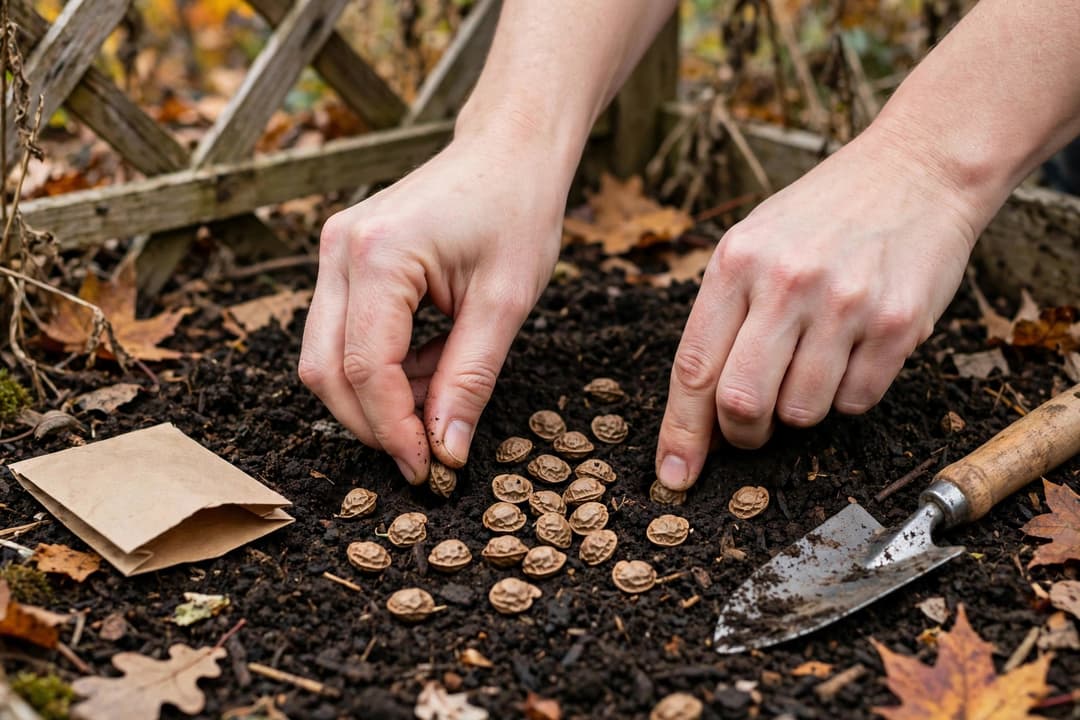
One timing honesty note: "fall" is a climate, not a date. The UC fact sheet's window is written for inland valleys and desert gardens, and UC Napa's late-fall example comes from a mild-winter valley; neither source gives a coastal or mountain date. If a cold snap is forecast for your pocket the week you plan to sow, hold the seed and start it in pots in a sheltered spot, planting out when the cold passes.
Give them something to climb — now, not later
Sweet peas are vigorous climbers: sources put vine types anywhere from five feet to about eight or nine feet depending on variety — UC Napa says seven feet, NC State Extension says up to eight feet if allowed to climb. Bush types stay roughly one to three feet and need no support, per UC Master Gardeners, but the classic tall vines need a fence, netting, or trellis — as a matter of practice, put it in before or at planting time, not after the vines are already flopping. Train the young vines up the support as they grow; low-growing annuals planted in front help shade the roots, which is exactly the cool-root condition sweet peas want.
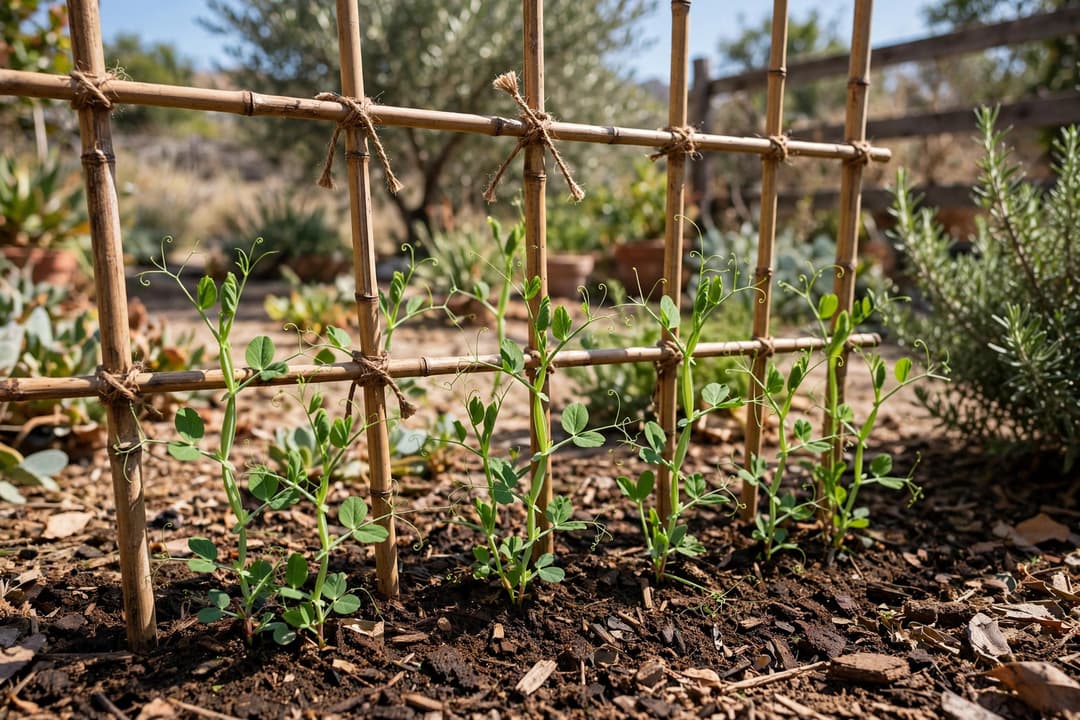
When the plants reach 6 to 8 inches tall, pinch out the growing tips, per UC Master Gardeners — that single pinch stimulates lateral growth and bushiness instead of one thin, leggy stem. It feels wrong to cut the top off a plant you just coaxed out of the ground; it is the step that turns one stem into a flowering wall.
Water, feed, and pick — the three habits that decide the season
Water consistently. UC Napa is blunt: sweet peas love consistent moisture, and without it they will fail to thrive. UC Master Gardeners add mulch to the prescription, which holds the cool, even moisture the roots want.
Feed lightly through the season. UC Napa advises feeding throughout the growing season with a light fertilizer, on top of the compost worked in at planting. Keep it light on purpose: UC Master Gardeners also warn that too much fertilizer encourages foliage at the expense of flowers, prescribing half-strength liquid fertilizer twice in the season — so light feeding is the rule, not the floor.
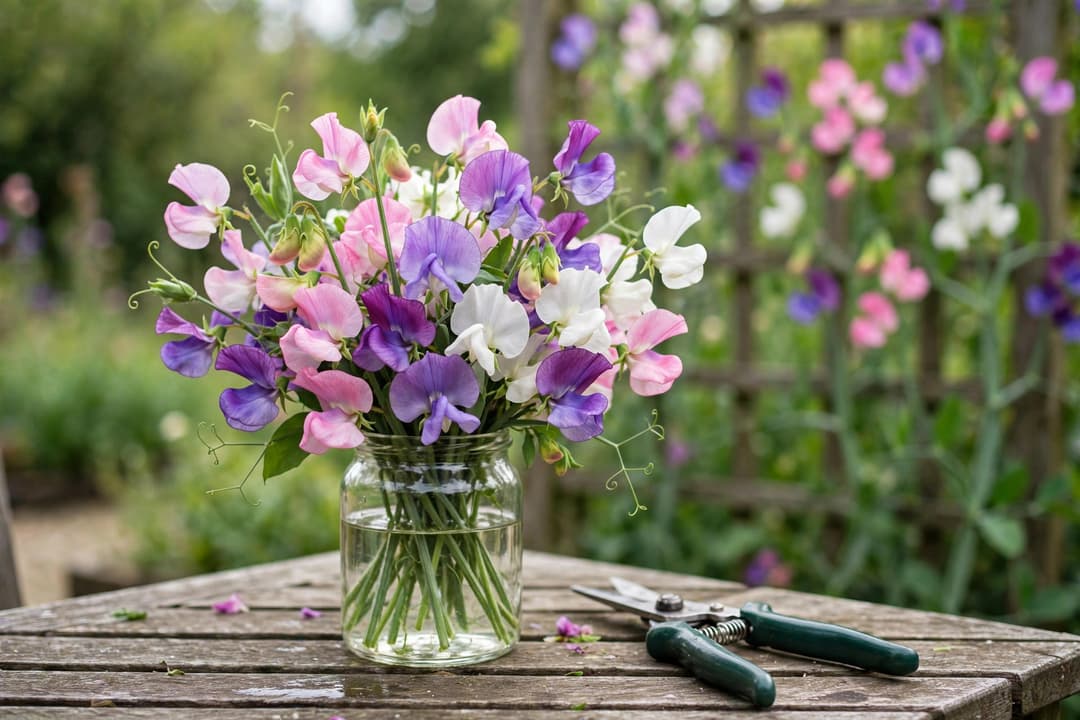
Pick constantly. This is the habit that actually extends the show. NC State Extension warns that flowering decreases if seed pods are allowed to develop, and UC Napa agrees: sweet peas flower longer if you pick them regularly. Cut bouquets freely — that is the point of growing them — and deadhead any spent flowers you do not cut. Aphids are the most common pest on the UC fact sheet, and NC State lists slugs, snails, and aphids among the pests to watch; check young plants — UC Master Gardeners report birds cutting seedlings back, and thrips are also on their list.
The warning that belongs in every sweet pea article
Sweet pea pods look like edible pea pods. They are not food. NC State Extension states it flatly — sweet peas are poisonous and should not be planted near edible peas — and the UC Master Gardener fact sheet agrees that the pods are not edible and can be toxic if ingested in quantity. UC Napa adds the practical version: at the end of the season, usually by early to mid-June, the vines go to seed and make pods; if you want seeds for next year, leave the pods on the vine until dry, then harvest and store them in jars — with one caveat from the UC fact sheet: saved seeds may not produce plants the same color as the parent — but never confuse them with dinner. Grow sweet peas in the flower bed, not in the vegetable row, and keep the seed packets out of the kitchen-garden mix.
Quick answers
When should I plant sweet peas in California?
In fall — October through November in mild-winter areas, per UC Master Gardeners; the fact-sheet window is written for inland valleys and desert gardens, with UC Napa's mild-winter valley as the worked example.
Can I still plant them in spring?
Yes — and that is NC State's general recommendation. In mild-winter California, though, a spring-sown plant starts behind a fall-sown one: it has had no cool months to build roots before the heat arrives, and its season ends earlier in summer.
How tall do they get?
Vine types reach roughly five to nine feet on a support depending on variety and source; bush types stay roughly one to three feet and need no trellis.
Why pinch the tips?
Pinching at 6 to 8 inches forces lateral branches, which means more flowering stems instead of one thin vine.
Are sweet peas edible?
No — poisonous, do not eat any part. The pods resemble edible peas but are toxic — grow them for flowers and scent only, away from the vegetable garden.