
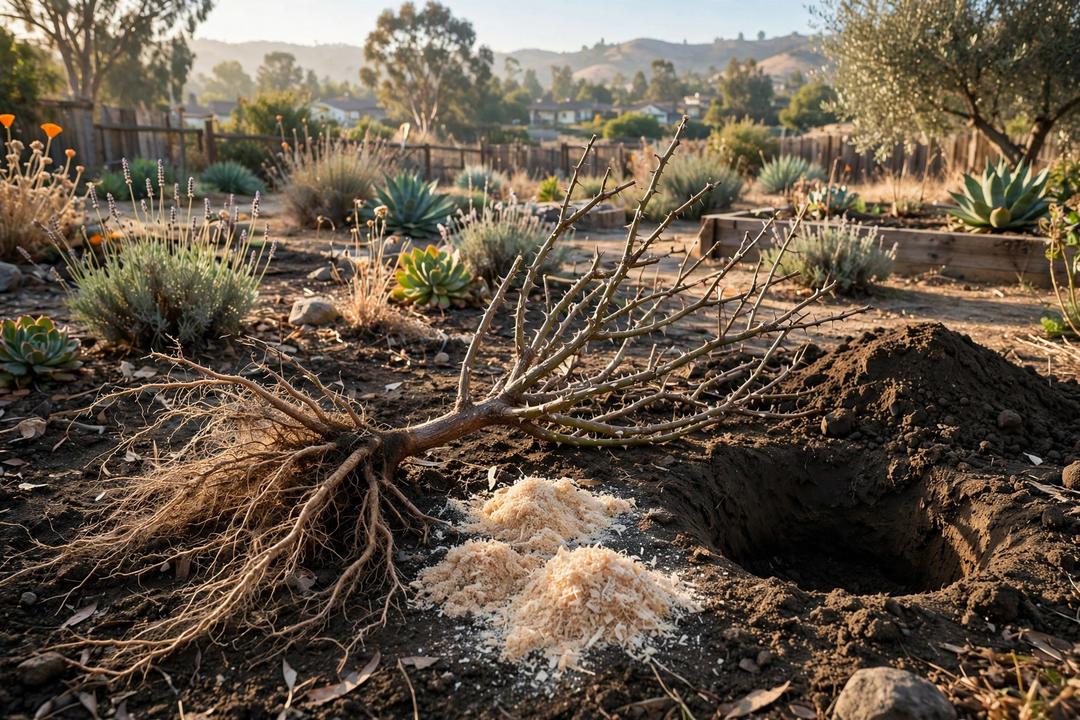
Order in November. Bare-root roses are sold while the plants are dormant, and in California that window runs from December through February — but the ordering opens in November, and the varieties everyone wants sell out before the season starts. Regan Nursery in Fremont opened its website for 2027 bare-root rose orders on November 11, 2026, and by November 21 its Desdemona and Dolly Parton roses were already marked sold out. The Marin Rose Society's annual calendar puts it as a deadline, not a suggestion: place your orders for new bare-root plants by the end of the month.
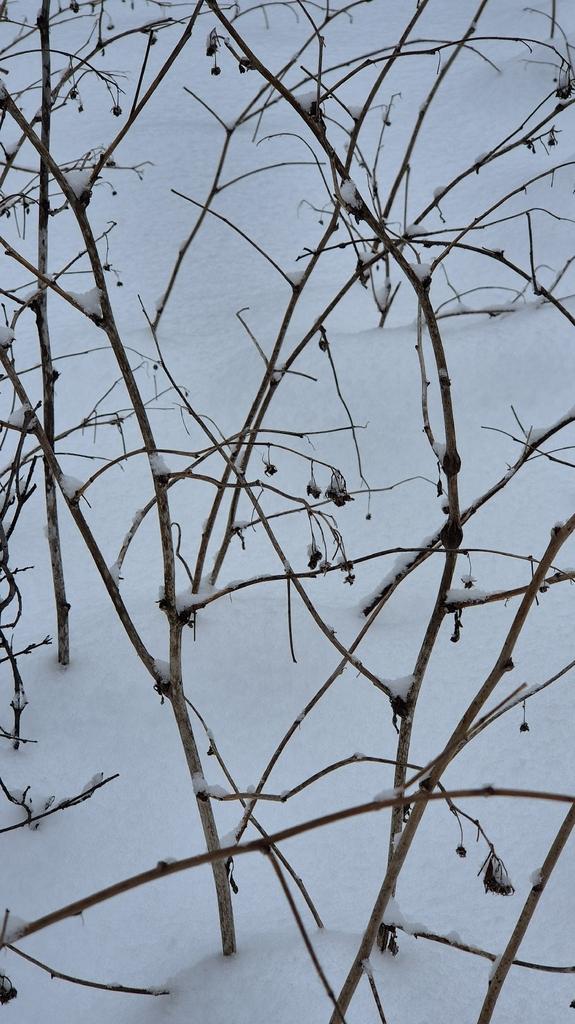
Sophie: It looks like a dead stick with roots. Why would I pay for that when the nursery has blooming roses in pots?
Sprouty: Because that dead-looking stick is the whole catalogue. The potted rose is whatever survived the season — the bare-root list runs far deeper than the dozen varieties on the nursery bench.
November is the ordering month, not the planting month
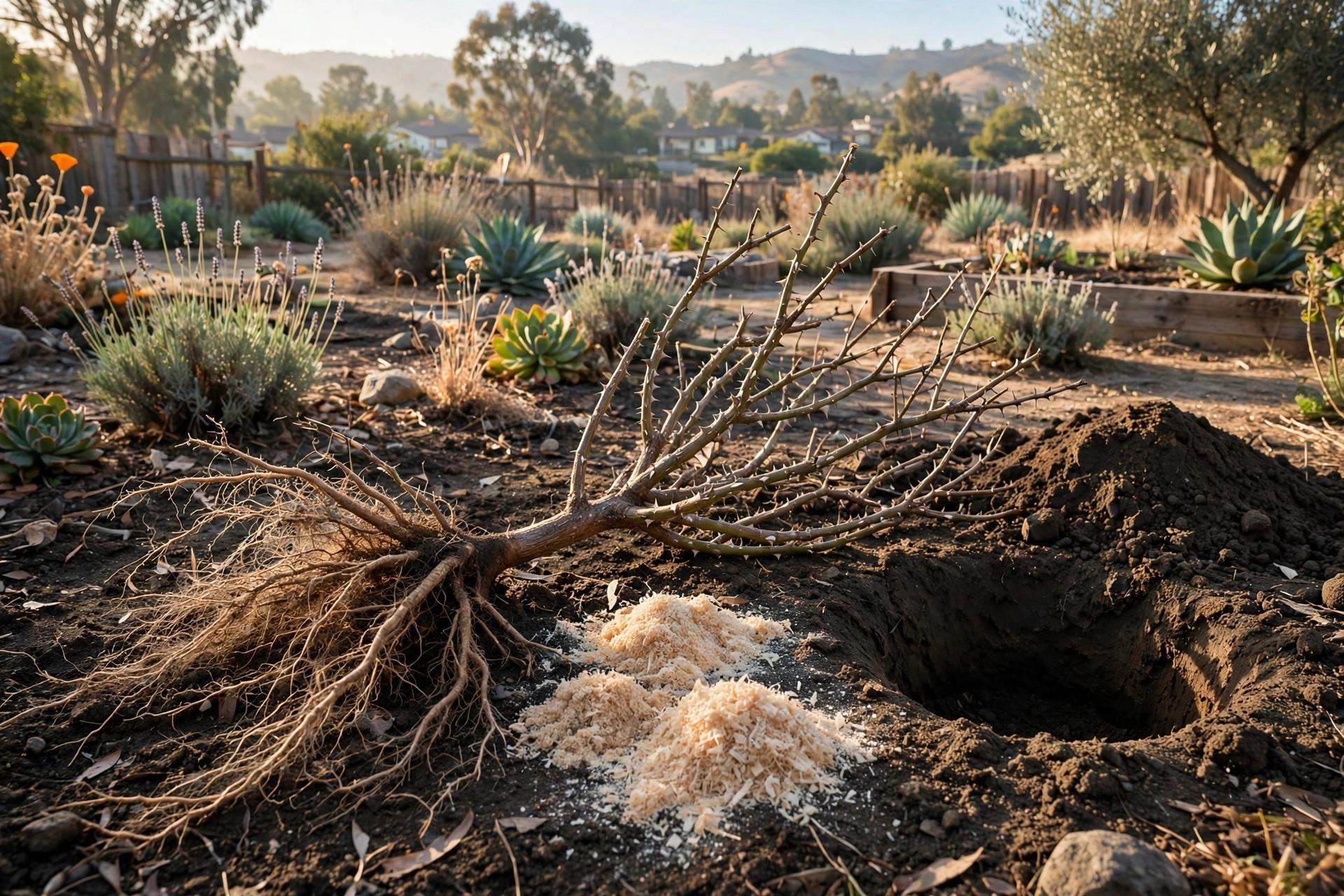
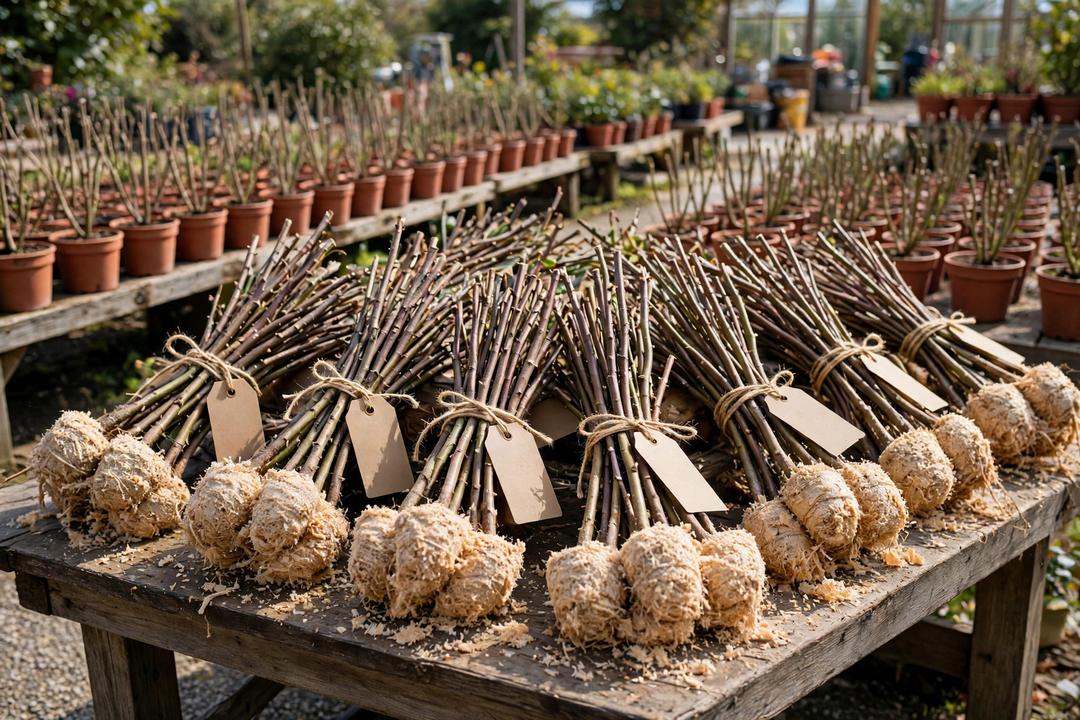
The distinction is the whole trick. A bare-root rose is a rose harvested from its growing bed in the fall, while it is dormant, and bundled in sawdust to keep the roots from drying out — that is how UC Marin Master Gardeners describe the bare-root season. UC Agriculture and Natural Resources, in a guide published November 15, 2026, puts the California availability window plainly: bare-root roses are available in late winter or early spring, typically December through February, and they should be planted shortly after they are bought or after they arrive from online sources. November is when you choose, reserve, and pay — the plant itself shows up later, still asleep.
The nurseries run on the same calendar. Regan Nursery's bare-root ordering season runs from November to January; its website opened for 2027 orders on November 11, 2026, for local pickup only — it closed its shipping department, so the roses are pre-ordered now and picked up in Fremont in early 2027. Francis Roses ran an even tighter window: ordering open November 12–14, 2026, with plants shipping in January 2027 at $65 a plant. The pattern is the same at both nurseries: a short ordering window in November, delivery in the dormant months, and the popular varieties gone first.
One caveat before the calendar: this timing is for mild-winter California. Ordering opens in November everywhere, but where the ground freezes, delivery and planting shift to early spring — and the planting details change with the climate. The bud-union rule in the planting steps below, for example, is the mild-winter practice: in cold zones the union is buried for freeze protection, following local Extension guidance. If you garden outside California, check your own Extension's bare-root guidance for the dates and depth that fit your winters.
| When | What happens | What you do |
|---|---|---|
| November | Nurseries open bare-root ordering; catalogues are fullest | Choose your varieties, check the grade, place the order |
| December–February | Bare-root roses are available and shipped dormant | Plant shortly after the rose arrives |
| Early 2027 | Local-pickup nurseries notify you the order is ready | Pick up, soak 24–48 hours, plant the same week |
Why a bare-root rose beats a potted one
Three reasons, all practical. First, price and weight: bare-root roses weigh much less than potted roses and are cheaper, per UC ANR — and UC Fresno Master Gardeners add that bare-root roses are usually the cheapest roses available. Second, selection: a huge variety of bare-root roses is available for ordering online, per UC ANR, while a potted rose is whatever the nursery happened to grow and keep alive. The American Rose Society classifies over 300 wild species and more than 37,000 cultivars — the bare-root catalogue is how a home gardener reaches past the dozen varieties on the nursery bench. Third, planting is nearly as straightforward as a potted plant, per UC ANR: the rose is dormant, so it spends its first weeks putting energy into settling its roots before spring growth starts.
The catch is that a bare-root rose looks like nothing. No leaves, no flowers, no soil — just canes and roots. That is also the test: a healthy one has plump canes with buds still dormant, and roots that have not dried out. UC Fresno warns that bare roots can dry out quickly, so they should be kept in water until you are ready to plant. If the canes are shriveled or the roots are brittle and papery, that plant was mishandled — pick another. When the rose arrives, check it before you soak it: UC Marin's arrival checks are no mold on the plant or its packaging, branches mostly intact, and roots with some heft to them. If planting must wait a few days, keep the roots covered with moist sawdust until you are ready.
Roses, Rosa species in the rose family (Rosaceae), have been garden plants for a very long time: cultivation began in China 5,000 years ago, and the ancient Greeks and Romans grew them for medicines, perfumes, and flowers, according to UC ANR. The modern rose you are ordering descends from that history — hybrid tea roses, the type most popular for home gardens, were introduced in 1867.
Own-root or grafted? The one choice that matters
When you order, the listing will usually say whether the rose is own-root or grafted, and it is the one choice worth understanding before you click buy. UC ANR explains the difference:
Own-root roses are propagated from cuttings taken from a genetically identical mother plant, so the rose grows on its own roots. They grow more slowly than grafted roses after planting, but catch up after two to three years — and they live longer.
Grafted roses are made by grafting your chosen rose variety onto an unrelated rose used as rootstock. Many favorites are difficult to grow in various microclimates or soil types, so grafting them onto a hardy, vigorous rootstock gives them a root system that mitigates those challenges.
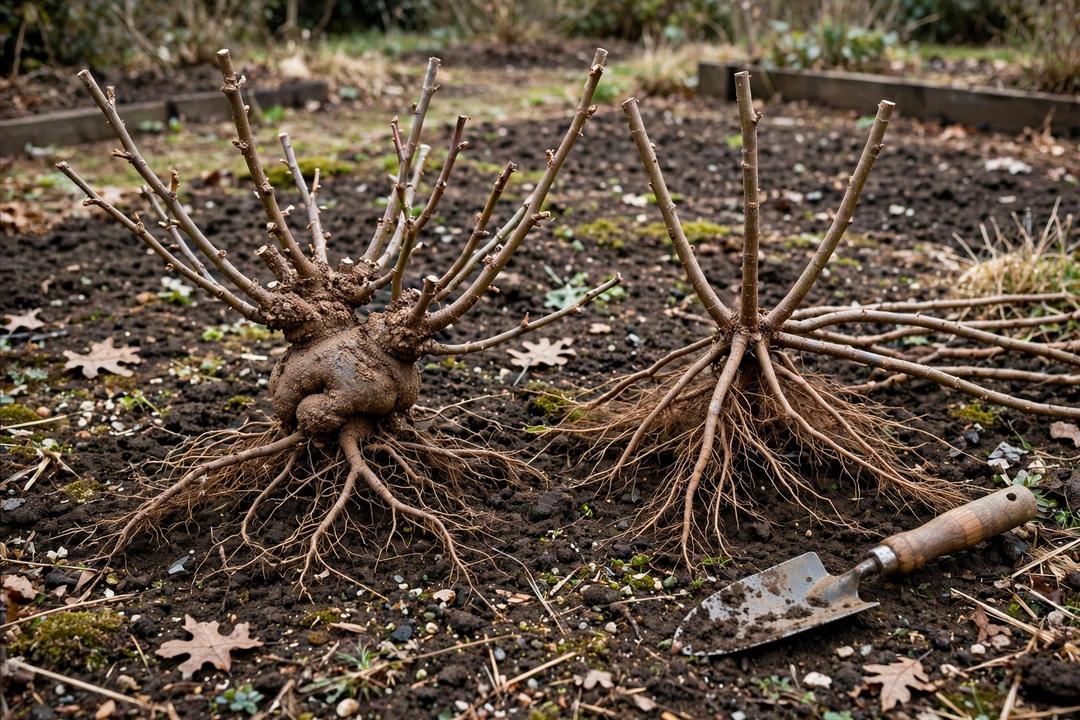
The practical rule: if your soil and microclimate are easy — a sunny, well-drained spot — an own-root rose is fine, and it will outlive a grafted one. If you want a fussy favorite to thrive in a harder spot, the grafted plant's rootstock does the work. Either way, check before you order whether the cultivar is known to thrive in your microclimate — UC ANR recommends asking your nursery or a trusted source such as a local rose society, because even details like a cultivar's color can make it harder to grow in some places.
How to pick a healthy bare-root rose
Use the grade. Roses are graded, and grade No. 1 is the one to buy: UC Fresno says grade 1 roses give you the best chance of success, and University of Nevada Extension's desert-Southwest rose guide defines a No. 1 rose as having three or more canes that are 14–18 inches long, with the buds and canes still dormant. (The No. 1 grade standard itself is national; the definition comes from the Nevada guide.) That is your inspection checklist: three or more sturdy canes, roughly a foot or more long, buds still asleep, roots plump rather than dried out.
Then match the type to the job. UC ANR's guide to the main types:
| Type | Size and flowers | Best for |
|---|---|---|
| Hybrid tea | 3–6 ft tall; one splendid 3–5 in flower per stem; lives 10–20 years, up to 30 | Cut flowers and classic rose beds; all colors except black and blue |
| Floribunda | 2–4 ft bushy shrub; clusters of smaller flowers per stem | Color in quantity; hardier and usually more disease-resistant than hybrid teas |
| Grandiflora | 5–8 ft tall; hybrid-tea flower form, 3–5 blooms per stem; bred in 1954 | Tall cutting roses with more blooms per stem |
| Climbing / rambler | Flexible canes trained up, not free-standing | Fences, arbors, and walls |
| Miniature | 1–2 ft tall with tiny blooms | Pots and small spaces |
| Landscape / shrub | Low maintenance, few thorns, glossy leaves; mostly own-root | Easy-care plantings where you want roses without the fuss |
Before you finalize the order, check the spot, not just the catalogue. Roses want full sun — at least 6–8 hours a day — and good air circulation, in soil around pH 6 to 6.5, well amended with compost and organic matter, per UC ANR. A rose ordered for a shady corner is a rose you will be fighting for years; the variety choice matters less than the six hours of sun.
Between the order and planting day
Bare-root plants have one strict rule: plant them almost immediately upon purchase, per UC Marin. If planting has to be postponed for a short time, UC ANR says to keep the plant moist — but not wet — and when you are ready to plant, hydrate the rooting end overnight in room-temperature water. UC Fresno's version is to soak the roots in water for at least 24 to 48 hours before planting. Either way, the soak is not optional: bare roots dry out quickly, and dried-out roots often fail to establish.
Use the waiting time. UC Marin's advice is to dig the hole ahead of time, so you are not working in less-than-ideal conditions on the day the plant arrives. And do not worry about a cold snap: as long as they remain dormant, bare-root roses can tolerate light frost and even an occasional hard freeze, per UC ANR. Dormancy is the protection.
Planting day, step by step
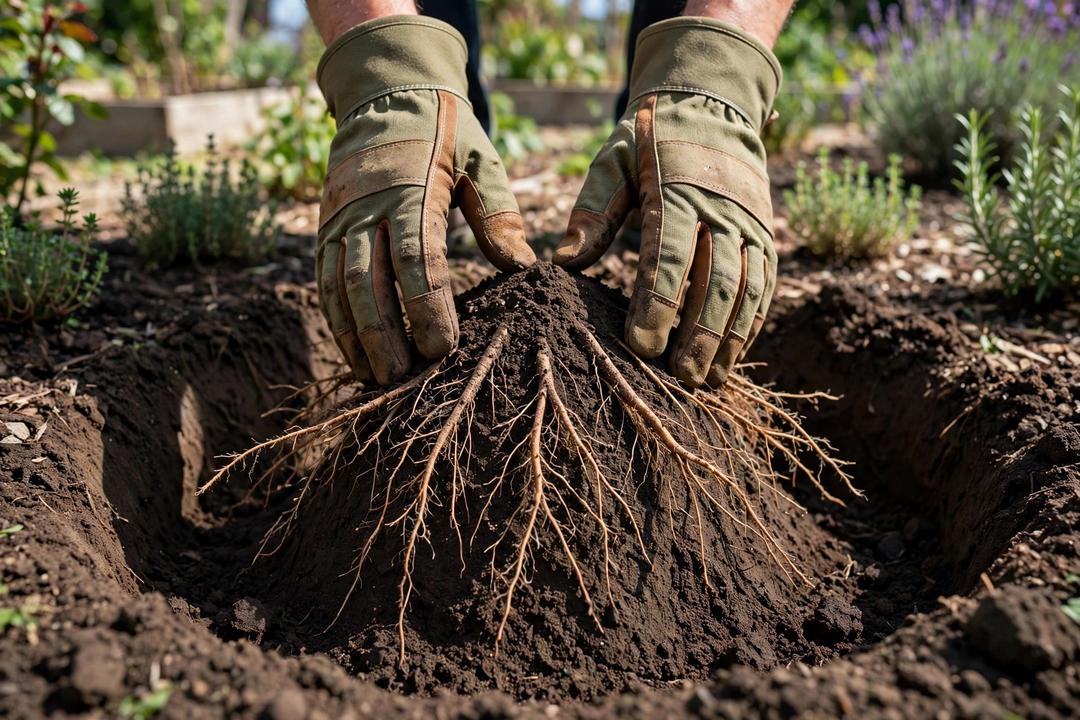
UC ANR's planting method, in order:
1. Soak the roots for 24 to 48 hours before planting, per UC Fresno — at a minimum, hydrate the root end overnight in room-temperature water, per UC ANR.
2. Dig a hole big enough to spread the roots. Build a soil cone in the center of the hole that is as tall as the hole itself.
3. Spread the roots evenly around the cone. Drape the root ends down the sides of the cone so they are not bunched or bent back on themselves.
4. Fill a little at a time. Add soil around the roots gradually so it contacts the roots well without compressing them, then gently firm the soil around the exposed canes.
5. Mind the bud union. For a grafted plant in California's mild winters, keep the swollen bud union about 4 inches above the soil line, per UC ANR. Burying it invites the rootstock to take over — and the rootstock's flowers are not the ones you ordered.
6. Water deeply, then stop. Water the plant in well, but do not leave it waterlogged. Then form a 1–2 inch high basin of soil around the rose, extending as far as the plant's horizontal boundaries, and fill the basin with mulch to conserve moisture. A drip line or bubbler is a good way to water without leaving the stem sitting in water; the leaves should not be watered except as needed to wash off insect pests, and then early in the day so they dry before night.
7. Prune before you walk away. If there are spindly or damaged canes, prune them off before planting.
First-year care: what to do, and what to stop doing
A new bare-root rose's first year is mostly about not interfering. Do not fertilize it at planting — and hold the nitrogen: University of Nevada Extension says not to fertilize new roses with nitrogen until after the first blooms. After the first blooms, feed it until blooming slows down in the fall, with light applications of fertilizer containing nitrogen, phosphorus, and potassium — that is UC ANR's feeding schedule, started later for a new plant. Then stop: the Marin Rose Society calendar's November instruction is to stop all fertilizing, let the plants go dormant, and not trim off spent blooms — let the hips develop. During the growing season, the opposite applies: dead-head spent blossoms regularly, because failing to remove them impairs the beauty of the plant and leads to rose hips that prevent the growth of new buds, per UC ANR. November is the one month the rule flips.
Watch for the two problems UC ANR singles out. In fog-prone microclimates near the coast, roses are especially vulnerable to rust and powdery mildew. The main blossom pests are aphids and spider mites: aphids love the tender foliage of budding flowers and new leaves, and even moderate populations produce honeydew that grows sooty mold on the blooms; spider mites attack in dry, dusty weather, bleaching the undersides of leaves until they fall off. UC ANR's remedies start simple — pick aphids off by hand, or knock them off with a hard spray of water in the morning so the leaves dry before evening — and natural predators such as lady beetles help. Insecticidal soaps or neem oil are sometimes used; toxic systemic pesticides are not recommended, because they kill natural aphid predators and beneficial insects such as bees.
Pruning comes later, and it is lighter than most people expect: make cuts at about 45 degrees, just above an outward-facing bud, so new growth aims outward. A heavier pruning for hybrid tea, floribunda, and grandiflora roses happens annually in late winter, while the plants are dormant but before new growth starts; climbing, miniature, and landscape roses do not need that severe pruning. Our when-to-prune tool for roses gives the timing by month.
What not to do
- Don't wait until January to order. The catalogue is fullest in November; by January you are choosing from what is left. Regan Nursery had already sold out of varieties ten days after opening.
- Don't leave a bare-root rose sitting in its bag. Plant shortly after it arrives. If you must wait, keep it moist, not wet — and never let the roots dry out.
- Don't skip the soak. Dormant roots need to rehydrate before they meet the soil; dry roots planted dry stay dry.
- Don't bury the bud union. On a grafted rose in California's mild winters, it stays about 4 inches above the soil line, or the rootstock can take over.
- Don't fertilize a new bare-root rose at planting — or with nitrogen before its first blooms. Feeding starts after the first blooms; feeding in fall pushes soft growth into the cold season.
- Don't judge it by its looks on arrival. A bundle of leafless sticks with plump canes and dormant buds is alive. A blooming potted rose costs more and offers fewer varieties — the bare-root catalogue is the wider choice.
Quick answers
When should I order bare-root roses in California?
In November. Nurseries open bare-root ordering in November, the ordering season runs November to January, and the plants are available and planted December through February. The Marin Rose Society calendar says to place orders for new bare-root plants by the end of November.
When do bare-root roses arrive?
They are available December through February, per UC ANR, and should be planted shortly after they arrive. Local-pickup nurseries such as Regan notify you when your order is ready for pickup in early 2027; mail-order roses like Francis Roses' ship in January 2027.
Can I plant a bare-root rose in November?
Not usually — in California the plants are not available until December. November is for ordering. If a rose does arrive early, plant it promptly while it is still dormant; dormant roses tolerate light frost and even an occasional hard freeze, per UC ANR. In cold climates the answer is different again: bare-root roses ship and are planted in early spring, once the ground can be worked.
Own-root or grafted — which should I buy?
Own-root roses grow on their own roots, grow more slowly for the first two to three years, then catch up and live longer. Grafted roses pair your chosen variety with a vigorous rootstock that helps it in difficult microclimates or soils. Easy spot: own-root. Fussy favorite or hard spot: grafted.
What does grade No. 1 mean?
It is the top grade: three or more canes 14–18 inches long, with buds and canes still dormant, per University of Nevada Extension's desert-Southwest rose guide (the No. 1 grade standard itself is national). UC Fresno says grade 1 roses give you the best chance of success. Buy grade No. 1 and check that the canes are plump and the roots have not dried out.
How long will a bare-root rose live?
Hybrid tea roses live 10 to 20 years and can live as long as 30 years, depending on the cultivar, per UC ANR. Own-root plants live longer than grafted ones.
What if my rose looks dead when it arrives?
It is almost certainly dormant, not dead. Check for plump canes and buds that are still asleep, soak the roots for 24 to 48 hours in room-temperature water, and plant it using the cone method. New growth comes in spring; a rose that leafs out late is still a rose.
How much sun does a rose need?
Full sun — at least 6 to 8 hours a day — with good air circulation, in soil around pH 6 to 6.5, well amended with compost and organic matter, per UC ANR.