
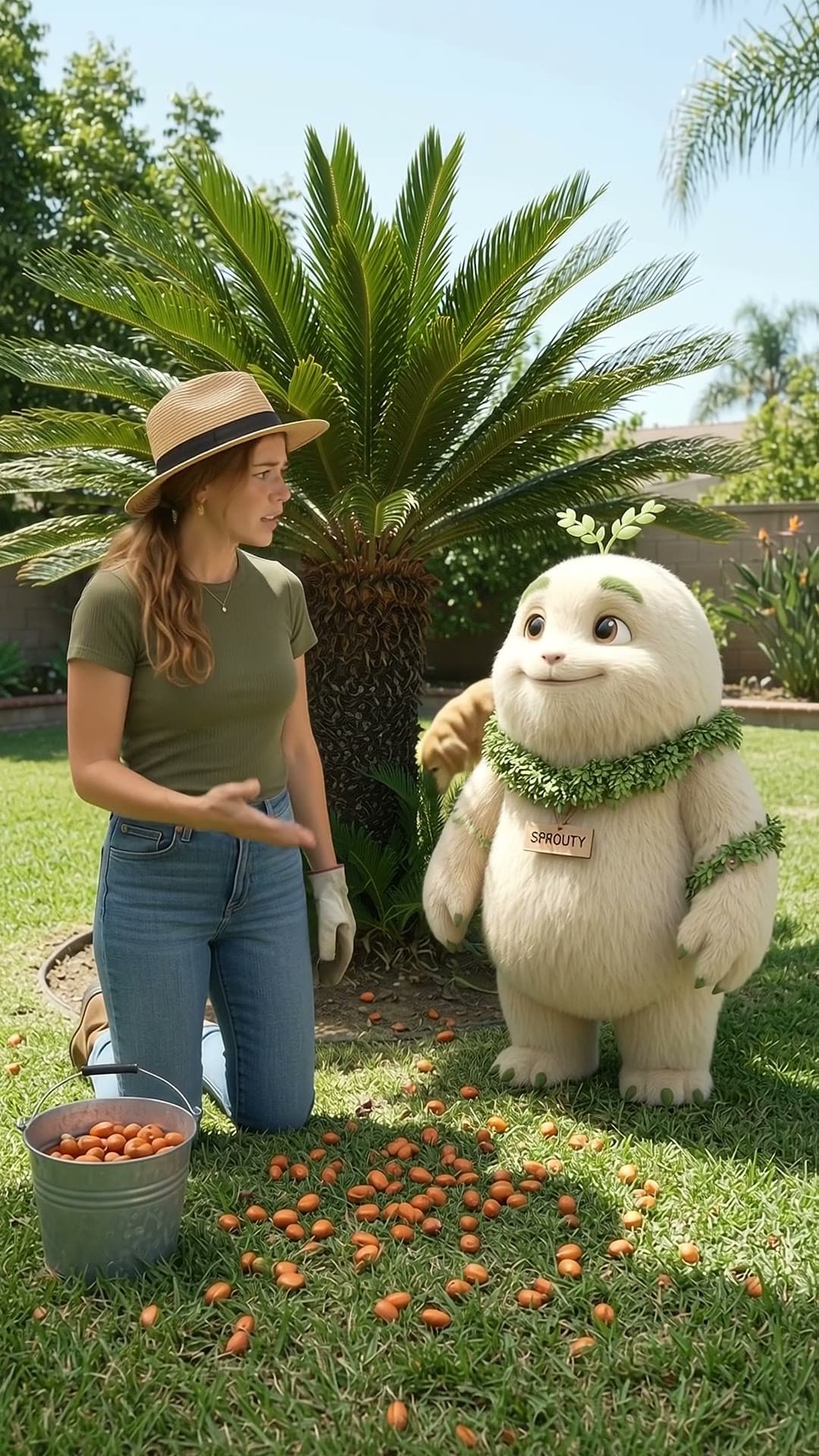
Yes — sago palm seeds are poisonous to dogs, and they are the most dangerous part of the plant. The ASPCA lists the sago palm among its toxic plants for dogs, with signs that run from vomiting and bloody stool to jaundice, liver failure, and death. Every part of the plant contains toxins, but NC State Extension's plant profile for Cycas revoluta notes the seeds carry the highest concentration of cycasin, the compound that attacks the liver — and veterinary poison references warn that even a small number of seeds can be fatal, especially to a small dog. One female cone can hold dozens of seeds.
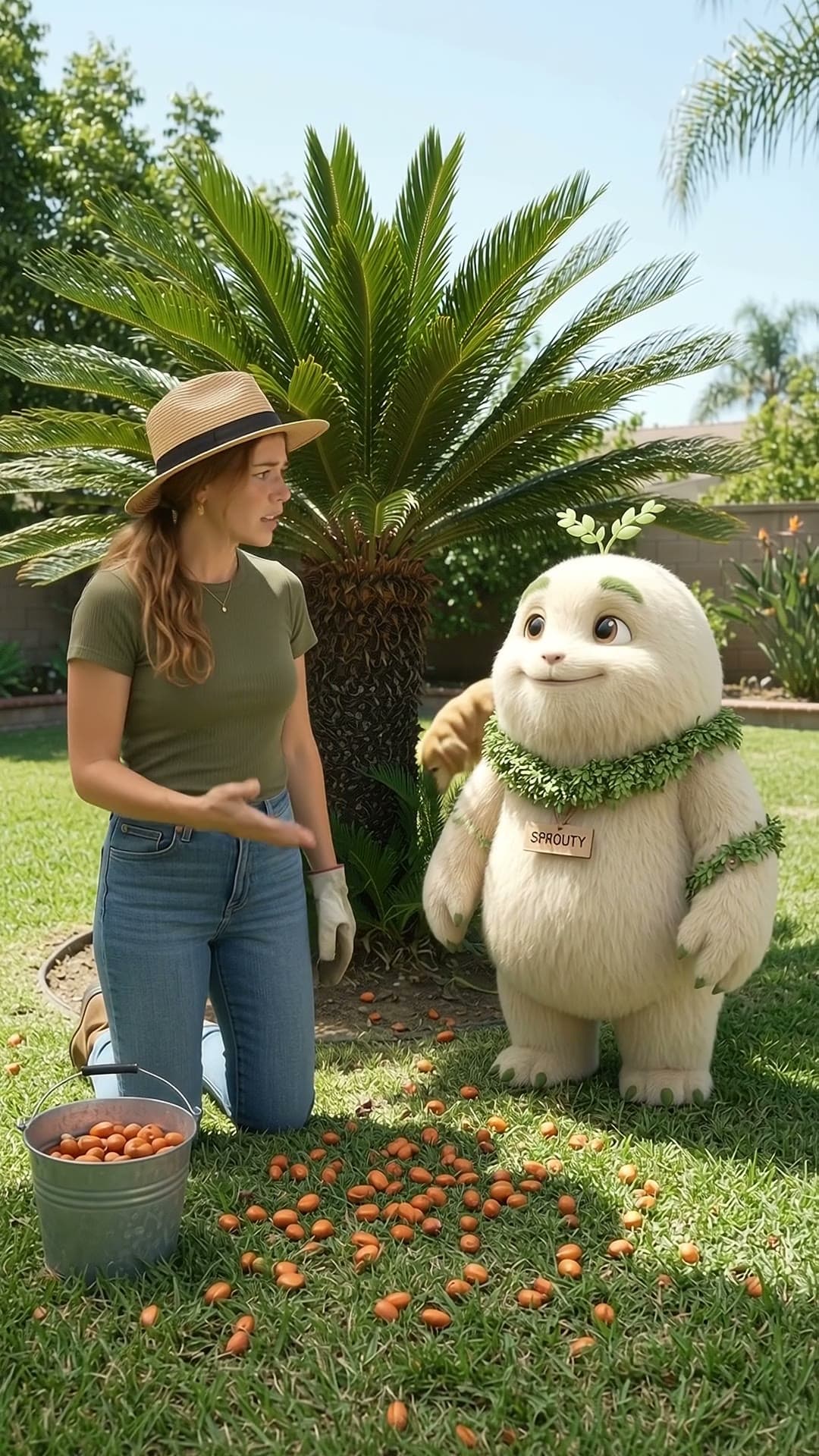
This guide is the companion to our SproutySpeaks video, where Sophie finds the lawn under her sago scattered with orange seeds and her dog headed straight for them. Below: how to tell whether the plant in your yard actually is a sago, what else it is called, where these plants grow, how to care for one safely, and how to remove one completely.
🚨 Dog just ate part of a sago palm? Do not wait for symptoms. Call your veterinarian or ASPCA Animal Poison Control at (888) 426-4435 right now — early treatment is what saves the liver. The full emergency steps are below.
Watch Sophie & Sprouty Pick Up Every Seed
A female sago is dropping deadly orange seeds right now — see the 10-second pickup routine in our latest quick tip video.
Sophie: "Wait — sago seeds can kill dogs?"
Sprouty: "Yes — deadly poison. Block the dog and pick up every seed. Every seed. No leftovers."
How to Spot a Seed Drop Before Your Dog Does
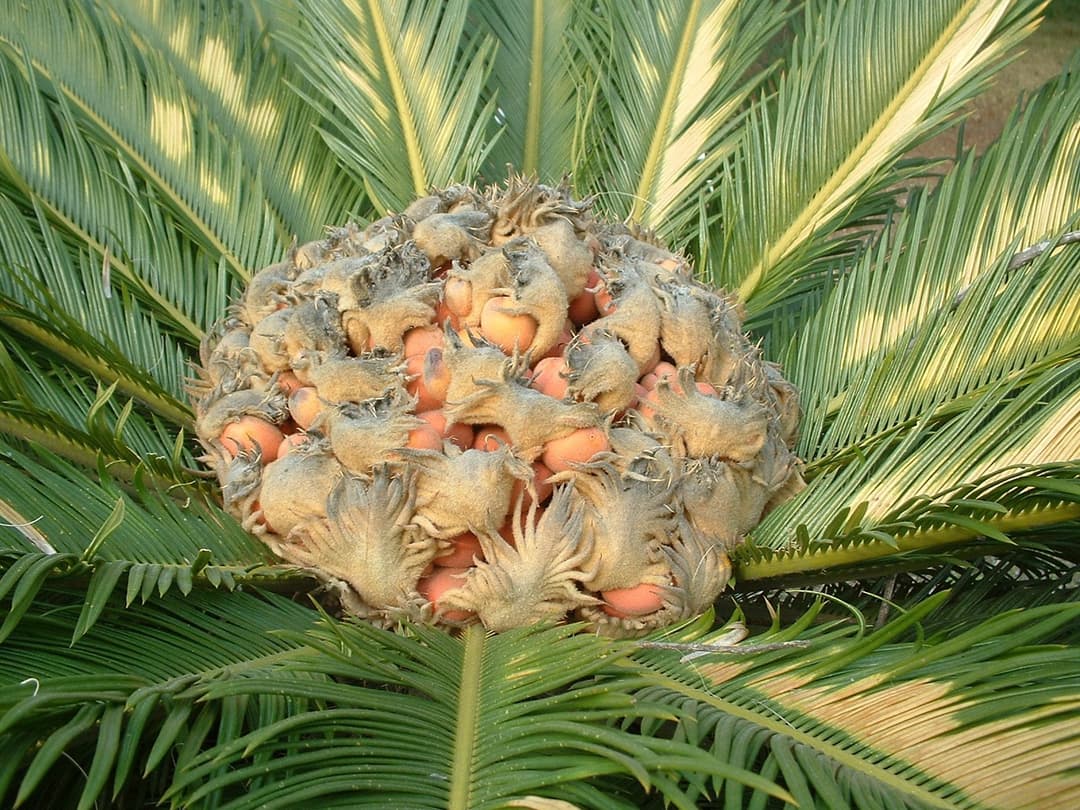
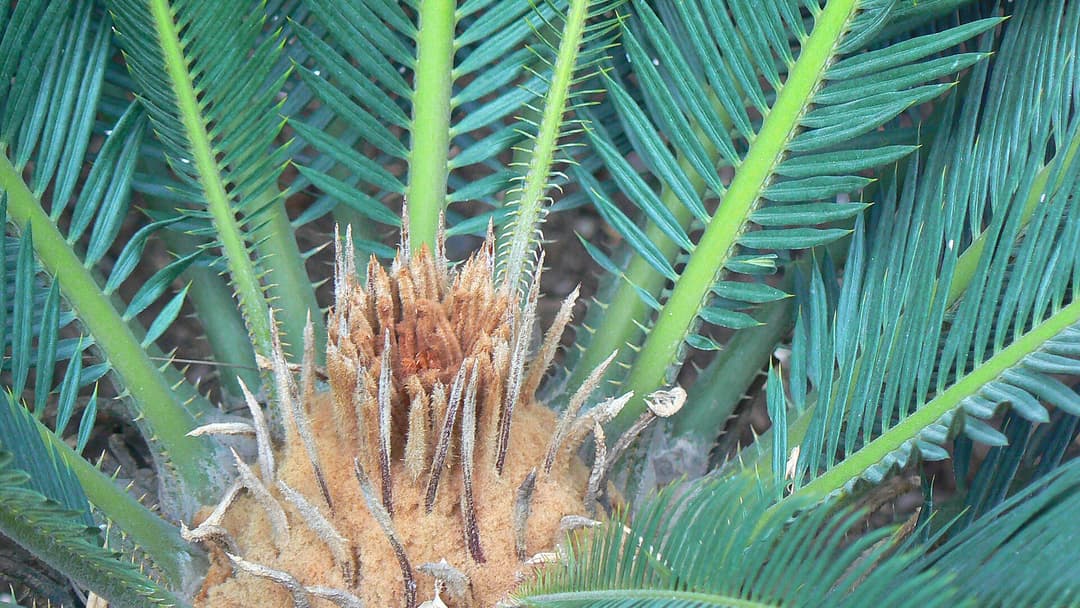
Only a mature female produces seeds, and only when pollen reaches her from a male plant. The seeds ripen to a hard-to-miss bright orange — typically in fall, though timing shifts with climate and the individual plant, so treat the calendar as a guide, not a guarantee. If your sago has a fuzzy dome in its center, or orange balls are appearing on the ground beneath it, you are in the drop window. Check daily — a dog will find a fallen seed faster than you will.
Why the Seeds Are the Most Dangerous Part
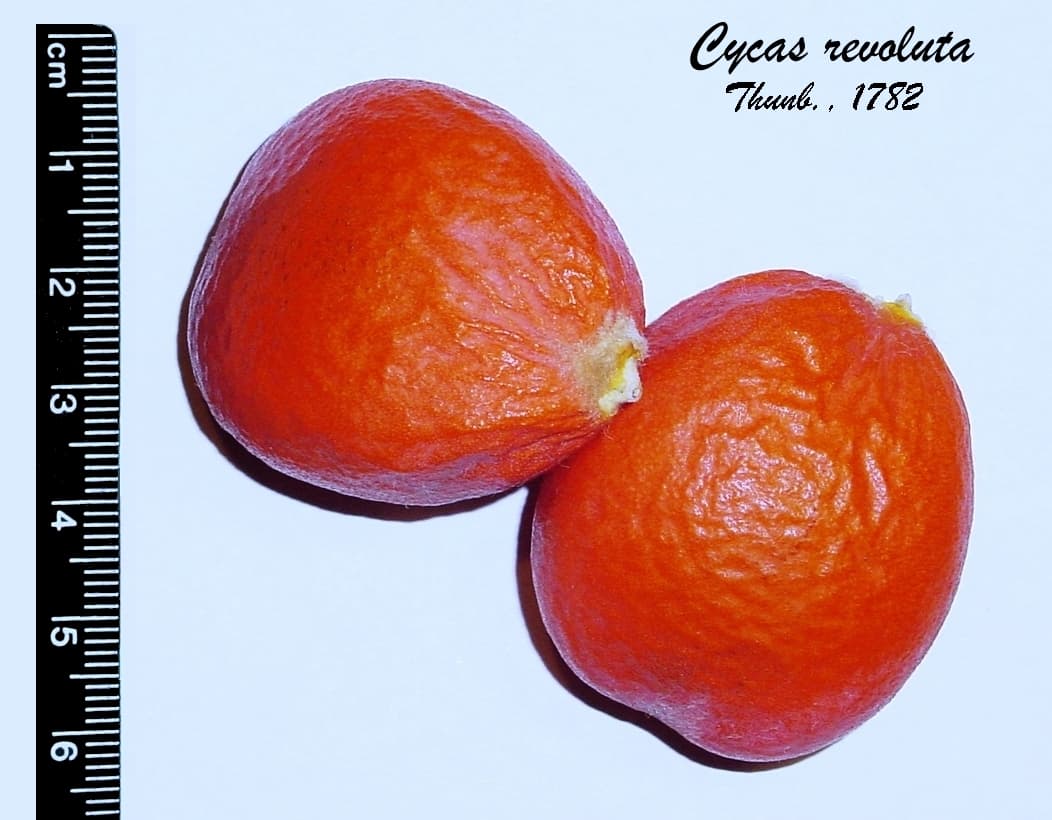
All of the plant is toxic — fronds, trunk, roots — but the seeds concentrate the cycasin. That matters because of how dogs meet this plant: not by chewing prickly fronds, but by picking up a smooth, bite-sized seed off the lawn. According to the ASPCA's sago palm listing, early signs include vomiting, diarrhea, drooling, and loss of appetite, and poisoning can progress to liver failure and death. There is no small dose to shrug off. The seeds are also a hazard to cats and livestock, and they are poisonous to people — one more reason they never belong in a compost pile or left where any animal can reach them.
Is That Plant in Your Yard a Sago Palm? How to Identify One
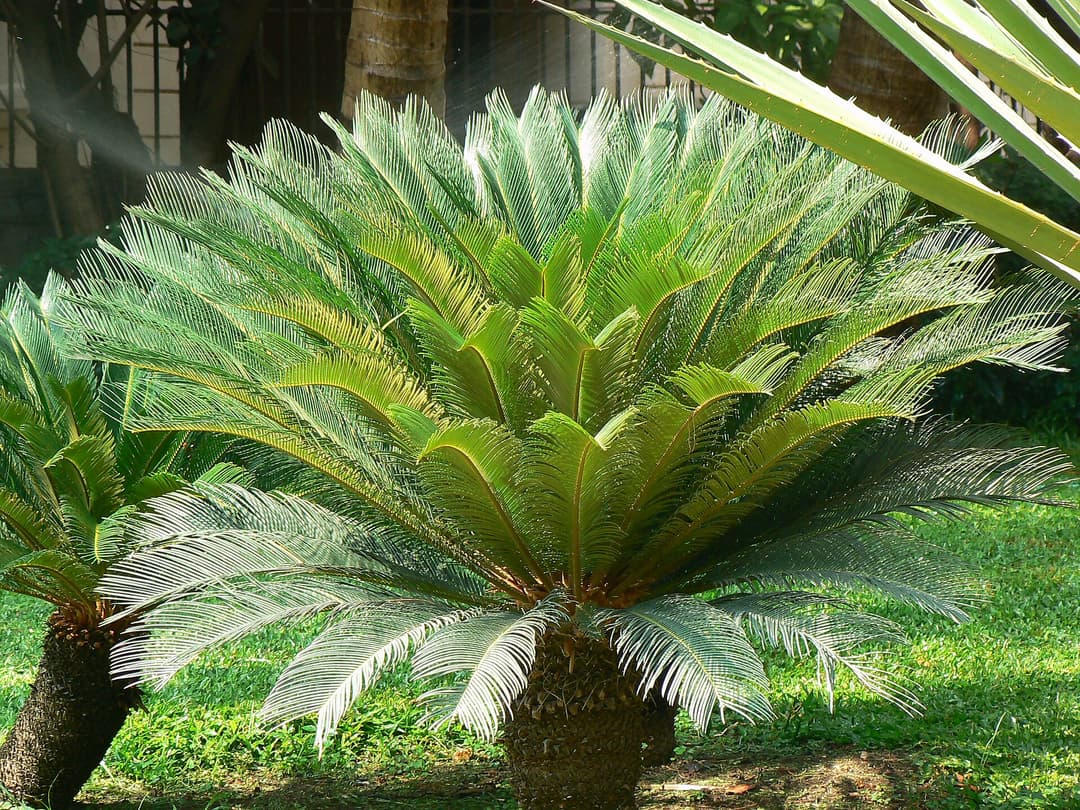
Start with what it is not: despite the name, a sago palm is not a palm at all. UF/IFAS Extension classifies Cycas revoluta in the cycad family — an ancient lineage of cone-bearing, non-flowering plants, closer in spirit to conifers than to the palms it imitates. The field marks that separate it from a true palm: stiff, glossy, dark-green fronds that feel almost plastic; narrow leaflets whose edges curl under (that curl is what revoluta means — "rolled back," per UF/IFAS); a thick, rough trunk armored with old leaf bases rather than a palm's ringed trunk; and extremely slow growth — UF/IFAS notes a sago can take 50 years to reach its full 10–15 feet, adding new fronds in occasional flushes rather than continuously. Young plants may show almost no trunk at all, which is why a small rosette and an old trunked specimen are often mistaken for two different plants.
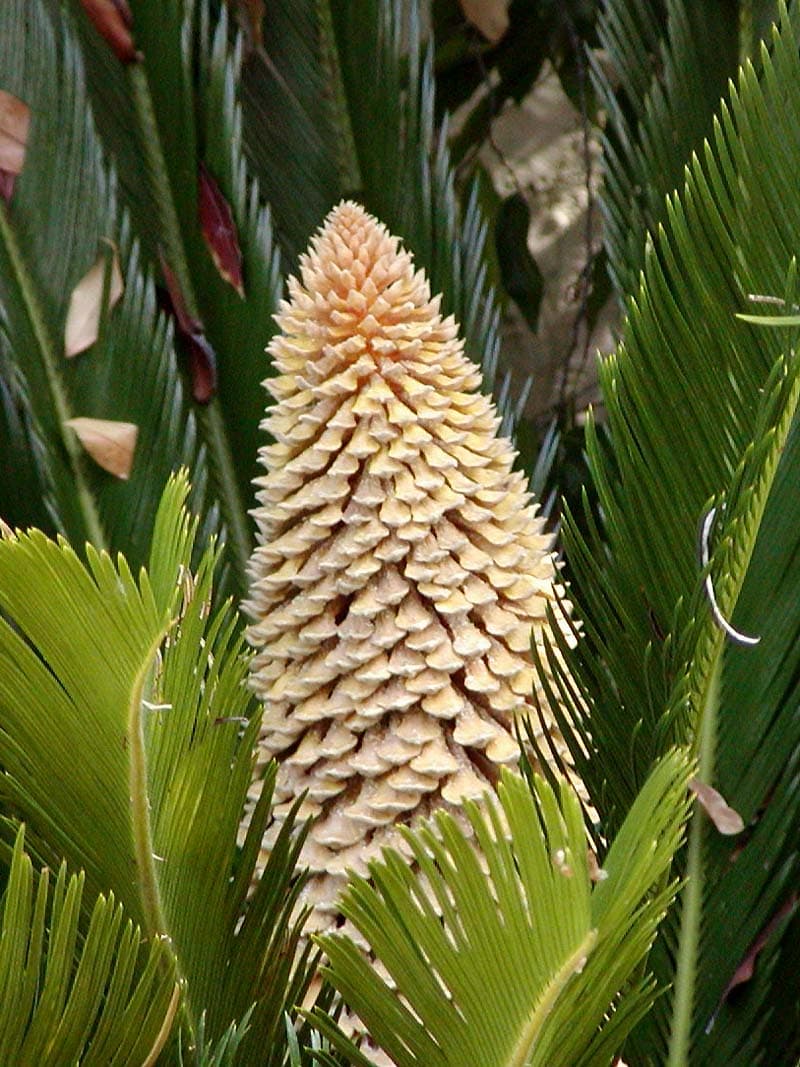
Male or female? You generally cannot tell from the leaves — the sex shows only when the plant reproduces. A male grows a tall, upright, golden pollen cone in the center, sometimes up to two feet long. A female grows the broad, fuzzy, golden dome you saw above — gardeners call it a cone, though it is technically a crown of seed-bearing leaves (megasporophylls), not a true cone. Only the female makes seeds. But do not read a plant with no cone as male or as safe: it may simply be young, and either sex is toxic in every part.
Look-alikes that cause confusion: the pygmy date palm is a true palm with softer, arching fronds and a thinner trunk. The cardboard palm (Zamia furfuracea) is a lower cycad with broad, fuzzy, cardboard-textured leaflets. The coontie (Zamia species) is a small, fern-like cycad. The queen sago (Cycas circinalis) is a larger relative — UF/IFAS publishes separate fact sheets for it, also under the name "sago palm." The safety point: identifying your plant as not Cycas revoluta does not make it safe — the ASPCA lists cardboard palm and other cycads as toxic to dogs too. When it matters, confirm the botanical name — a photo of the trunk texture and a leaflet close-up, sent to your local extension office, settles most identifications.
Sago Palm, King Sago, Japanese Sago — What Else Is It Called?
The same plant answers to several names, and the name tangle hides real danger. UF/IFAS lists the common names for Cycas revoluta as sago palm, king sago palm, and Japanese sago palm; in Japan it is called sotetsu. Garden labels use these loosely, so the botanical name on the tag — Cycas revoluta — is the only name worth trusting.
Three confusions matter most. First, the true sago palm is a different plant entirely: Metroxylon sagu, an actual palm whose pith yields commercial sago starch — UF/IFAS notes the shared name exists precisely because both plants are tied to "sago." Second, queen sago usually means Cycas circinalis or a close relative, not a female king sago. Third, the food trap: sago starch is a real food in parts of Asia, and Cycas starch was historically eaten in Japan in famine times — but only after processing to remove its toxins, and UF/IFAS warns the plant carries a powerful neurotoxin that can cause paralysis or death if not prepared properly. Nothing about that history makes an ornamental sago in your yard edible — for you or your dog.
Where Sago Palms Grow — and Where You'll Meet One
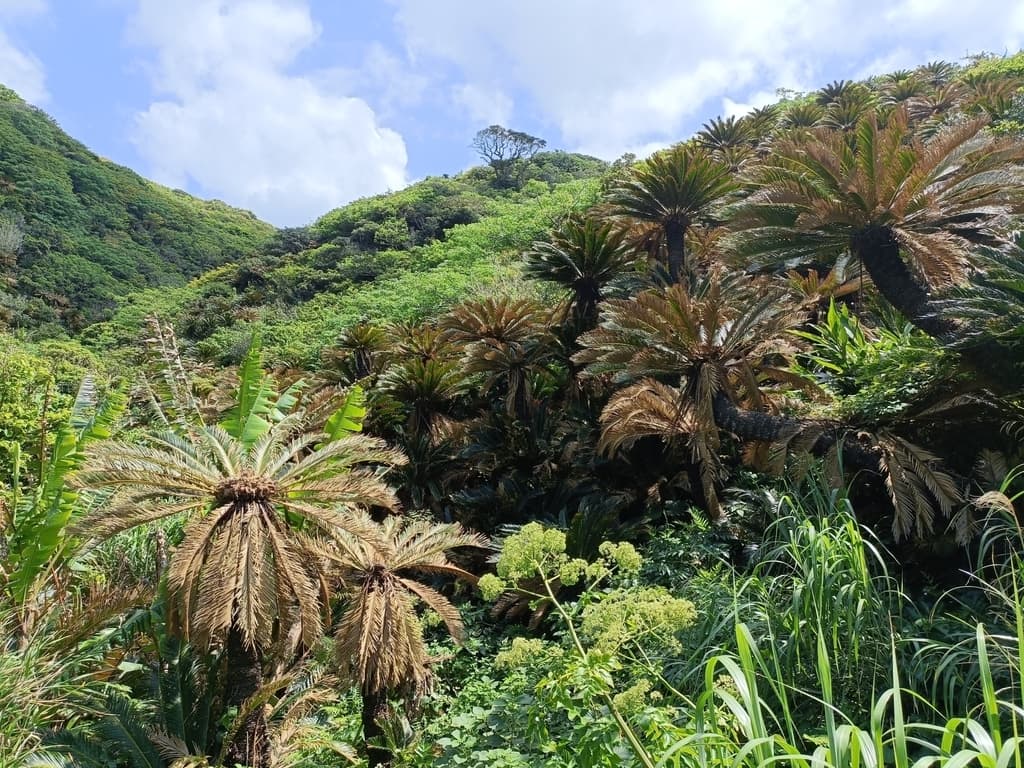
The species is native to the tropical islands of southern Japan, per UF/IFAS Extension, and it has been planted around the world's warm regions ever since. Outdoors year-round it suits USDA zones 8b–11 (NC State Extension), and UF/IFAS names Florida, California, Georgia, and Puerto Rico as places it grows particularly well — add the Gulf Coast, southern Texas, Arizona's warm communities, and Hawaii. Colder regions meet it as a container plant, sold nationwide and wintered indoors; a potted sago is usually seedless, but a mature, pollinated one can produce seeds anywhere.
You do not have to plant one to live with one. Check for sagos in these places: landscaping inherited when you buy a home (1980s–2000s builder plantings are full of them); rental yards and vacation rentals; HOA common areas and apartment courtyards; hotel, office, and shopping-center landscaping; parks and public gardens. And remember your dog's map is bigger than your yard — a neighbor's sago dropping seeds through a fence, or fallen seeds on a walking route, are your problem too. If you have just moved in and there is a palm-like plant you cannot name, identify it before the dog settles in.
The Pickup Routine: Every Seed, Every Time
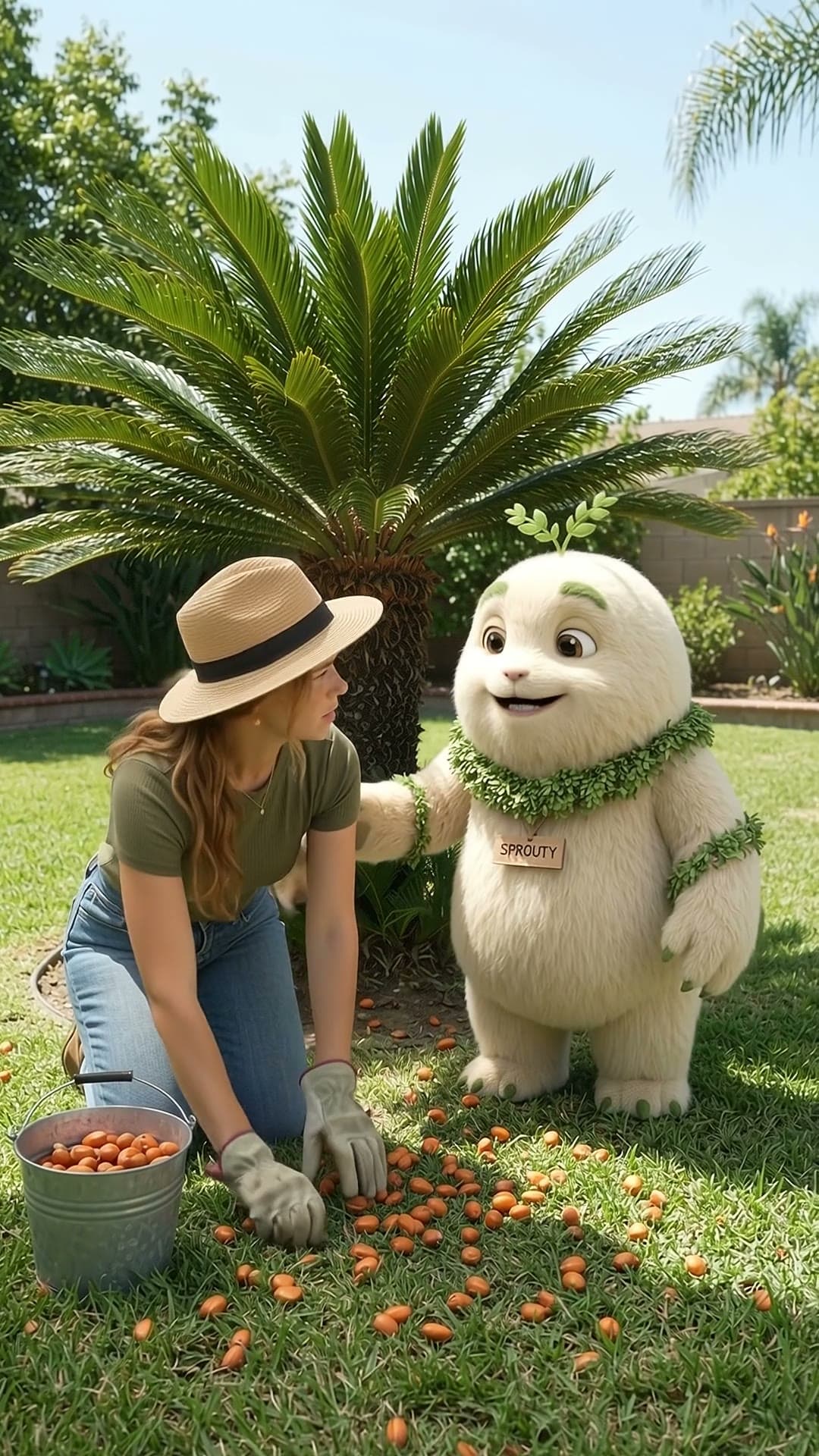
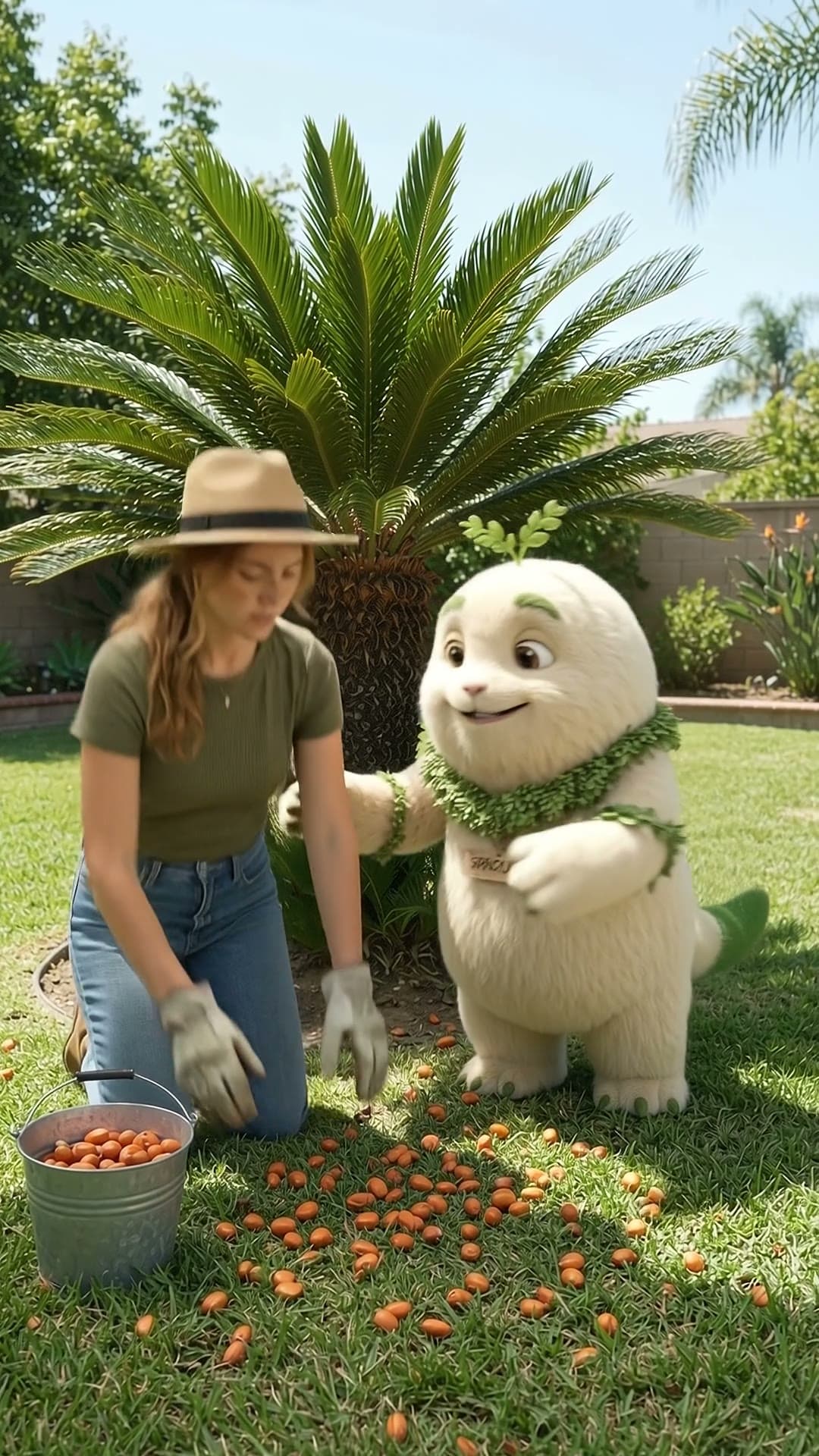
Treat a seed drop like broken glass, not like fall cleanup. Keep the dog inside or on the far side of the yard until the ground is clear. Put on gloves — the poisoning route is eating the plant, but gloves keep seed residue off your hands and the plant's leaflets are genuinely sharp — and work a bucket slowly across the whole area under and around the plant, checking the grass, the planting bed, and the gaps along fences and pavers where seeds roll. When you think you are done, walk it once more: the rule from the video is every seed, no leftovers, because the dose that matters can be a single seed. Bag the seeds sealed in the trash — never the compost pile, and never loose in a yard-waste pile where they can scatter or be reached; check your local waste rules for anything more specific. Then repeat the check daily while the cone is shedding, and always after wind, which knocks loose seeds down in bunches.
If Your Dog Eats a Sago Seed
Do not wait for symptoms, and do not watch and hope. If you saw your dog eat any part of a sago palm — or you find chewed seeds and your dog was near the plant — call your veterinarian or the ASPCA Animal Poison Control Center at (888) 426-4435 immediately. The ASPCA lists this as a genuine emergency: vomiting and diarrhea can start within hours, liver failure can develop over the following days, and a dog that seems to recover can still decline as the liver injury builds. There is no specific antidote — treatment is decontamination, blood work, and liver support — so the earlier it starts, the better the odds. Do not induce vomiting unless a veterinarian tells you to. Bring a seed or a photo of the plant with you — identifying the plant speeds up treatment.
Caring for a Sago Palm You Decide to Keep
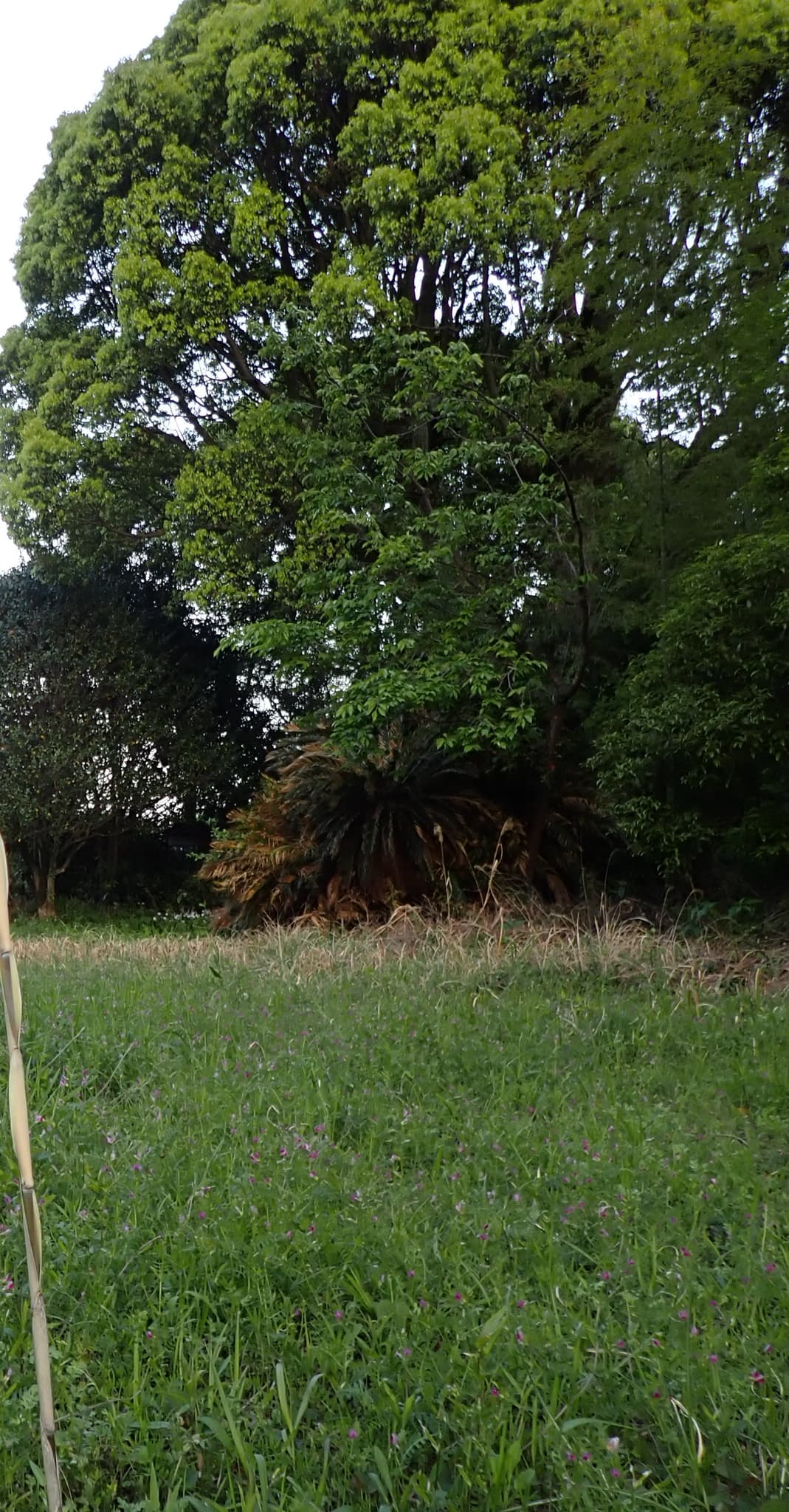
Keeping a sago and keeping a dog are compatible only with management, so know the plant's actual needs. It wants well-drained soil above everything — soggy roots invite rot — and full sun to partial shade; UF/IFAS notes it grows larger leaves in more shade. Once established it is drought-tolerant: water deeply, then let the soil dry. Growth is so slow that a damaged crown can take seasons to replace itself, which shapes the pruning rule: cut only fronds that are fully brown and dead, leave yellowing fronds on until they finish (they are still feeding the plant), use clean tools, and never cut into the central growing point. Collect and bag every pruned frond the same day — a dropped frond pile is chewable, toxic material at dog height.
Pups. Mature plants sucker from the base and trunk. Left alone, pups build the multi-stemmed clump in the photo above. If you want the clump and can manage the access, keep them; otherwise remove pups while they are small — and treat every removed pup as toxic waste, not as a free plant to hand a neighbor with a dog. Cone management, honestly stated: removing a female's seed-bearing crown before the seeds ripen can stop most seeds before they ever reach the ground, and it is worth doing — but it does not detoxify the plant, it can be awkward surgery around the growing point, and on a large plant it is a job for an experienced landscaper. A fence or barrier during the drop window buys time between pickups; neither replaces the pickup routine.
Troubleshooting. Three problems account for most sick sagos. White crusting on frond undersides and the trunk is usually cycad aulacaspis scale — UF/IFAS calls it one of the greatest damaging agents of this plant in Florida, and it can kill an untreated plant. New fronds that emerge yellow, stunted, and twisted ("frizzle top") point to manganese deficiency, a soil problem, not a magnesium one — Epsom salts are not the fix. A soft, mushy base with yellowing fronds suggests crown or root rot from wet soil. Diagnose before treating, and keep any treatment label-legal and pet-aware.
How to Remove a Sago Palm Completely
For a yard where a dog roams unsupervised, removal is the only option that ends the risk — and it has to be complete, because a half-removed sago is still a toxic plant. Work in order:
1. Secure the site first. Dogs and children out. Pick up every loose seed before you disturb the plant, and have heavy-duty bags ready before the first cut.
2. Gear up. Thick gloves, long sleeves, eye protection, sturdy footwear. The leaflets are stiff and sharp enough to cut skin.
3. Strip the fronds. Cut them in manageable sections and bag them immediately — no piles, no curb stacks where an animal can reach them.
4. Dig out the whole plant. Trench around the base, cut and undercut the roots, and rock the plant free. The removal target is the entire trunk (caudex), its base, and the main root mass — cutting the plant off at ground level is not removal. Small plants come out by hand; large or multi-trunk specimens are heavy, fibrous work that often justifies a contractor.
5. Hunt the pups. Dig out every basal and trunk offset, including the half-buried ones under mulch. Here is the regrowth truth: a severed root fragment alone rarely rebuilds a plant, but leftover crown tissue and living pups absolutely can — they are small sagos in waiting.
6. Dispose and sweep. Bag all material — fronds, trunk chunks, roots, seeds, pups — sealed, for the trash stream your local waste authority directs; never compost it, chip it into mulch, burn it in the open, or give pups away. Then rake and inspect the whole area: grass, mulch, paving gaps, under neighboring shrubs. Re-inspect after the next watering or rain, which surfaces hidden seeds, and keep checking for regrowth sprouts for a season.
Renting? Do not dig up a landlord's plant yourself. Send the owner or manager the identification and the toxicity concern in writing, ask for professional removal, and use barriers and on-leash yard time until it is done. The same contractor checklist applies whoever hires them: plant and pups out, debris contained, ground swept for seeds, area re-inspected before dogs return.
Frequently Asked Questions
Are sago palm seeds poisonous to dogs?
Yes. The seeds carry the highest concentration of cycasin in the plant, and even a small number of seeds can be fatal, especially to a small dog. Treat any ingestion as an emergency.
Is a male sago palm safe around dogs?
No. A male never makes seeds, which removes the easiest exposure route — but its fronds, trunk, roots, and pollen cone are all toxic too. A male sago is a hazardous plant without the orange warning signs.
How can I tell if my sago palm will drop seeds?
Only mature female plants produce seeds, and only after pollination. A female in season grows a fuzzy, dome-shaped crown in her center that fills with seeds which ripen bright orange — typically in fall, though timing varies. No crown and no seeds does not prove a plant is male; it may simply be young.
Can I compost sago palm seeds or fronds?
No. Every part of the plant is toxic, and home composting cannot be relied on to make any of it safe. Bag seeds and pruned material sealed in the trash, out of reach of pets and wildlife.
My dog ate a sago seed but seems fine. Should I still call the vet?
Yes — immediately. Early signs can be mild or delayed while liver injury is already underway, and outcomes are far better with early treatment. Call your veterinarian or ASPCA Animal Poison Control at (888) 426-4435.