 Sprouty
Walking past your raised garden beds in late summer or autumn, it is easy to spot a few small bell peppers, jalapeños, or sweet peppers resting on the soil beneath the canopy. Maybe an immature green pod dropped prematurely after a gust of wind, or a ripening pepper developed a tiny dark puncture mark and turned soft. For many gardeners, the natural instinct is to simply leave it where it lies. After all, doesn't garden debris naturally break down into the soil?
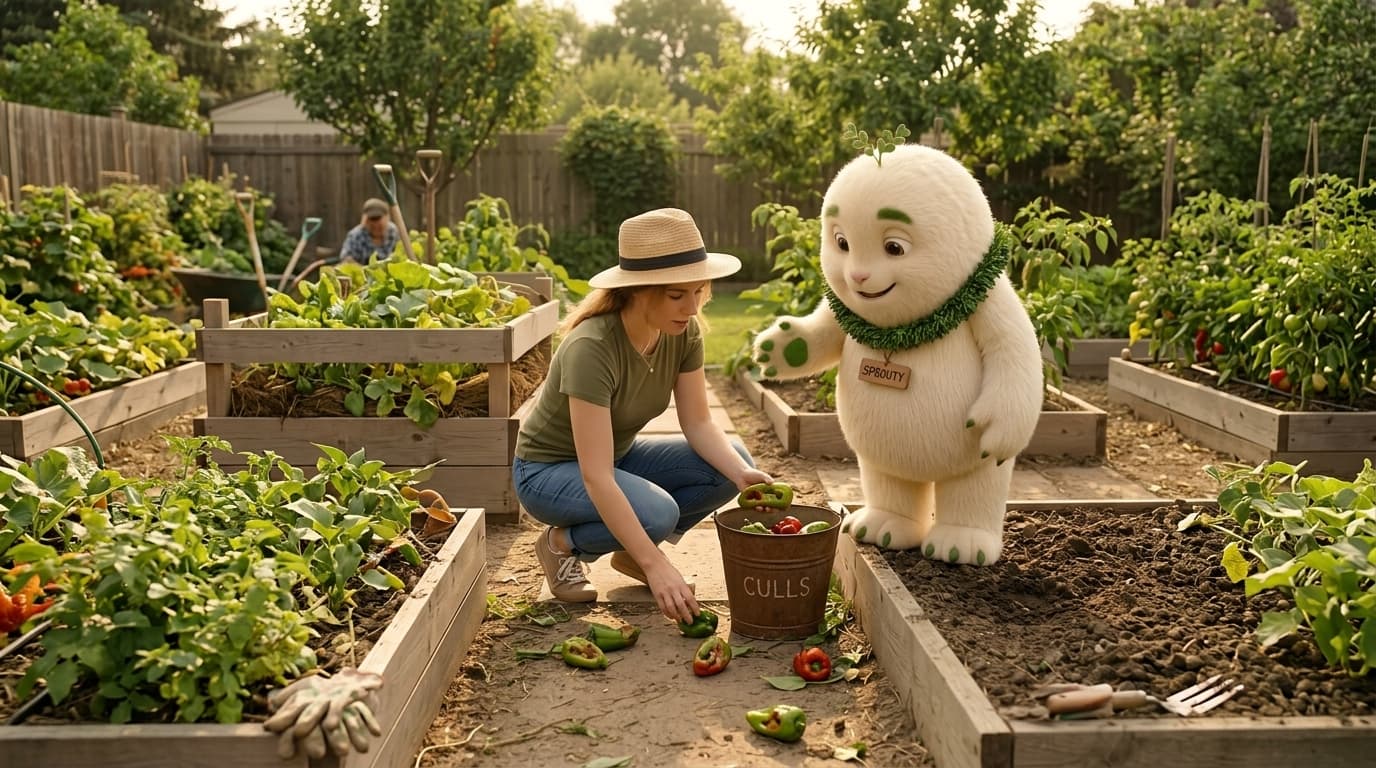
That was the exact assumption Sophie made while checking on her pepper patch. Reaching down toward a fallen, holey pepper nestled in the dirt, she paused and prepared to keep walking. But before she could leave it behind, Sprouty stopped her in her tracks:
Sophie: "A few holey peppers fell off the plants… I’ll just leave them on the soil. They’ll compost down, right?"
Sprouty: "No way! Leaving those dropped peppers on the soil turns your garden into a pest incubator. Pepper weevil larvae keep feeding and breeding inside fallen fruit. Pick them up and discard them right now!"
Sophie: (Quickly grabbing her culls bucket and gathering every fallen pod from the bed) "Got it! Gathering every dropped pepper—sanitation breaks the cycle!"
🫑 On-Screen Truth: Dropped or holey peppers? GATHER AND DISCARD THEM IMMEDIATELY.
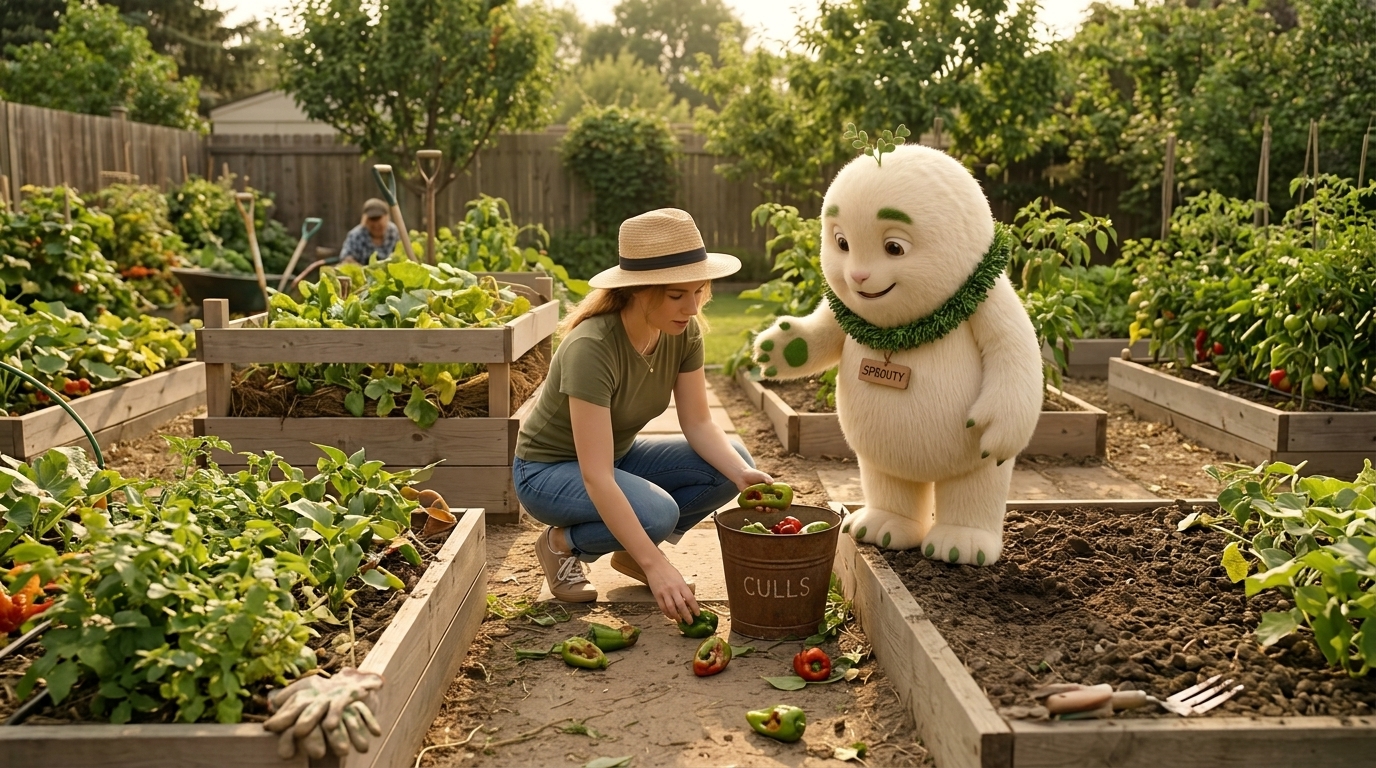
Watch Sprouty & Sophie in the Garden
See why leaving damaged, holey peppers under the plant lets weevil larvae continue breeding in our quick video companion.
The Silent Nursery: What Is the Pepper Weevil?
When gardeners notice early fruit drop on their bell peppers or sweet chilies, their first instinct is often to blame watering issues, high summer temperatures, or sudden heat stress. While weather fluctuations certainly cause blossom drop, premature drop of developing, marble-to-golf-ball-sized fruit with tiny pinholes points directly to an insect pest: the pepper weevil (Anthonomus eugenii).
As documented in the UC IPM Pepper Pest Management Guidelines, the adult pepper weevil is a tiny snout beetle measuring about 1/8 inch (3 mm) long, with a dark, brassy luster and an elongated beak. While adult beetles feed lightly on flower buds and leaves, their primary reproductive damage happens when females drill small holes into young flower buds or the base of developing pepper pods to deposit eggs.
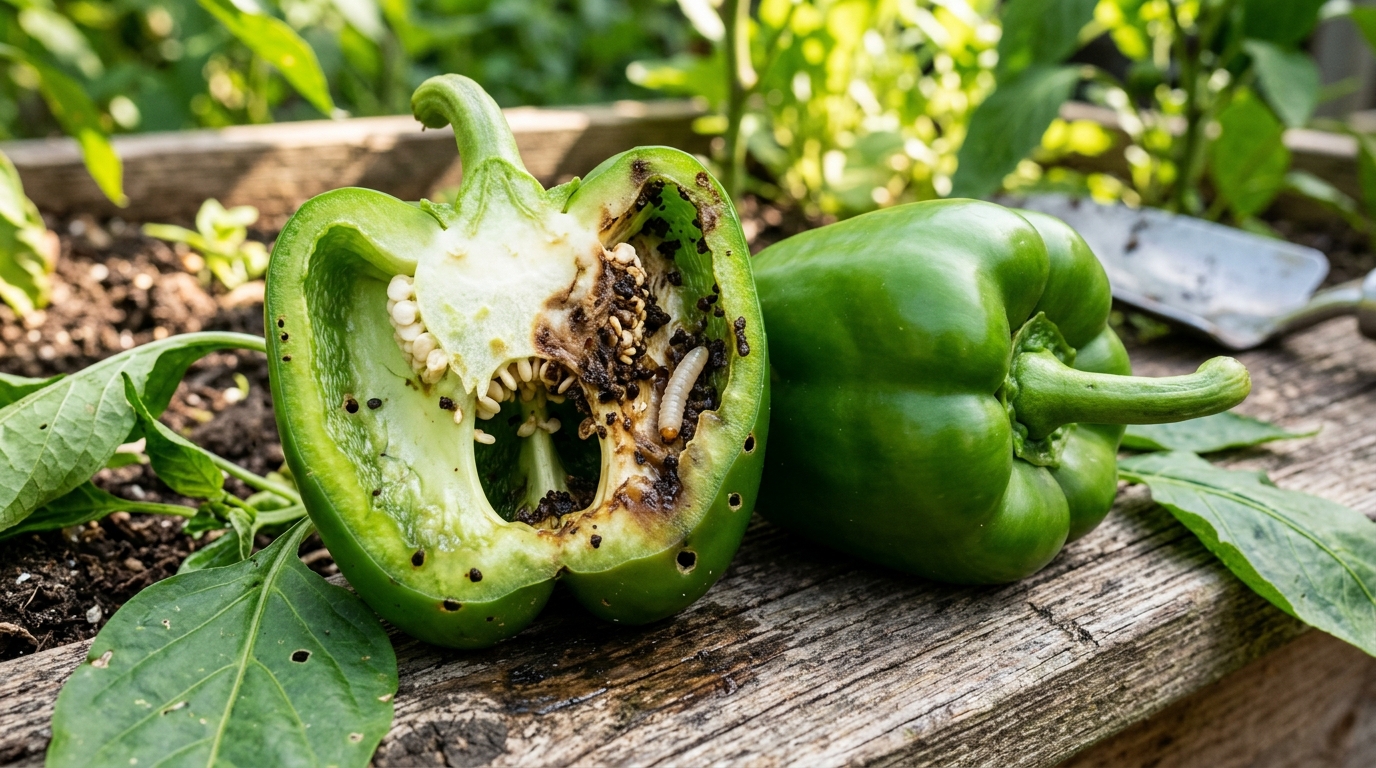
Once laid, the female seals the puncture hole with a brown fluid plug. Inside the sealed pod, the eggs hatch into off-white, legless grubs with distinct brown heads. These larvae begin tunneling directly into the central seed core and inner wall tissue.
Why Leaving Dropped Fruit on the Soil Keeps the Cycle Alive
Here is the critical biological detail that trips up most home vegetable growers: pepper plants abort infested fruit, but dropping to the ground does not kill the weevil.
As larvae feed on the seed core, the plant senses internal tissue destruction and forms an abscission layer at the stem joint. The young pepper turns yellow or pale green and tumbles to the soil. To an untrained eye, this looks like the problem resolved itself—the "bad" fruit fell off.
However, the University of California Statewide Integrated Pest Management Program highlights that larval development takes 2 to 3 weeks across three instars, followed by a pupal stage of just 3 to 6 days—and all of this happens entirely inside the dropped fruit on the ground.
🔄 The Ground-Level Nursery Trap
When an infested pepper lands on garden soil, the thick outer pod acts as an insulated fortress against predators and weather. Inside, the larva continues chewing on seeds and decomposing tissue, pupates, transforms into an adult beetle, and chews a neat exit hole to emerge. Once free, the adult flies right back up into the canopy to mate and puncture your remaining healthy peppers. One dropped pod can hatch multiple adult weevils in a matter of days.
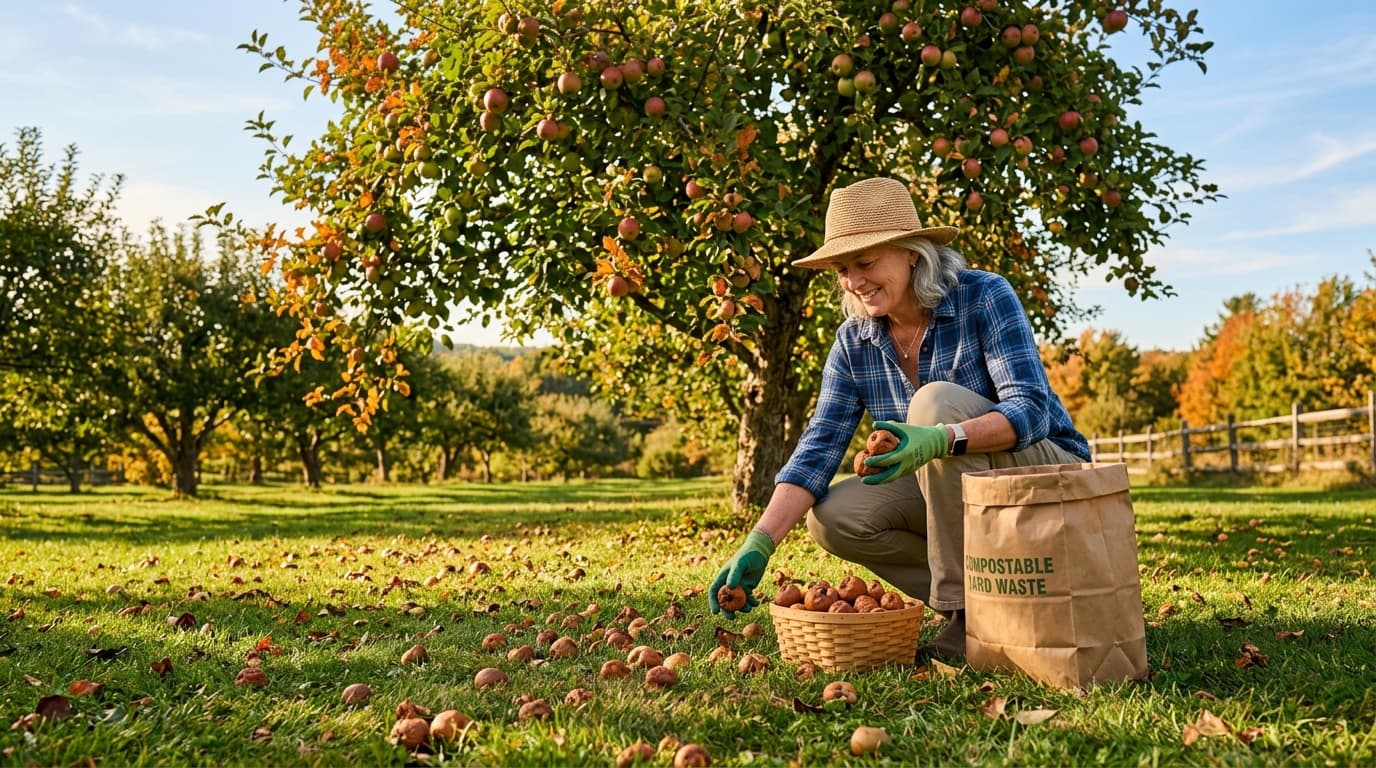
Much like leaving fungal mummies under fruit trees—a cycle we detailed in our guide to orchard sanitation and breaking fungal loops—leaving fallen vegetable drops under your peppers creates an ongoing reservoir of reinfection right at root level.
Recognizing Pepper Weevil Damage vs. Other Pepper Problems
Before pulling out sprays or ripping out plants, confirm what you are seeing. Pepper pods drop for a handful of reasons, but weevil damage leaves specific forensic signatures:
| Symptom | Probable Cause | Key Diagnostic Clue |
|---|---|---|
| Premature fruit drop with pinholes | Pepper weevil (Anthonomus eugenii) | Small puncture dots near calyx; brown decaying seed core when sliced; legless grub inside |
| Black, sunken, leathery bottom | Blossom-end rot (calcium/moisture imbalance) | Damage confined strictly to the blossom end; no insect larvae or puncture exit holes |
| Bleached, papery white patch on side | Sunscald | Appears on fruit exposed to intense direct afternoon sun where leaf canopy is thin; skin is dry and paper-like |
| Large ragged chew marks & bare stems | Hornworms or caterpillars | Large chunks missing from leaves and fruit walls, accompanied by large barrel-shaped black droppings |
| Blossoms dropping without fruit forming | Temperature extremes (heat/cold stress) | Flowers abort completely before forming tiny pods; common when nights exceed 75°F (24°C) or fall below 55°F (13°C) |
If you're tracking other ambiguous symptoms on your plants, comparing leaf discoloration with our diagnostic guide on why plant leaves turn yellow can help you distinguish between soil fertility issues and pest-induced decline.
The 4-Step Garden Bed Sanitation Protocol
Because the larvae and pupae spend their entire developmental period concealed deep inside the fruit pod, broad-spectrum contact insecticides are largely ineffective against the damaging stages. Entomologists and extension specialists agree that cultural control and physical sanitation are the most powerful weapons in your arsenal.
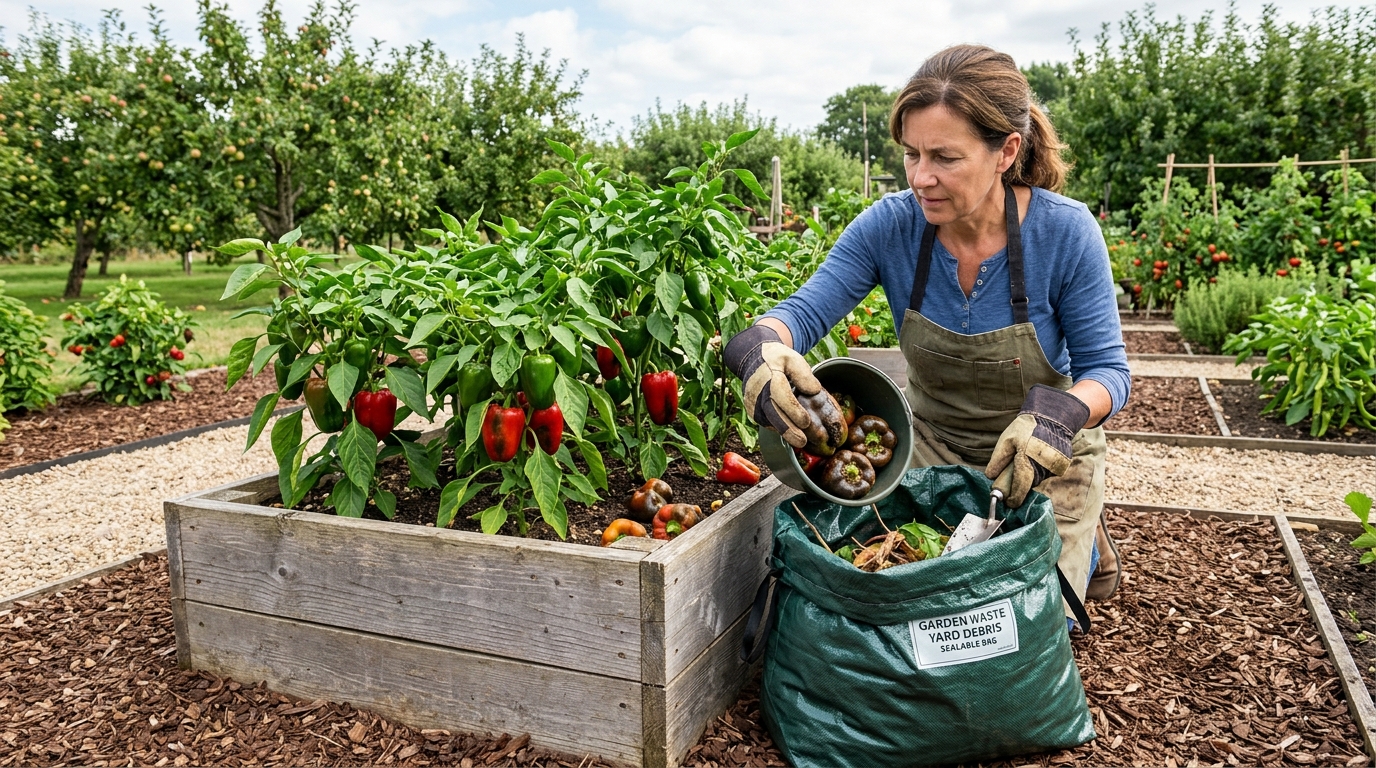
1. Conduct a Twice-Weekly "Drop Patrol"
Do not wait for clean-up day at the end of the season. Inspect the soil beneath every pepper plant at least twice a week—especially after windy days or rain. Pick up every fallen fruit, no matter how small, green, or shriveled. Even aborted flower buds should be collected if weevils are active in your area.
2. Cull Punctured or Yellowing Pods from the Branch
When examining your plants, look closely at hanging fruit near the calyx (the green cap where the stem attaches). If you see tiny dark puncture dots, discolored dimples, or pods turning yellow prematurely while adjacent peppers are dark green, snip them off immediately. Removing them before they drop cuts off the larva before it can complete feeding.
3. Never Put Infested Peppers in Cool Compost
This is the most common mistake well-meaning gardeners make. Typical backyard compost piles rarely maintain the sustained 140°F–160°F (60°C–71°C) core temperatures required to kill insect pupae. Tossing infested peppers into an open compost pile simply gives the larvae a comfortable buffet and guarantees hundreds of adult weevils will emerge next spring.
Instead, follow these disposal options:
- Municipal Green Waste: Most commercial municipal composting facilities generate intense, sustained industrial heat that destroys weevil larvae and weed seeds reliably. Seal them in your yard-waste cart.
- Solarization / Deep Freezing: If you keep everything on-site, seal the culled peppers in a clear plastic bag and leave it in direct hot sun for 7–10 days, or freeze the bag for 48 hours to kill all life stages before composting.
- Sealed Household Trash: For small backyard crops with heavy infestations, bagging and placing them in municipal trash eliminates the reservoir immediately.
4. Eliminate Solanaceous Weeds & Rotate Next Season
Pepper weevils feed and overwinter on plants in the nightshade (Solanaceae) family. As emphasized by the UC IPM Home Garden Peppers Program, removing wild nightshades—such as silverleaf nightshade (Solanum elaeagnifolium) and black nightshade—from garden margins is essential to prevent wild reservoir populations.
When planning your next season's garden layout, do not plant peppers, eggplants, or tomatoes in the bed where weevils were active. Rotate to non-solanaceous crops such as leafy greens, legumes, brassicas, or root crops to starve out lingering pupae in the soil.
🌿 Sprouty's Golden Rule of Garden Sanitation
In the garden, what falls to the ground doesn't just disappear—it either feeds your soil or feeds your pests. If a pepper drops with holes or rot, it is not mulch; it is a breeding ground. Gather it, bag it, and break the cycle before the next generation takes flight!
Looking for broader organic strategies to protect your vegetable beds and ornamental plants? Explore our complete breakdown in the Natural Pest Control Reference Guide, or check our Seasonal Tips Playbook for timely garden bed prep advice.