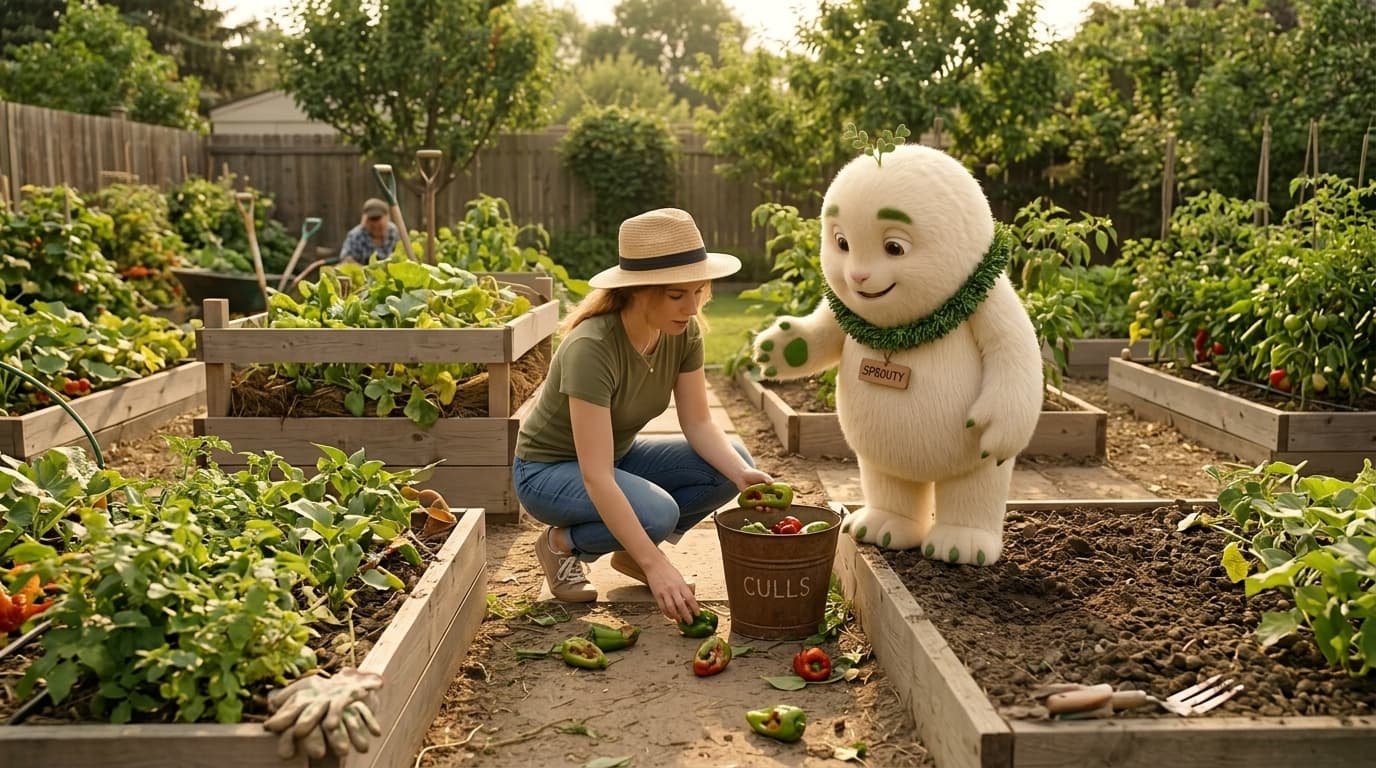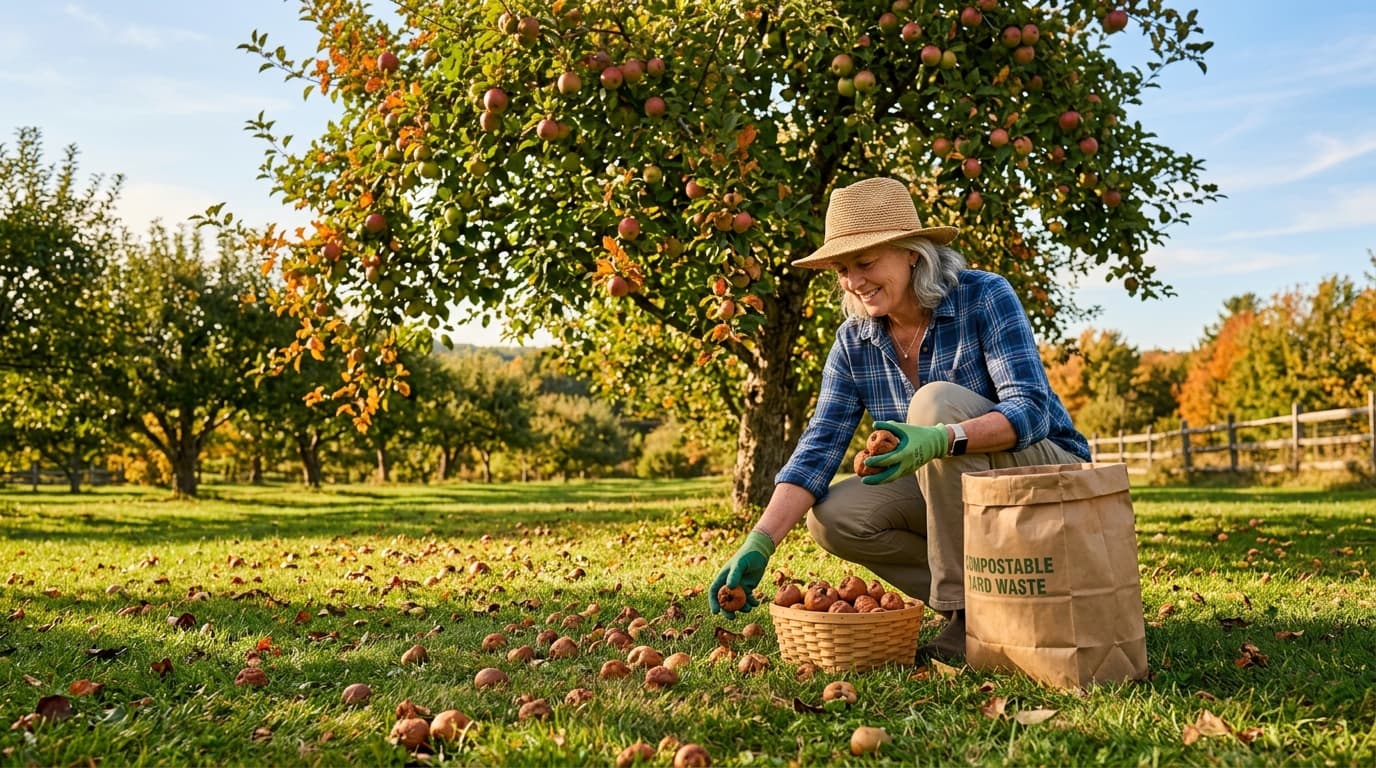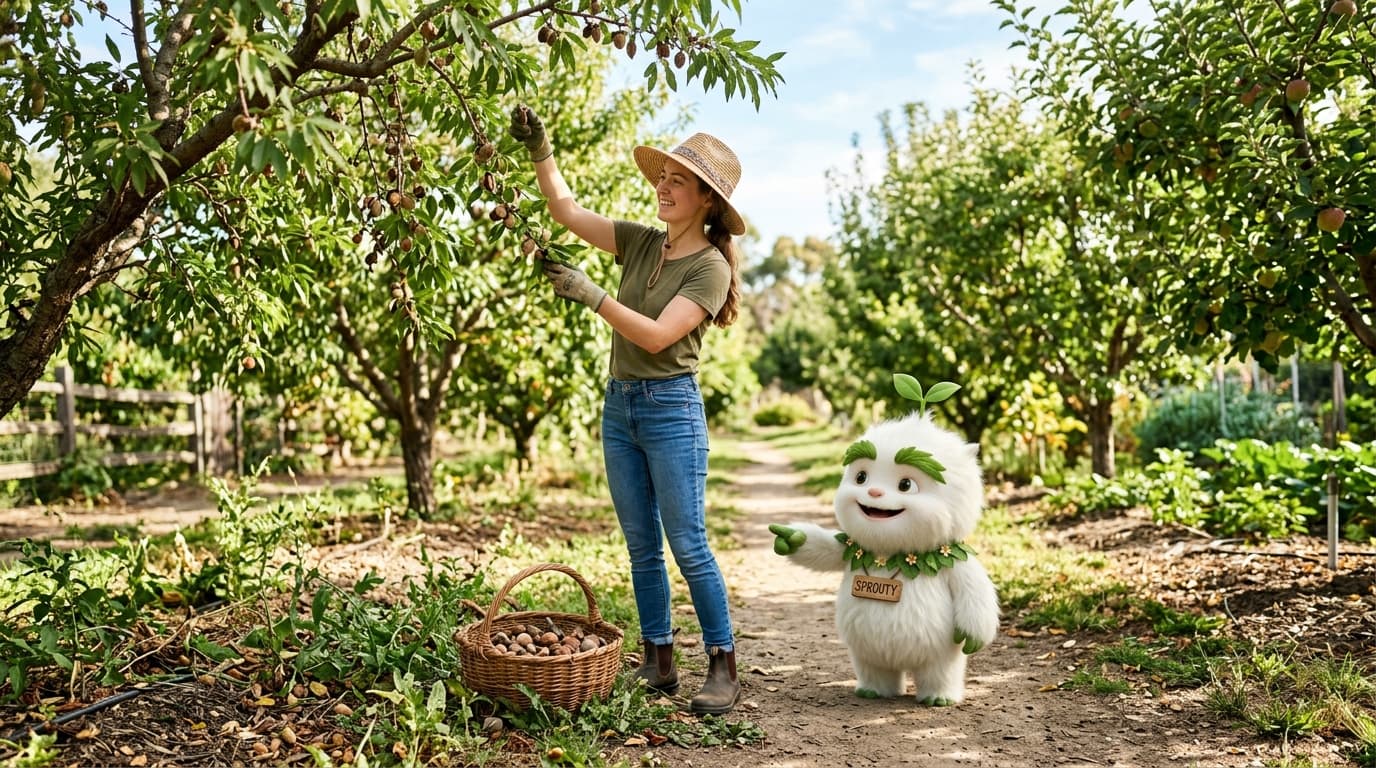

After days of stretching, reaching, and filling harvest crates with crisp apples, juicy peaches, sweet plums, or freshly shaken almonds, reaching the end of harvest season brings a deep sense of accomplishment. But as you step back to admire your orchard or backyard fruit trees, your eyes inevitably catch a few dozen stubborn leftovers clinging to high twigs or hidden within the inner canopy. They are small, slightly shriveled, cracked, or sunburned—fruit and nuts that didn't look appetizing enough to pick.
For many gardeners and backyard growers, the instinctive reaction is to let them be. After all, the edible harvest is safely indoors, winter dormancy is approaching, and surely winter frost and wind will knock them down eventually. Right?
That was the exact question Sophie asked as she wrapped up her post-harvest chores along the orchard path. Looking up at the last dried clingers dangling from the branches, she paused with her hands on her hips, ready to call it a day. But before she could walk away, Sprouty stepped forward with an essential orchard warning:
Sophie: "I think I’m done harvesting. Can I leave these last ones?"
Sprouty: "Don’t leave cling fruit or nuts behind. Old leftovers can keep pests cycling."
Sophie: (Reaching up to pull the stubborn clingers into a grounded basket on the orchard path) "Good catch. I’ll clean them up."
🌰 On-Screen Truth: Cling fruit or leftover nuts? STRIP THEM AND REMOVE THEM.
Watch Sprouty & Sophie in the Orchard
See why stripping unharvested cling fruit and nuts into a basket stops pests from cycling in our quick video companion.
The Elevated Nursery: What Are "Mummies" and Clingers?
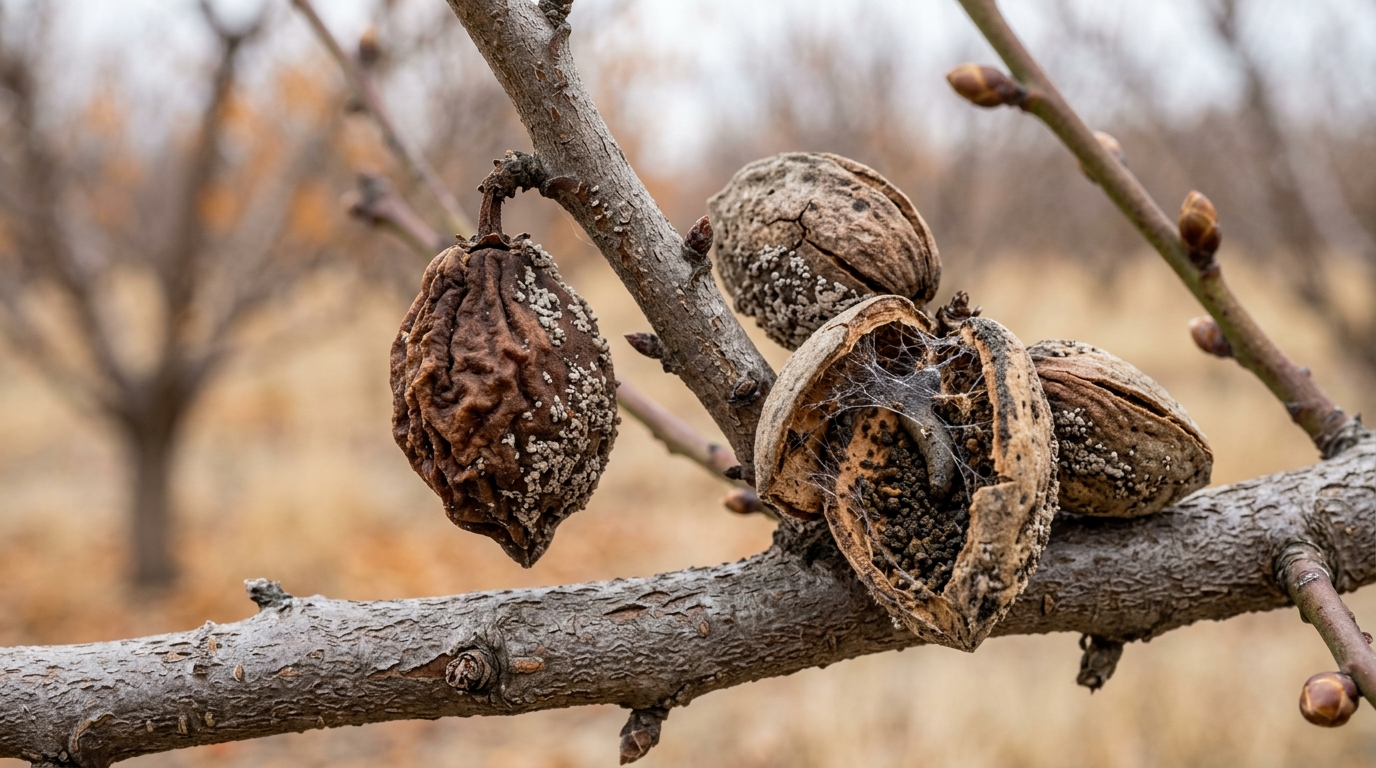
In pomology and commercial orchard management, unharvested fruit and nuts that fail to drop and dry directly on the tree are called "clingers" or "mummies." Whether it is an almond whose hull dried tight against the shoot, a peach that shriveled into a blackened husk, or a walnut whose blackened husk adhered firmly to the twig, these items are not harmless garden decorations. They are biological survival capsules engineered by nature to protect pathogens and insect pests through the harshest months of winter.
When fruit drops to the ground, it enters an active zone of soil decomposition. Earthworms, beneficial ground beetles, saprophytic fungi, and soil microbes immediately begin breaking down the organic flesh. But when fruit or nuts remain clinging high up in the tree canopy, they enter a sheltered "penthouse suite":
- Suspended Above Soil Decomposers: High in the canopy, clingers remain dry and out of reach of earthworms and beneficial ground predators that consume insect pupae.
- Insulated Winter Shelter: The tough, dried outer shell or leathery husk forms a protective thermal barrier against rain and sub-freezing winds.
- Prime Spring Launchpad: Pests and fungal spores awakening in the canopy do not have to climb or crawl up from the soil. They are already positioned directly next to next spring's delicate new blossoms and emergent green shoots.
The Pest Connection: Why Navel Orangeworm Counts on Mummy Nuts
The clearest example of unharvested cling nuts destroying future harvests is the navel orangeworm (Amyelois transitella), widely recognized by agricultural entomologists as the single most devastating pest of California almonds, pistachios, and walnuts, as well as a serious threat to figs, citrus, and stone fruits.
According to the UC IPM Navel Orangeworm Management Guidelines, navel orangeworm larvae cannot bore through sound, green hull tissue during spring and early summer. So how does this destructive pest bridge the gap from one season to the next?
It relies almost entirely on unharvested mummy nuts clinging to the trees:
- Winter Development: Unlike insects that enter complete winter diapause (dormancy), navel orangeworm larvae continue to feed slowly inside mummy nuts throughout the autumn and winter months, nourished by leftover nut meats.
- Spring Emergence: Beginning in late February and March, adult moths emerge from the hanging mummies. Because new nuts have not yet split their hulls, females seek out the remaining old mummies still stuck in the canopy to deposit their first generation of spring eggs.
- The Exponential Summer Explosion: As the new crop approaches hull split in midsummer, the population of moths—which multiplied over two generations inside unharvested mummies—attacks the opening hulls in overwhelming numbers, boring into nutmeats and introducing dangerous aflatoxin-producing mold spores.
🔬 The UC ANR Research Threshold
University of California Agriculture and Natural Resources (UC ANR) long-term field trials have repeatedly proved that winter sanitation—physically knocking down and destroying mummy nuts—is far more effective than summer insecticide sprays. In commercial orchards, UC IPM recommends reducing tree mummies to fewer than 1 to 2 nuts per tree. In home orchards and backyard gardens, where trees are easily accessible, the goal is zero mummies remaining in the canopy.
The Disease Connection: How Cling Fruit Fuels Brown Rot and Cankers
If you grow stone fruits—peaches, nectarines, plums, apricots, or cherries—leaving dried "clingers" on the branches creates an equally aggressive fungal cycle: brown rot blossom and twig blight, caused by the fungal pathogens Monilinia fructicola and Monilinia laxa.
As detailed in the UC IPM Peach Brown Rot Guidelines and the UC IPM Home & Landscape Brown Rot Program, infected fruit that dries on the twig hardens into a dense fungal mass called a pseudosclerotium. These mummies remain glued to the branch bark by dried fungal sap throughout the winter.
When spring arrives with warm daytime temperatures (60°F to 75°F) and seasonal rainfall or heavy morning dew, the fungal matrix reactivates. Unlike fallen fruit on the ground—which we detailed in our guide to breaking the fungal loop from dropped fruit—canopy mummies sit right above new blossom clusters. Spring breezes and splashing rain carry billions of microscopic conidia downward into opening flowers, causing blossom blight, oozing cankers, and twig dieback that ruin the new crop before fruit even forms.
| Fruit or Nut Tree | Primary Pest / Pathogen Cycling in Clingers | Consequence If Left Hanging |
|---|---|---|
| Almond, Walnut, Pistachio | Navel orangeworm (Amyelois transitella) | Larvae overwinter inside nutmeats; spring generations multiply and ruin midsummer hull split with webbing, frass, and aflatoxin molds. |
| Peach, Plum, Nectarine, Apricot | Brown rot (Monilinia fructicola / M. laxa) | Pseudosclerotia release airborne spores at bloom, blighting spring blossoms and forming perennial twig cankers. |
| Apple & Pear (Pome Fruits) | Codling moth (Cydia pomonella) & Black rot | Larval cocoons hide in stem crevices; fungal mummies harbor canker-forming spores that infect next season's foliage and young fruit. |
| Citrus & Fig | Fruit flies, Vinegar flies, Secondary mold | Dried, split, or clinging fruit attracts invasive flies, wasps, and rodents that damage bark and spread fruit rots. |
The 3-Step Canopy Sanitation Protocol
Breaking the pest and disease cycle requires zero chemicals. It simply demands timely, physical removal following harvest. Here is the exact orchard sanitation protocol recommended by horticultural specialists:
1. Conduct Post-Harvest "Cling Patrol" Directly into a Basket
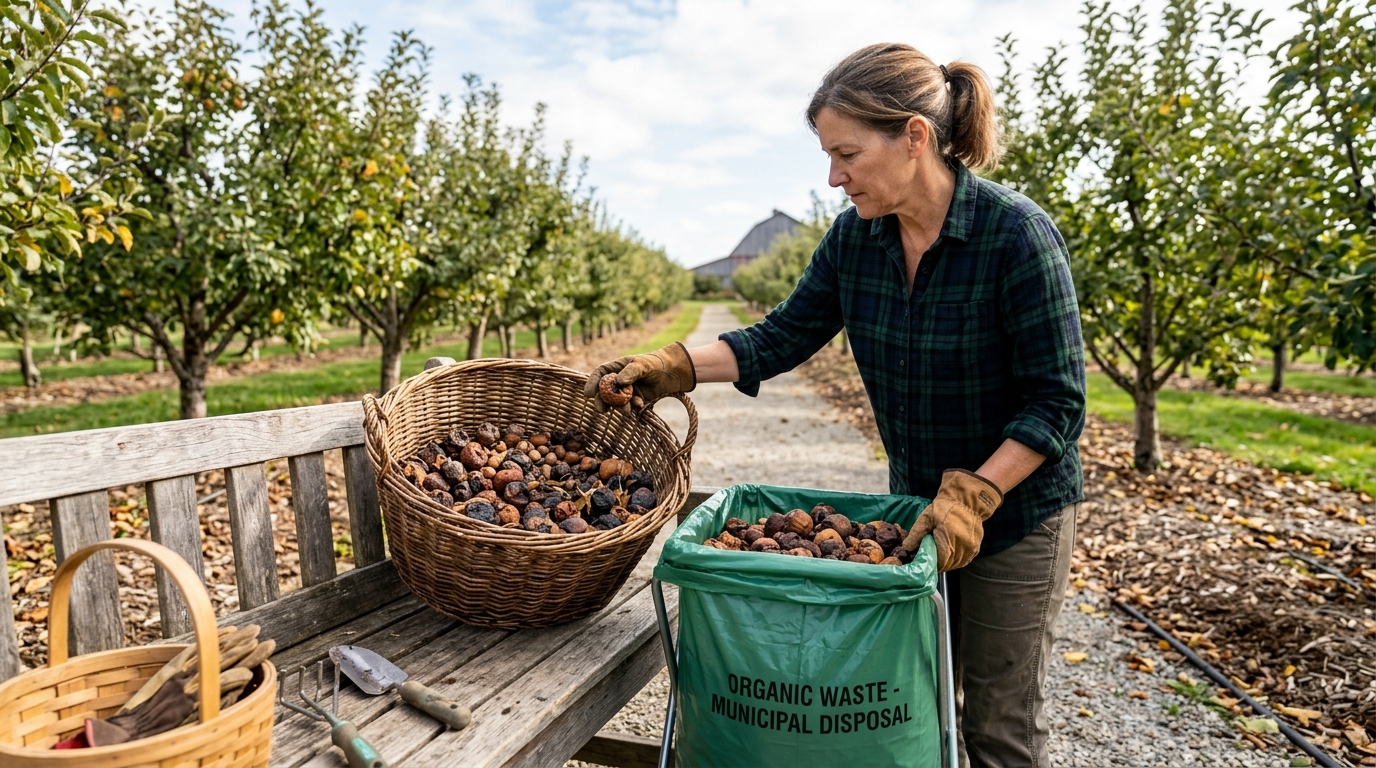
Do not wait until spring pruning when insects have already developed. Immediately following harvest, walk each tree with a grounded basket or bucket on the orchard path. Reach into the branches and gently twist or snap off all clinging fruit, dried clusters, deformed pods, and split nuts. If high branches are out of reach, use a lightweight bamboo pole or extendable fruit picker to gently dislodge them directly into a collection tarp or basket below.
Pro-Tip: Never let shaken mummies remain on the ground beneath the drip line. While ground-level mummies are less sheltered than hanging ones, navel orangeworm larvae and brown rot spores can still survive in ground debris if left unmanaged.
2. Inspect the Branch Attachment Points
When pulling off a clinging mummy fruit, inspect the twig where the stem was attached. If brown rot was present, you may notice a small, sunken, dark-colored canker or a spot where clear amber sap has gummed up the wood. If you see a twig canker, use sharp, sanitized bypass pruners to snip the twig 2 to 3 inches below the damaged area. To keep your pruning tools from transmitting pathogens between cuts, remember our golden rules of pruning hygiene detailed in why wound paint traps moisture and makes dieback worse.
3. Dispose of Mummies Properly (Never in Cool Compost!)
Once your harvest basket is filled with dried clingers, cracked nuts, and shriveled fruit, how you dispose of them matters immensely:
- Municipal Green Waste (Recommended): Commercial composting facilities reach sustained thermophilic temperatures exceeding 140°F to 160°F (60°C to 71°C), effectively killing insect larvae, pupae, and fungal pseudosclerotia. Place your basket contents into your municipal yard-waste cart.
- Deep Burial or Flailing: If you manage acreage or do not have municipal organics service, run a flail mower over swept nuts to physically crush the shells, or bury mummies under at least 2 inches of soil where soil microbes decompose them before larvae can emerge.
- Do Not Dump in Backyard Compost: Standard backyard compost piles rarely generate enough sustained heat to penetrate thick nut shells or kill resistant fungal fruiting structures, turning your compost pile into an insect breeding ground.
🌿 Sprouty's Golden Rule of Orchard Hygiene
"If it clings to the branch, it clings to the pest cycle. Clean your trees after harvest, drop the leftovers into a basket, and give your orchard a fresh, healthy slate for next spring's bloom!"
Want more seasonal orchard and garden prep guidance? Explore our Natural Pest Control Guide, check our interactive Gardening Calendar & Planting Calculator for your regional frost timing, or visit our Seasonal Tips Playbook for timely fruit tree maintenance.