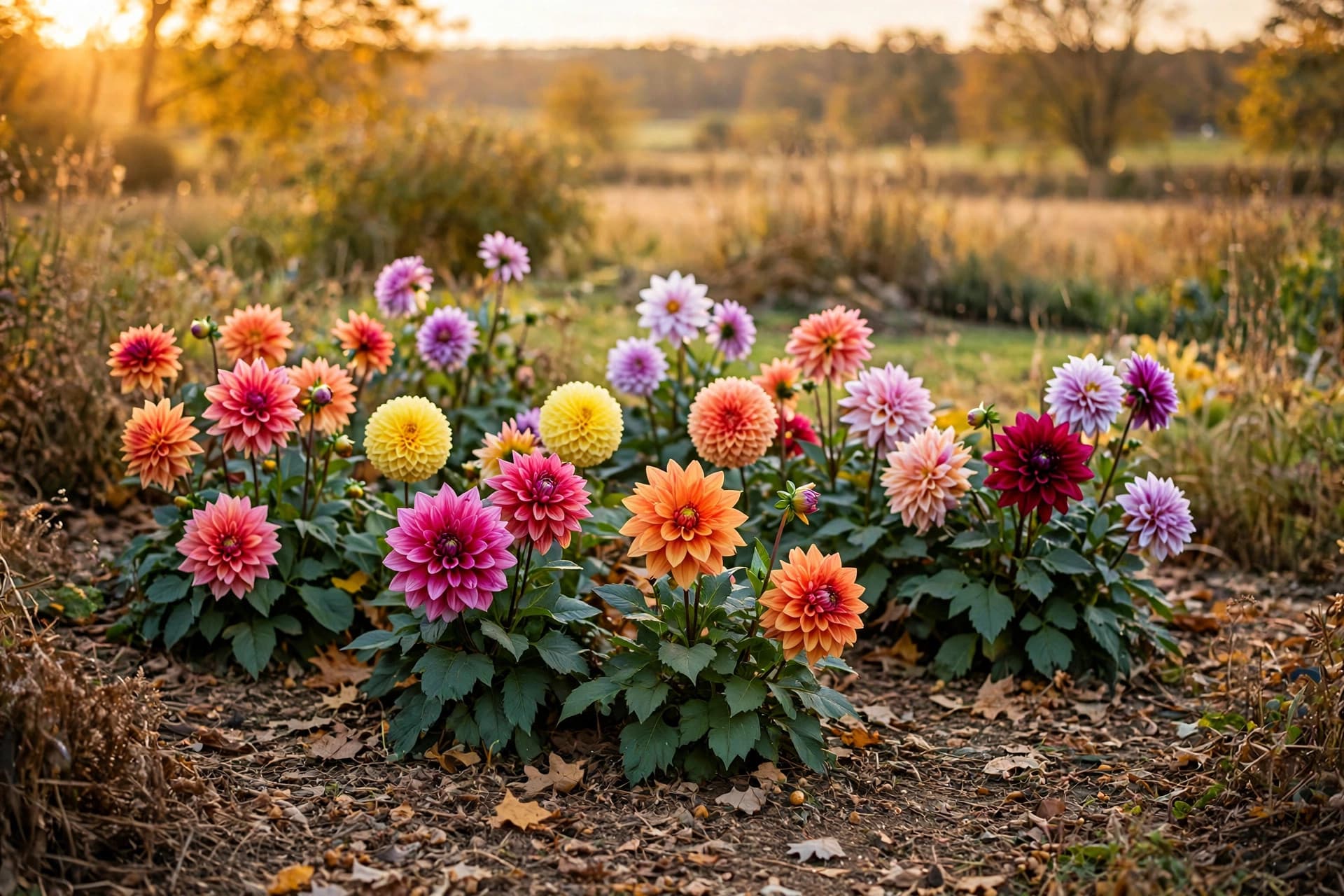

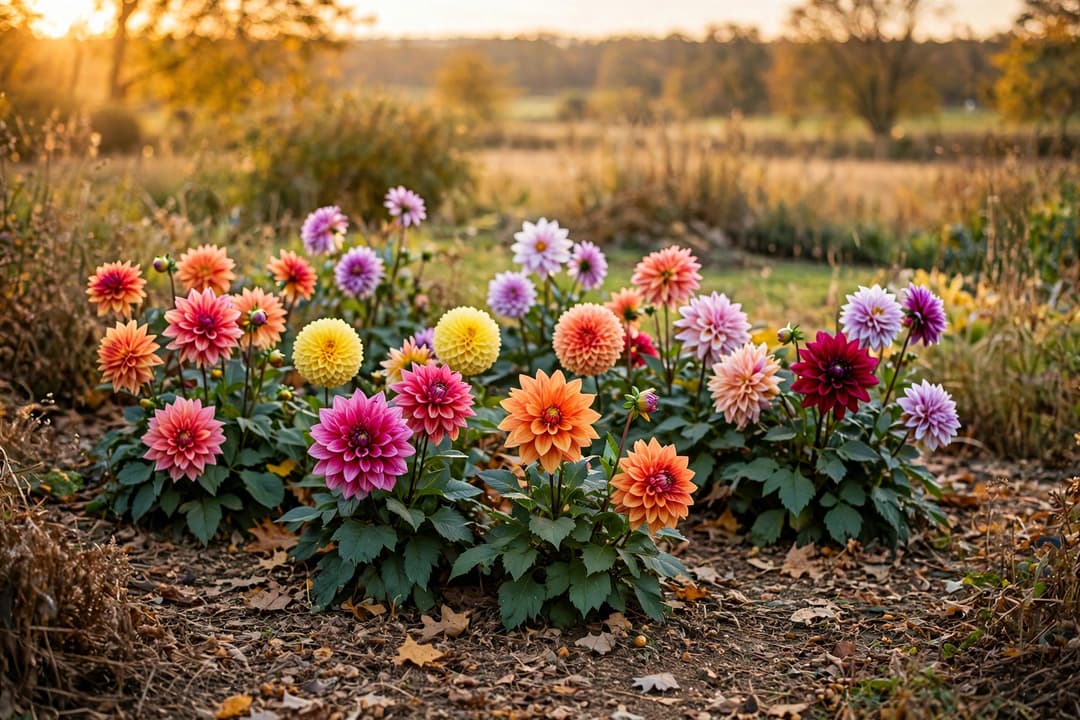
Dig them once tubers have matured, after the first frost blackens the foliage, but before a hard freeze can damage the tubers — and in mild-winter zones, you may not need to dig at all. That is the short answer, and the rest of this article is about getting the details right, because the two mistakes that kill stored dahlias are digging too early, while the tubers are still soft and unfinished, and storing them somewhere that freezes or stays wet. NC State Extension puts the hardiness line plainly: dahlias are herbaceous perennials in the aster family (Asteraceae), native to Mexico, Central America, and northern South America, and garden dahlias are mostly hybrids of mixed parentage (Dahlia spp.), and their tuberous roots can be injured at temperatures below 25 degrees Fahrenheit. University of Connecticut Extension adds the cultural hook: dahlias are Mexico's national flower, and gardeners who want to save them for replanting next year must dig the tuberous roots up and store them over winter.
Sophie: "Wait — are dahlia tubers bulbs? I keep calling them bulbs."
Sprouty: "Not quite — they are tuberous roots, a swollen root cluster, not a true bulb. It matters at dividing time: every piece you save needs a bit of crown attached, or it will never sprout, no matter how healthy it looks."
First, Decide: Dig, Mulch, or Treat as an Annual?
Your zone decides the job, not your enthusiasm. NC State Extension gives the rule in one sentence: to grow dahlias as perennials in zones below 7, dig up the tubers in fall, dry them carefully, and store them in vermiculite or dry sand at 35 to 45 degrees Fahrenheit; in zones 7 to 10, mulch over in winter. Planting depth at replanting is 3 inches, per the same guide. That means a gardener in zone 6 or colder is digging, full stop, while a gardener in zones 7 to 10 has a genuine choice — mulch in place and accept some winter risk, or dig anyway for certainty. Penn State Extension adds a caution that applies even in milder ground: heavy freezing and winter rains can promote rotting, especially in zones 6 and lower, and leaving tubers in the ground outside the mulch-over zones is a gamble, not a plan. If your variety is irreplaceable, dig it regardless of zone — mulch is a bet, storage is a plan. And if you have no cool storage space at all, the honest third option is treating dahlias as annuals and buying fresh tubers in spring; a tuber stored in a warm room or a freezing garage is worse than no tuber at all.
When to Dig: After Frost Blackens the Leaves, Before a Hard Freeze
The signal is the foliage, not the calendar. UConn Extension advises waiting until a frost blackens the foliage, then, if possible, waiting a week so any carbohydrates left in the above-ground tissue can make their way to the roots for good sprouting next spring. Iowa State University Extension gives the same sequence with numbers: cut back the plants to within 2 to 4 inches of the ground within three or four days of a killing frost, leave the dahlias in the ground for an additional six or seven days to cure, then dig. The other end of the window matters just as much: dig before a hard freeze can damage the roots, and before the ground freezes solid, which makes clean lifting impossible. Penn State Extension notes one more timing fact: dahlias need to be in the ground for at least 120 days to produce mature tubers for storage, and while it is unnecessary to wait for the first frost, waiting until after it lets you enjoy every last bloom — in zone 5b, typically the second to third week of October. So if your plants went in late and have not had 120 days, temper expectations: the tubers may be small and store poorly, whatever you do.
How to Dig and Divide: Neck, Crown, Eye — All Three or It Will Not Sprout
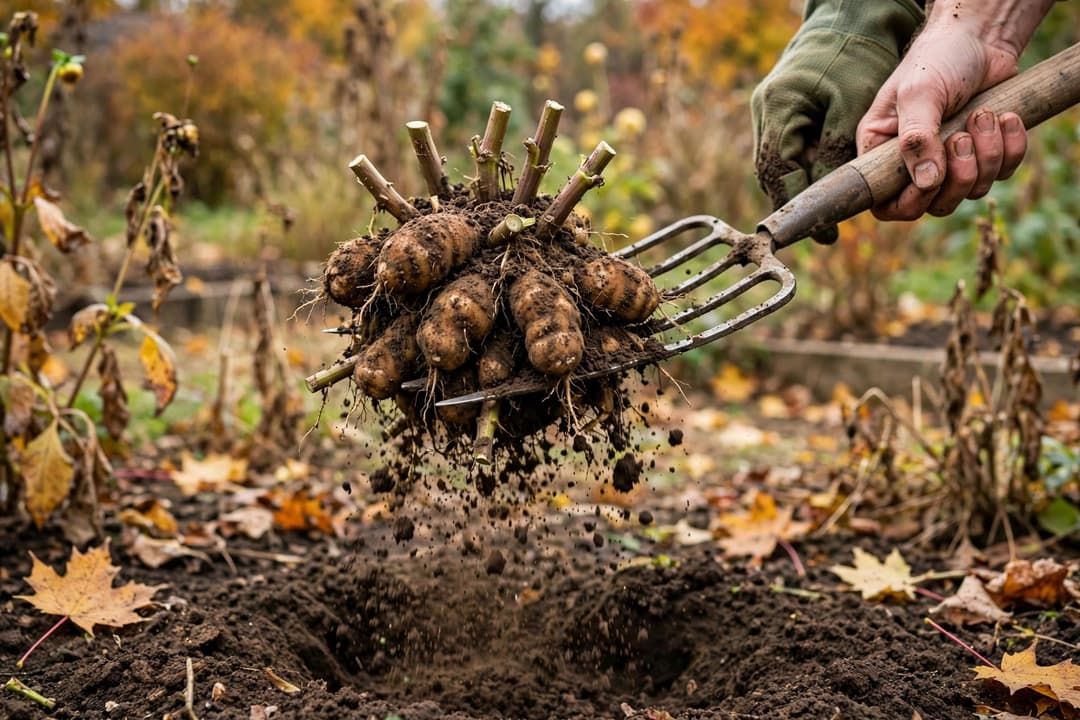
Label first, dig second. UConn Extension warns to note variety names before digging — if tags were not written out at planting, make them now, while color and flower type are still identifiable — then cut stems back to 2 or 3 inches and dig carefully starting at least 8 inches away from the crowns so tubers are not sliced or speared, using a spade or pitchfork. Penn State Extension describes the same lift: cut the stalk down to where the clump can be carried, work it out with a pitchfork, and shake or hose the soil off. Dividing is where beginners lose next year's plants. Penn State's rule is exact: viable tubers are always attached to the old stalk, and each tuber must have a neck and a crown to get a viable eye; necks thinner than a pencil will probably dry out by spring. A tuber with no eye is a blind tuber — it may look perfect and will never sprout. Penn State divides in fall — the tubers are more manageable to cut then, though she notes she loses some eyes that way, while they are easier to store; UConn prefers the opposite, leaving the whole clump together and separating it before planting next spring, when multiple buds or eyes can be seen. Both are defensible — pick fall dividing if storage space is tight, spring dividing if you are unsure what an eye looks like yet. Either way, trim the roots: Penn State notes that not trimming them can retain too much moisture.
Drying and Storing: Cool, Dark, Dry — and Checked, Not Forgotten
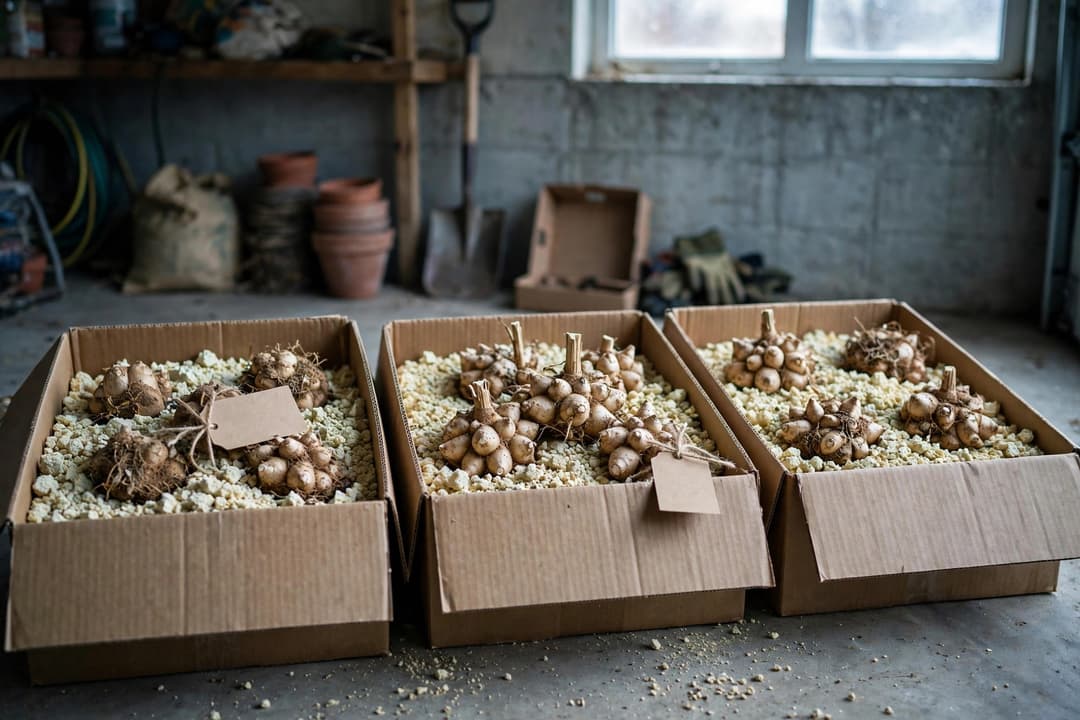
Drying is not optional, and sources disagree on how long — which tells you to judge by the tuber, not the clock. Iowa State says wash the clumps, allow them to dry for 24 hours, then place them upside down in cardboard boxes covered with vermiculite, peat moss, or wood shavings, and store in a cool (40 to 50 degrees Fahrenheit), dry location. Penn State hoses soil off too, but dries for four or five days out of the sun, having found that 24 to 48 hours left tubers more prone to rot. NC State takes the other school for below-zone-7 storage: dry carefully and do not wash. UConn splits the difference from experience: it shakes dried soil off rather than hosing, and notes that if soil is washed off, the tubers should most likely be stored in lightly moistened peat moss or other slightly damp material so they do not desiccate. The practical synthesis: if you wash, dry longer (several days, out of sun, until skins feel dry) and store in a slightly moist medium; if you do not wash, dry briefly and store in dry medium. Storage temperature across sources lands in the same neighborhood — NC State 35 to 45, Iowa State 40 to 50, UConn 45 to 55, Penn State 40 to 50 degrees Fahrenheit — so aim for a frost-free spot around 40 to 50 degrees, off cement floors (Penn State warns concrete draws moisture), with airflow: Penn State uses plastic bins with holes drilled in the sides and does not click the lid shut. Then check: UConn says every 2 to 3 weeks for decay or desiccation, with a sparse sprinkle of water once or twice a month if tubers stored in pots with soil are shriveling; Penn State checks after a few weeks and changes the shavings if they feel moist, since the first month is when excess moisture causes trouble. Discard anything soft, mushy, or moldy — rot spreads in a closed box. Note the one conflict: Iowa State stores clumps in cardboard boxes, while Penn State warns against cardboard, newspaper, and paper bags because they wick moisture — if you use cardboard, check the medium more often and switch containers if it stays damp.
California, Honestly
California does not have one dahlia winter, and the zone rule above is your guide, not a statewide verdict. Under NC State's zones 7 to 10 mulch-over rule, much of coastal and lowland California can leave tubers in the ground under mulch — but the foothills are the exception that proves the rule: if your foothill garden gets regular frost most winters, it sits on the cold side of that choice — and winter rain on top of cold is the rot combination Penn State warns about. If your winters stay frost-free and your soil drains freely, mulch over and skip the digging. If frost visits your yard most winters, dig — a frost pocket is not a coastal patio, and one hard freeze can finish tubers that a mild-winter garden would carry through. Let your own forecast and your own yard's frost history decide, not a date from another climate.
Starting Again in Spring
Stored tubers are not finished until they are back in the ground. UConn Extension says tuberous roots can be set into beds usually by late April unless unseasonably cold weather is predicted — and the general tender-perennial rule from Iowa State is to plant outside after the last frost, or pot up indoors in late winter or early spring for a head start. In spring, divide any clumps you stored whole, keeping one eye per piece, and plant with the crown about 3 inches deep per NC State. Do not rush the return: one late frost undoes a winter of careful storage, and plant into warm, drained soil, not cold and wet ground.
Frequently Asked Questions
Can I dig dahlias before the first frost?
Yes, but you trade blooms and tuber maturity for safety. Penn State notes it is unnecessary to wait for frost, but the tubers need at least 120 days in the ground to mature. If a hard freeze is forecast before your foliage blackens, dig now — a slightly immature tuber beats a frozen one.
What if I missed the window and the ground is already frozen?
Wait for a thaw rather than forcing frozen clumps out — lifting from frozen soil risks snapping necks, and a tuber without its neck and crown will not sprout. Tubers that froze solid in the ground are likely lost; check after thawing and discard anything soft, mushy, or moldy.
Why did my stored tubers shrivel or rot?
Shriveling means too dry — storage too warm, medium too dry, or thin necks that were never going to make it. Rot means too wet — insufficient drying, a sealed lid, or a medium that stayed soggy. The fix is the regular checks UConn and Penn State both insist on: catch either problem in the first month, while the rest of the box can still be saved.
Do I have to divide every year?
No. A clump can be stored whole and divided in spring when eyes are visible, per UConn. Dividing yearly multiplies your plants and keeps clumps manageable, but a whole clump stored well should bloom fine — division is propagation, not survival.