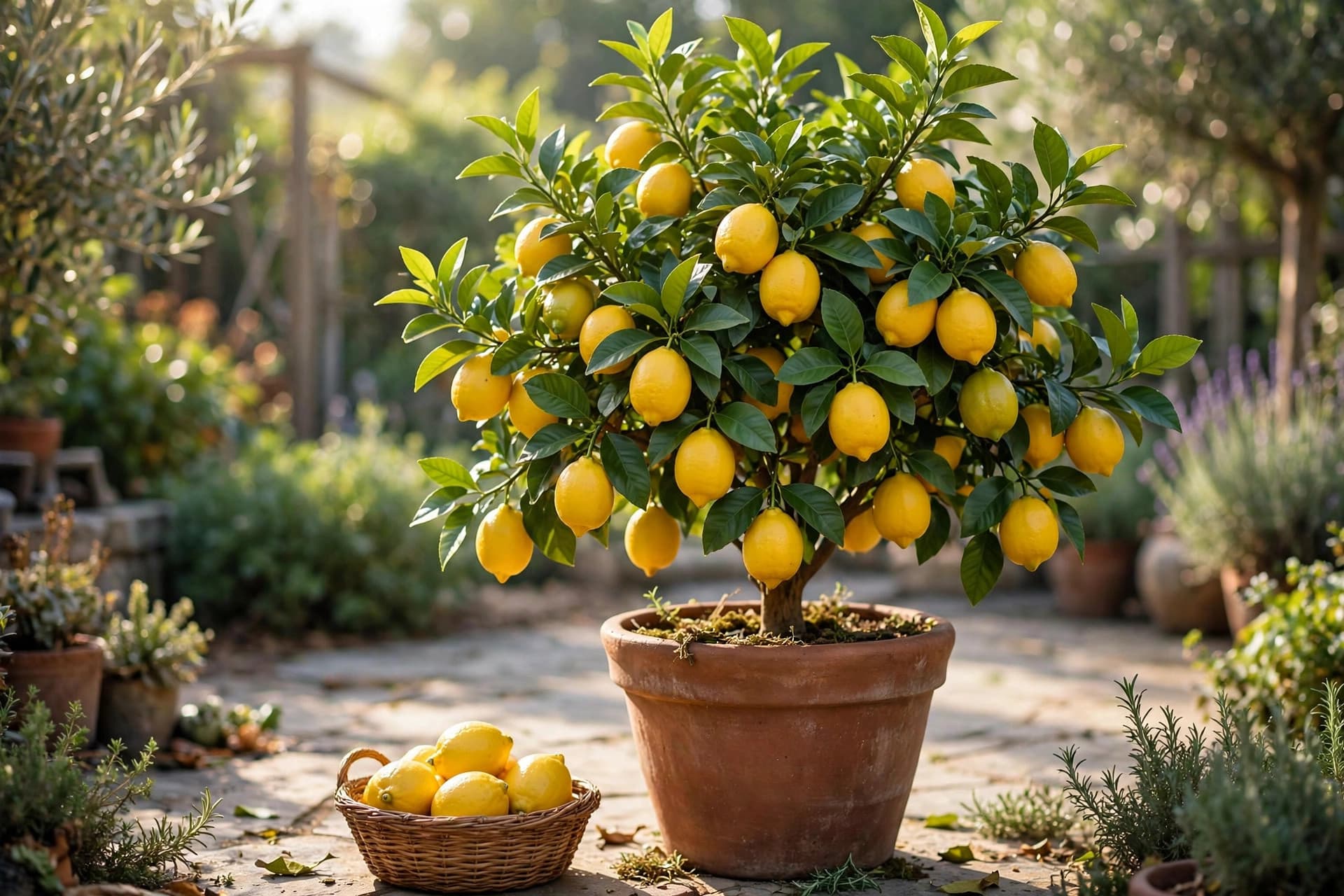

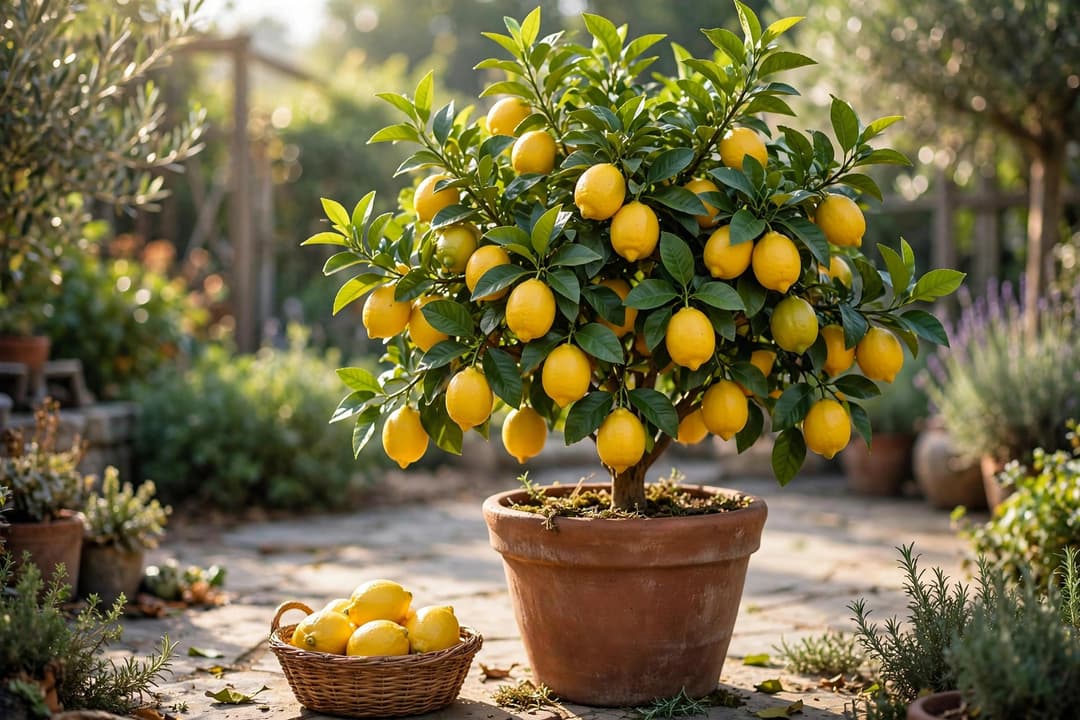
Yes — and a pot is the easiest way to do it. A grafted Meyer lemon (Citrus × meyeri) grown in a container will fruit at home in most climates: it needs a large pot with drainage, at least six hours of sun a day, a citrus fertilizer through the growing season, and winter shelter where frost bites (Penn State Extension). The tree is self-pollinating, so one tree is enough (Penn State Extension). Lemons take about six months from blossom to ripe fruit (Ask Extension) — plant this fall, and next year's lemonade is already on the calendar.
This guide is the companion to a small milestone: our 100th SproutySpeaks video, in which Sprouty brings Sophie a lemonade in the garden she spends all day caring for. Thank you for growing with us through a hundred videos.
Watch Sophie & Sprouty's 100th Video
She cares for every plant — but today, Sprouty cares for her. Our 100th video, with lemonade.
Sophie: (Watering can in hand, mid-round of the whole garden) "Every plant in this garden gets a drink before I do."
Sprouty: (Carrying a glass of lemonade with both hands) "Not today. Today the garden's expert says the gardener sits down first."
🍋 On-Screen Lesson: Grow a Meyer lemon in a pot — 6+ hours of sun, deep water when dry, citrus food spring to fall — and the harvest pours the lemonade.
Why the Meyer lemon is the home grower's lemon
The Meyer is a cross between a lemon and a mandarin orange, which makes it naturally sweeter and less sharp than a store lemon — lemonade from Meyers needs noticeably less sugar (NC State Extension). It is also a naturally smaller tree, and dwarf trees grafted onto size-limiting rootstocks are bred for container life and fruit sooner than standard citrus (LSU AgCenter). Buy a grafted tree from a reputable grower, not a seedling: a grafted four-foot tree can bloom within weeks of arriving, while a seed-grown lemon can take years to fruit (Penn State Extension).
The pot, the soil, the spot
Start in a 5-gallon pot and step up as the tree grows — doubling to roughly 24 inches across at the next repot rather than jumping to the biggest container you own (LSU AgCenter). A mature container lemon settles happily in a 10–15 gallon pot with drainage holes, and trees appreciate fresh soil about every three years (Ask Extension). Use a well-draining potting mix, and plant with the trunk flare — where the roots begin — above the soil line (Ask Extension). Burying the flare is the quiet killer of young trees, in pots and in the ground alike.
Then give it the sunniest spot you have: six to eight hours of direct sunlight is the range extension guides converge on for real fruit production (LSU AgCenter; Penn State Extension). Indoors, that means an unobstructed south-facing window, and rotating the tree every few weeks so all sides get their turn (Ask Extension).
Water and food: consistency is the whole game
Container citrus dry out far faster than in-ground trees. Water deeply when the soil has dried slightly — until water runs from the drainage holes — then let it dry again; citrus resent sitting in soggy soil (LSU AgCenter). The pattern matters more than the schedule: a tree that perks up within a day of watering was simply thirsty, while leaves that stay yellow or cupped after watering point to roots that are too wet, not too dry.
Feed with a fertilizer made for citrus — high in nitrogen, around a 2-1-1 ratio — during the active growing season (Penn State Extension). Ask Extension's cadence: a high-nitrogen fertilizer three to four times a year, starting in late winter (Ask Extension). LSU AgCenter agrees on the window — spring through early fall — and is explicit about the stop: no fertilizer in late fall and winter, when growth slows (LSU AgCenter).
Flowers, fruit, and the honest wait
Meyer lemons are self-pollinating (Penn State Extension), but outdoors insects do the carrying; a tree flowering indoors needs you to play bee — gently brush the blossoms with a small, soft paintbrush (Penn State Extension; NC State Extension). Some blossom and small-fruit drop is normal and not a failure: the tree keeps what it can feed. Help it choose by thinning fruit clusters to one or two fruits — the remaining lemons grow larger and healthier (NC State Extension).
Then wait. Lemons take about six months to develop and ripen (Ask Extension), and a Penn State grower's potted Meyer took ten months from spring purchase to three perfect ripe lemons — a timeline worth hearing before you plant, not after (Penn State Extension). Prune lightly for airflow and shape, remove growth below the graft, and let the tree get on with it (NC State Extension).
Winter, honestly, by zone
Meyer lemons are hardy to about 22°F, which still means winter protection almost everywhere (Penn State Extension). Below zones 8b–9a, the tree belongs in a container precisely so it can come inside for the winter (NC State Extension). Bring it in gradually — sudden temperature change is a classic cause of fruit drop — give it your sunniest window, and expect it to want humidity, not dry heating-vent air (Penn State Extension). In zone 9b, like our Northern California foothills garden, a potted Meyer can live outside most of the year and roll under shelter for the coldest nights — which is exactly why the pot earns its keep.
From tree to lemonade
Pick when the fruit is fully yellow, heavy for its size, fragrant, and gives very slightly under a squeeze — lemons ripen on the tree, not on the counter. For a classic pitcher: roughly one cup of fresh lemon juice (about 6–8 Meyer lemons), one cup of water whisked with three-quarters of a cup of sugar until dissolved, then three more cups of cold water and ice. Because Meyers are part mandarin, start with less sugar than a store-lemon recipe calls for and adjust — most people land lower. The first glass from your own tree will taste sweeter than the recipe explains.
Quick answers
Can I grow lemons in a pot in a cold climate? Yes — that is the entire point of the container: sun outside in summer, a bright window inside in winter (Penn State Extension; NC State Extension).
How long until my Meyer lemon fruits? A grafted tree can bloom within weeks and fruit within the first year; a ripe lemon takes about six months from blossom (Penn State Extension; Ask Extension).
Why is my tree dropping blossoms and baby fruit? Usually water or temperature swings: keep watering consistent, and move the tree in or out gradually when seasons change (Penn State Extension; Ask Extension).