
🍂 Fall Gardening Guide
September–November · Fall is the gardener's second spring — cooler temperatures, reliable rain, and one last chance to set your garden up for a spectacular year ahead. Don't put away those tools yet.

🌱 Sprouty's Fall Reminder
All gardening is local! These tips are general guidelines — always check your specific USDA hardiness zone and local frost dates for the most accurate planting schedules.
Plant Spring Bulbs
⏱ Early–Mid Fall — once soil cools below 60°F, before the ground freezes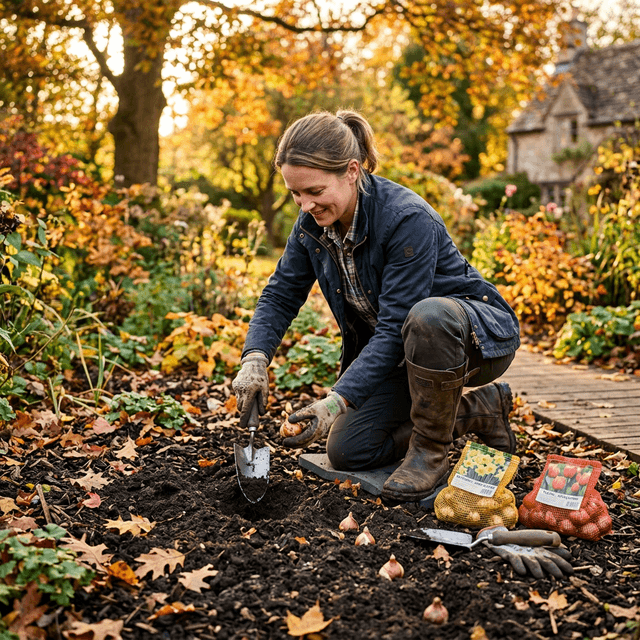
Planting spring bulbs in fall is one of gardening's great acts of optimism — pressing a papery bulb into cold soil and trusting it will reappear in glorious colour months later. The good news: bulbs are nearly foolproof, and a single autumn afternoon of planting will reward you with weeks of spring colour.
Bulbs need a cold winter to bloom, plus a few weeks to grow roots before the ground freezes. Plant once the soil at planting depth stays below about 60°F — late September through October in much of the country, November or later in the South. A cheap soil thermometer takes the guesswork out.
The rule of thumb: plant 2–3 times as deep as the bulb is tall. Large bulbs like tulips and daffodils go about 6–8 inches deep; small ones like crocus and grape hyacinth about 3–4 inches.
All bulbs should be planted with the pointed tip facing upward. If you can't tell which end is up on small bulbs (like crocus), plant them on their side — they'll find their way.
Bulbs rot in waterlogged soil. Pick a spot that drains well, or plant in a raised bed. Don't add a layer of sand or gravel to the bottom of the hole — it doesn't fix drainage — and avoid overwatering after planting.
Try the "lasagna" method: plant large bulbs (tulips, alliums) deep, then layer smaller bulbs (crocus, grape hyacinth) above them in the same hole. They bloom at different times, extending the season. Cover the whole hole with soil.
Use small stakes or bamboo skewers to mark bulb locations so you don't accidentally dig through them in spring. Label with the variety name so you remember what to expect.
| Timing | What to Start |
|---|---|
| Early Fall (Sept–Oct) | Alliums, Fritillaria (need earliest planting) |
| Mid Fall (Oct–Nov) | Tulips, Daffodils, Hyacinths, Crocus |
| After First Rains (Oct–Nov) | California native bulbs (Brodiaea, Triteleia, Dichelostemma) — wait for autumn rains; summer-style water rots dormant corms |
| Late Fall (Nov–Dec) | Warm-winter areas: plant pre-chilled tulips and hyacinths |
| From purchase (zones 8+) | Keep tulips and hyacinths in the fridge until planting, away from fruit |
| Spring (after bloom) | Let foliage yellow fully before cutting — feeds next year's bloom |
📍 Zones 8–10: tulips and hyacinths need refrigerating before planting — keep them in a ventilated bag in the fridge from purchase until planting in November–December, at least 6–8 weeks, and away from fruit, whose ethylene gas can stop them blooming. For California native bulbs (Brodiaea, Triteleia), purchase early but store cool and dry; never plant into warm soil with summer irrigation — wait until the first autumn rains awaken them naturally.
Extend the Season with Row Covers & Cold Frames
⏱ Early Fall — before first frost threat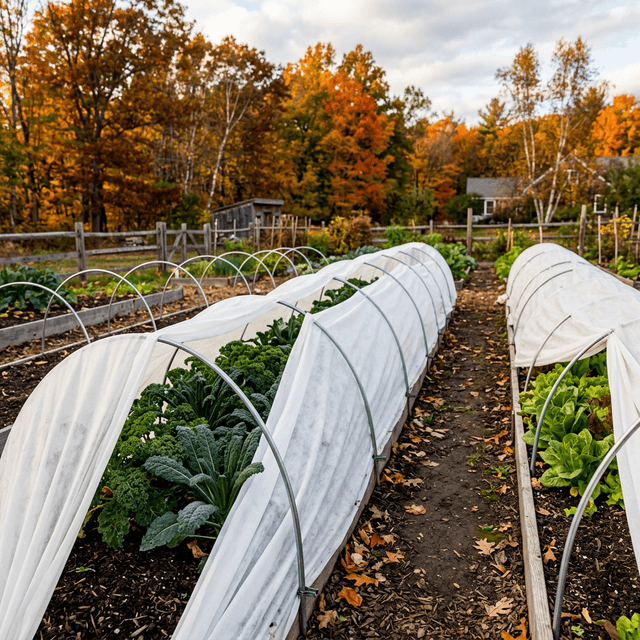
The first frost doesn't have to end your harvest. A layer of floating row cover adds a few degrees of frost protection, and a cold frame can keep hardy greens growing into December or even January in many climates. Season extension is one of the highest-ROI skills in vegetable gardening.
Your "average first frost date" is a statistical 50% probability — there's a 50/50 chance of frost before that date. Monitor your local 10-day forecast from late September and be ready to cover crops at 36°F (just above frost).
Bend ½-inch PVC pipes into hoops over your bed, spaced 2 feet apart, and drape floating row cover fabric over them. Set this up before temperatures drop so you're ready to deploy instantly when a frost warning comes.
Depending on its weight, row cover gives roughly 2–8°F of frost protection — lightweight fabric mostly blocks wind, heavier fabric holds more warmth. It works best on still nights; anchor the edges so wind can't lift it, and add a second layer on the coldest nights.
Cold nights make hardy crops like kale and spinach build up sugars, so they taste sweeter after frost. If leaves are frozen in the morning, wait until they thaw on the plant before you pick — frozen leaves bruise and turn mushy.
Even late into fall, a sunny day inside a covered tunnel can reach 90°F+, wilting and even burning plants. Open ends or lift covers on any day above 50°F to prevent overheating.
| Crop | When to harvest | Cold hardiness (approx.) |
|---|---|---|
| Kale, Collards | After frost (sweeter) | Survives to 20°F unprotected; row cover extends to 10°F |
| Spinach | Harvest young leaves | Hardy to 20°F; cold frame can keep it growing all winter in zones 6+ |
| Lettuce | Before hard freeze | Hardy to 28°F unprotected; needs row cover below that |
| Carrots | After hard frost (sweeter) | Leave in ground with heavy mulch; dig as needed through winter |
| Swiss Chard | Before hard freeze | Hardy to 28°F; use row cover to extend |
| Arugula | Young, before bolting | Very cold-hardy under row cover, nearly year-round in mild climates |
Clean Up Garden Beds Strategically
⏱ Mid–Late Fall — after first frost through leaf drop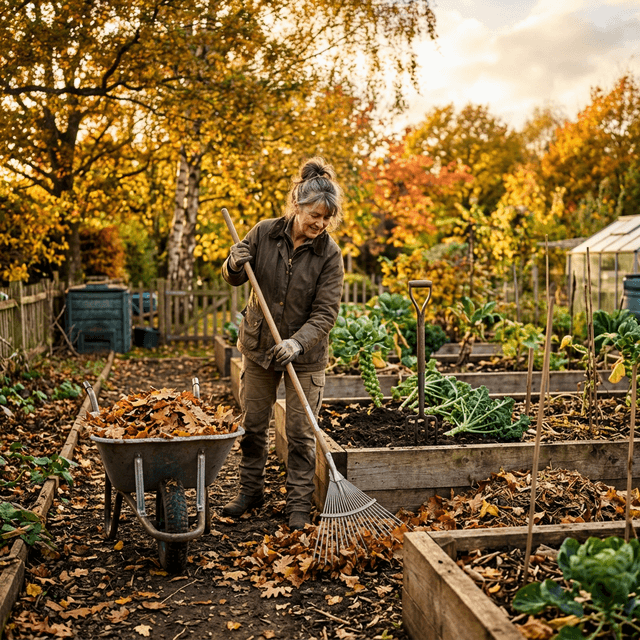
Fall cleanup is not a binary "clean everything" or "leave everything" choice. The modern approach is strategic: remove what harbours pests and disease, leave what benefits wildlife and next year's garden. Here's how to tell the difference.
Any plant showing signs of blight, rust, or wilt should stay out of the home compost pile. Most home piles don't get hot enough, evenly enough, to kill plant pathogens, so disease cycles straight back into next spring's beds. Bag diseased debris for municipal green-waste or trash collection instead.
Tomato, pepper, squash, and bean plants are done for the season. Pull them root and all so pests and diseases have less to overwinter on, and compost only the healthy ones.
Echinacea, rudbeckia, sunflowers, and ornamental grasses with seedheads are a critical winter food source for goldfinches, sparrows, and other birds. Leave them until late February/March when natural food becomes available again.
A thin layer of shredded leaves is excellent free mulch and earthworm feed. Run your mower over fallen leaves until they're dime-sized pieces, then leave them on the lawn or rake onto beds. A thick mat of whole leaves can smother grass — only shredded leaves are beneficial.
Hollow-stemmed perennials (echinacea, rudbeckia, bee balm) provide overwintering habitat for native bees. Leave them standing until spring. Hostas, daylilies, and ornamental grasses can be cut back to prevent slug habitat in spring.
Fall is the perfect time to redefine bed edges with a half-moon edger. Crisp edges make spring cleanup easier and give beds a defined, attractive shape all winter.
Never give lilacs, forsythia, or azaleas a "fall haircut." Their flower buds formed over summer on old wood — pruning in September or fall cuts off next May's flowers. Save shaping cuts for right after spring blooms fade.
Red tip photinia (Photinia × fraseri) is best pruned in winter while it's dormant. Fall pruning pushes tender new red leaves that are very prone to Entomosporium leaf spot, which spreads in cool, rainy weather. Rake up and remove spotted fallen leaves now instead.
Sweet potatoes are tropical perennials that cannot tolerate frost. Once freezing temperatures blacken and kill the vines, decay organisms travel down dying stems into the storage roots within days. Dig tubers carefully the same day frost strikes to save your crop from rot.
In interior California valleys (Davis, Sacramento, San Joaquin), second-crop seed potatoes must be in the ground during the first two weeks of September. Waiting past mid-September means vines won't develop enough canopy before cold weather and winter frost halt tuber formation.
While fall brassica transplants and lettuce go in early, direct-sown spinach (Spinacia oleracea) requires cool soil to germinate. In Yolo County and the inland Sacramento Valley, baking 80°F+ early-September soil triggers thermodormancy (heat dormancy) and rot. Wait for the last two weeks of September when nighttime temperatures moderate and topsoil cools to 50–68°F for rapid, uniform emergence.
Non-native tropical milkweed (Asclepias curassavica) doesn't die back naturally in mild winters, creating an ecological trap where deadly Ophryocystis elektroscirrha (OE) parasites accumulate on evergreen foliage and disrupt monarch migration. In mid-September, cut tropical milkweed down to the ground (disposing of cuttings in the municipal trash, never compost) or pull it completely and swap in California native milkweeds like narrowleaf milkweed (Asclepias fascicularis).
Cutting back still-green herbaceous peony foliage in August or September starves underground storage roots of the photosynthesized carbohydrates needed to assemble next year's flower buds. Wait until after a killing freeze completely destroys and browns the foliage, then cut stems down near ground level (and discard foliar debris to prevent Botrytis fungal blight).
Resist the urge to shear spent garden mums down to stubs during fall cleanup. Leaving old stems standing buffers the crown through freeze–thaw cycles, traps protective snow and loose mulch, and dramatically improves overwinter survival. Wait to cut stems down near ground level until early spring when fresh green basal shoots appear.
When a cold snap browns palm fronds, resist the tidy lopper impulse. Brown and scorched fronds form an essential thermal blanket shielding the single apical growing point (the palm's heart) from subsequent hard freezes. Leave damaged fronds intact until all freeze risk has passed and vigorous new green spear growth emerges in spring.
Resist heading back leafy persimmon branches during autumn. Japanese persimmons (Diospyros kaki) produce fruit from mixed buds formed near the tips of current-season wood. Heading cuts on a living, leafy fall canopy remove next year's most productive terminal buds and disrupt cold acclimation. Wait until late winter when the tree is fully dormant and bare to make selective thinning cuts.
Resist the urge to shear back flowering lantana shrubs in autumn. Lantana produces vibrant flower heads continuously through fall until frost halts growth. Pruning in September or autumn chops off this season's flower show, deprives pollinators of late nectar, and stimulates tender new growth vulnerable to freeze injury. Put the pruners down until late winter or early spring when danger of frost has passed and new basal growth emerges.
Never leave fallen or blighted camellia blooms to rot under shrubs. Petal blight (Ciborinia camelliae) forms resilient resting structures (sclerotia) in infected flower calyxes that drop into soil and mulch, persisting in the soil for several years to reinfect future blooms. Collect dropped flowers immediately and dispose of them in municipal yard waste or trash (never compost into camellia beds), and maintain a 4-inch layer of clean mulch to suppress spore release.
Amend Soil & Plant Cover Crops
⏱ Early–Mid Fall — immediately after clearing beds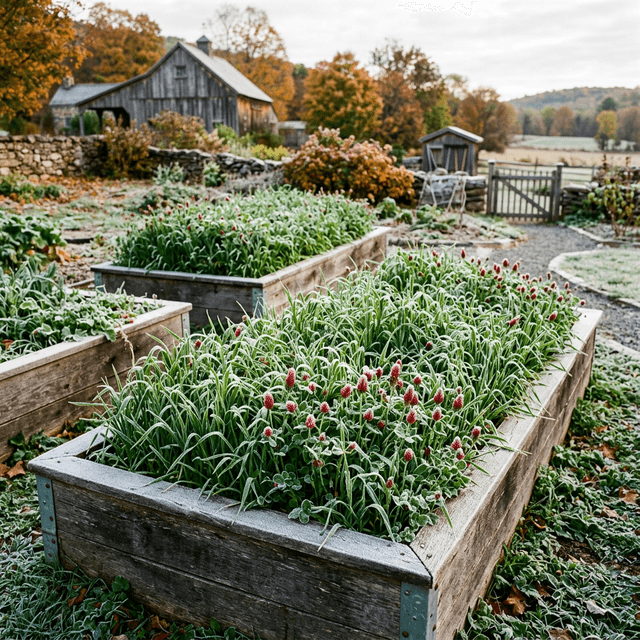
What you do with bare soil in fall determines how good your spring garden will be. Leaving soil bare over winter means erosion, structural breakdown, and massive weed pressure in spring. A cover crop or deep compost layer protects and feeds your soil while you're inside planning next year.
As soon as you remove a crop, spread 2–3 inches of finished compost over the bed. This feeds soil microbes and earthworms over winter, so by spring you have biologically active, crumb-structured soil ready to plant.
Fall is the ideal time to apply lime (to raise pH) or sulfur (to lower pH) because they work slowly, over several months. Test first so you only add what the soil needs, then apply in fall so the change is underway by spring.
Cover crop seeds germinate best in soil above 50°F — usually through early October in most zones. Broadcast seed over bare beds, rake lightly to cover, and water in. They establish over fall and resume growth in early spring.
While cold-hardy winter rye can be sown late into November, Daikon radish requires 6–8 weeks of warm early-autumn weather to grow its massive, soil-busting taproot. Sowing in September or early October allows the taproot to drill 12–18+ inches into heavy subsoil and scavenge nitrogen. Waiting until November leaves you with tiny pencil-sized roots that fail to break compaction.
Mow or till cover crops under 2–3 weeks before you want to plant in spring. This gives them time to decompose. For no-till gardens, crimp or mow to kill and leave as mulch — transplant directly through the dead mat.
If you're not planting a cover crop, layer leaves, straw, or wood chips 3–4 inches thick over cleared beds. This prevents erosion, reduces compaction from winter rain, and insulates soil from freeze-thaw damage.
Never wait until soil chills to mulch active fall crops. Mulch acts as a thermal blanket: applying 2–3 inches of straw or shredded leaves while soil temperatures are still 55–65°F traps late-summer heat against chilly autumn nights. This extends active root expansion and nutrient uptake weeks beyond bare soil. Waiting until soil cools below 50°F only traps the cold and stalls growth.
| Cover crop | Why grow it | Seeding rate |
|---|---|---|
| Winter Rye | Fastest, hardiest cover crop; excellent weed suppressor | 2–3 lbs per 1,000 sq ft |
| Crimson Clover | Nitrogen fixer; attractive to pollinators; fixes 80–150 lbs N/acre | 1 lb per 1,000 sq ft |
| Hairy Vetch | Best nitrogen fixer; vigorous cold tolerance | 1–2 lbs per 1,000 sq ft |
| Daikon Radish | Deep taproot breaks compaction; winterkills, leaving open channels | 1 lb per 1,000 sq ft |
| Oats + Peas mix | Good weed suppression; winterkills cleanly in zones 5 and colder | 2–4 lbs mix per 1,000 sq ft |
| Composts (as topdress) | Feeds soil biology; improves structure over winter | 2–3 inches over bed |
Divide Perennials & Plant Trees/Shrubs
⏱ Early–Mid Fall — 6+ weeks before hard freezeFall is one of the two best planting windows of the year (spring being the other). Soil is warm, air is cool, and rain is reliable — ideal conditions for roots to establish with minimal stress. Everything planted in fall goes into spring with a head start over spring-planted specimens.
September is the ideal window to plant asters, coneflowers, sedums, bare-root peonies, and violas. Warm soil (above 55°F) fuels rapid root branching before ground freezes, while cool nights reduce transplant stress, so plants head into spring already rooted in.
Hostas, daylilies, irises, coneflowers, ornamental grasses, and sedums all benefit from division every 3–4 years. Dig up the clump, slice through the root mass with a sharp spade, and replant divisions at the same depth. They'll establish roots before freeze.
A tree planted in fall has 6–8 months of root development before it has to support a full canopy of leaves. Fall-planted trees experience significantly less transplant stress than spring-planted ones. Water well until the ground freezes.
Dahlias, cannas, calla lilies, elephant ears, and gladiolus won't reliably survive winter in the ground in zone 6 and colder. Within a few days after frost blackens the foliage, dig them carefully, let them dry for a few days, and store them in barely moist vermiculite, coir or peat in a cool (35–50°F), frost-free spot. Check monthly for rot or shriveling.
After the ground has frozen (not before — you don't want to trap warm ground and delay dormancy), apply 3–4 inches of straw or shredded leaves over new plantings. This prevents freeze-thaw heaving that lifts shallow roots out of the ground.
Garlic is planted in mid-fall, a few weeks before the ground freezes, and harvested the next summer. Break bulbs into individual cloves, plant 2 inches deep and 6 inches apart, pointed end up. Mulch heavily with straw. It's one of the most rewarding things you can grow.
Retail nurseries stock their premier native inventory (Ceanothus, Manzanita, sages, buckwheats) in September. Snap up your plants while stock is strong, but resist planting during lingering summer heatwaves. Potted natives planted into baking 85°F+ soil stall root expansion and rot when watered. Stage pots in dappled shade and wait to plant until daytime highs moderate in mid-to-late autumn.
While deciduous fruit trees thrive with fall planting, tender subtropicals like avocados and citrus are the critical exception. Young container nursery stock has tender green bark and shallow roots that cannot tolerate freezing temperatures (Hass avocados suffer tissue damage below 30°F). Putting an avocado in the ground in September leaves it exposed to winter frost before roots establish. Either hold potted trees in a sheltered microclimate to plant in spring after last frost (the safest route), or prepare rigorous freeze protection (a 4-stake frost cloth teepee, trunk wrap, and root mulch).
| Timing | What to Start |
|---|---|
| Early Fall (September) | Buy California natives early (stage in shade); hold potted avocados/citrus in sheltered microclimates; plant flowering perennials (asters, coneflowers, sedum, peonies) & violas; divide hostas and irises |
| Late September | Direct sow inland spinach & broccoli raab (wait for soil to drop below 75°F to avoid thermodormancy) |
| Mid Fall | Plant staged California natives once daytime heat breaks; plant garlic, spring bulbs; dig tender bulbs (after frost) |
| After first frost | Dig dahlias, cannas, elephant ears; pot up for storage |
| After ground freezes | Apply winter mulch to protect new plantings from heaving |
| Late fall/winter | Store tender bulbs; check monthly for rot |
📍 Plant garlic a few weeks before the ground freezes so cloves can root but not sprout much before winter.
Winterize Tools, Irrigation & Structures
⏱ Late Fall — before freezeA few hours of fall tool care will save you hundreds of dollars and hours of frustration next spring. Garden tools, irrigation lines, and structures all need end-of-season attention to survive winter in working condition.
Wash soil off pruners, loppers, and hoes with soapy water. Use a metal file or diamond sharpening stone to restore a clean bevel edge — sharp tools make cleaner cuts that heal faster and require far less effort. Wipe blades with an oily cloth to prevent rust.
Water left in garden hoses expands when freezing and cracks the rubber. Disconnect hoses from spigots, drain completely by hanging in a loop, and store coiled in a garage or shed. Leaving hoses attached to outdoor spigots can also freeze and burst the pipe inside the wall.
In-ground drip and sprinkler systems must be winterized before freeze. Use a compressor to blow compressed air through each zone until no water comes out. If you have a complex system, an irrigation company can do this for you.
Terracotta, ceramic, and concrete pots filled with moist soil will crack from freeze-thaw expansion. Empty and clean them, then store in a garage, shed, or basement. If pots are too large to move, tip them on their sides to prevent water collection.
Walk the garden now and look for loose fence panels, wobbly trellis posts, and cracked raised bed lumber. Fall repairs before snow cover are far easier than spring ones. Treat any bare wood with a penetrating oil or stain.
Run lawnmowers, tillers, and string trimmers until the fuel is depleted — stale fuel is the #1 cause of starting problems in spring. Clean blades, change oil, remove spark plugs and add a few drops of oil to the cylinder before storing.
Want this month's tasks for your ZIP? Open the Garden Calendar, or browse all four seasonal guides.

Join Sprouty's Garden Club 🌱
Get weekly gardening tips, seasonal planting reminders, and exclusive guides delivered straight to your inbox. No spam, just sprouts!