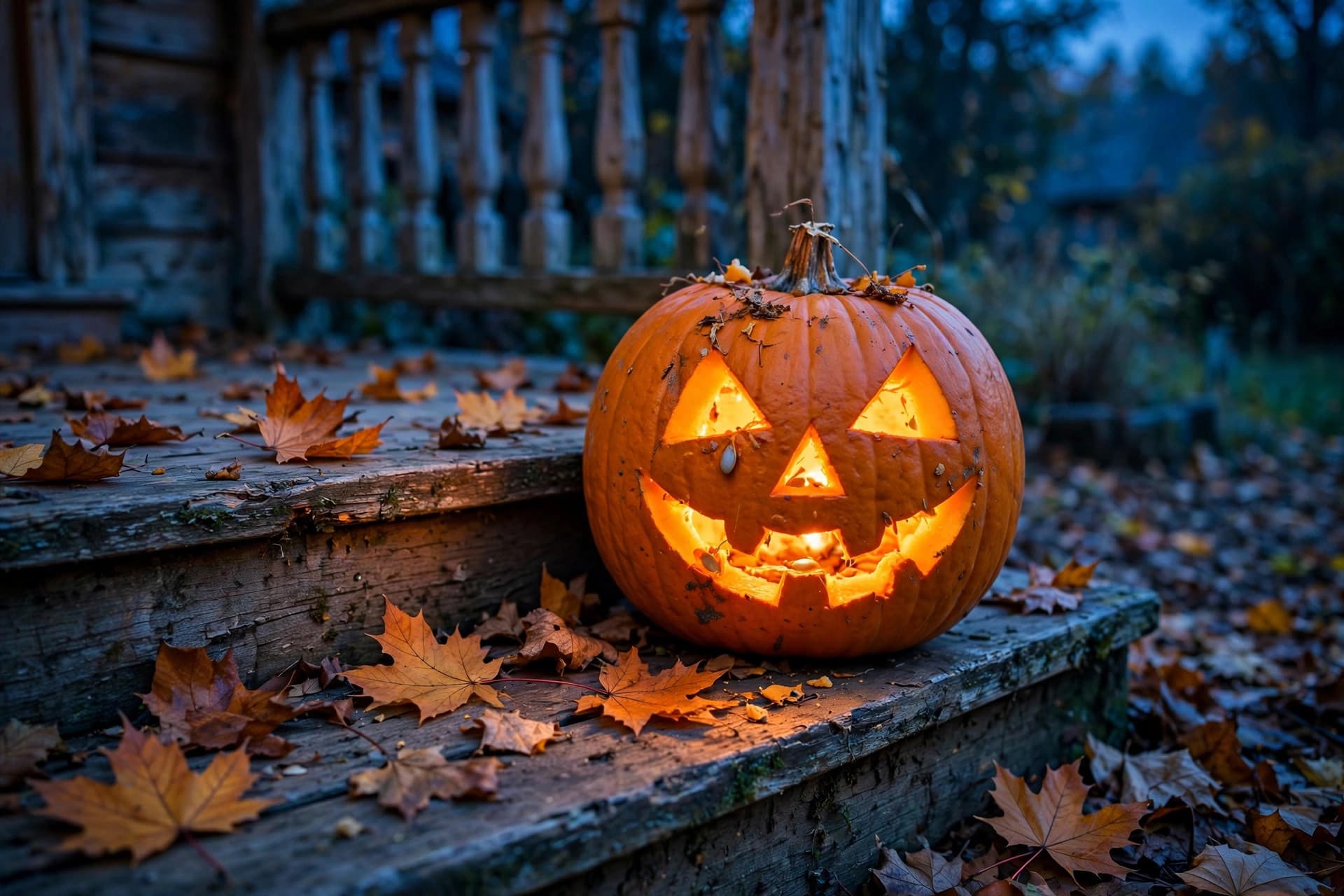

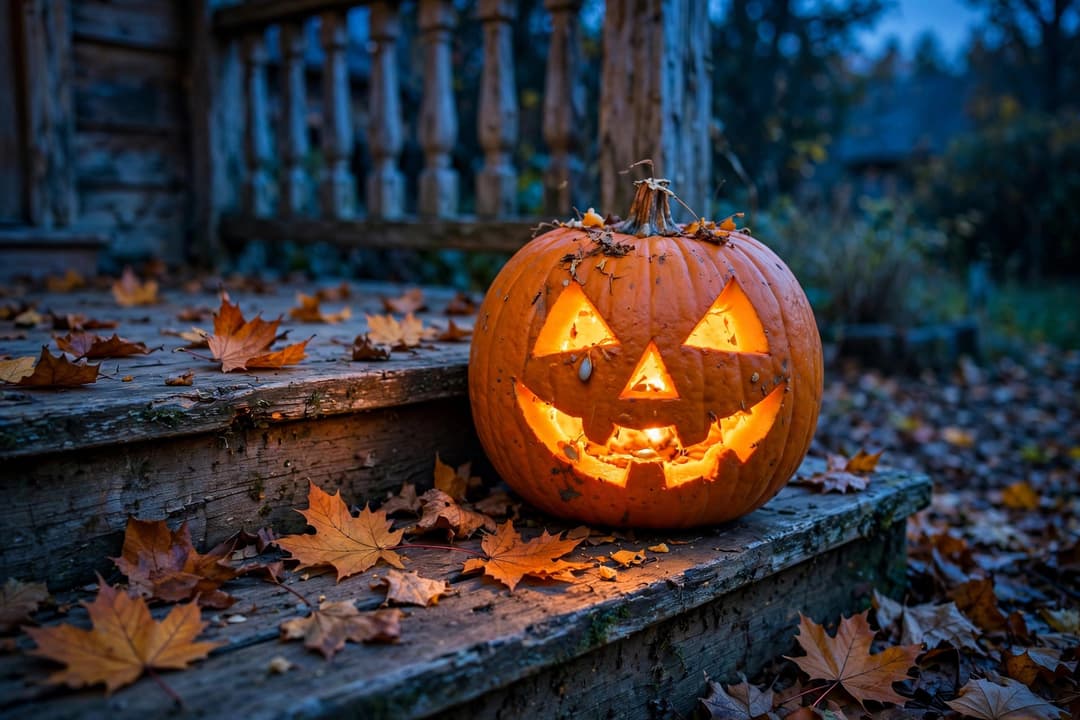
Carving your pumpkin 8 to 10 days before Halloween rather than weeks ahead is the single most critical decision you can make to prevent early rot, according to NC State Extension's 2022 guide. While an untreated jack-o'-lantern begins softening, withering, and decaying within 3 to 5 days per Utah State University Extension, combining a 10 percent bleach sanitizing spray, a protective petroleum jelly barrier on cut margins, a battery-powered LED light, and display temperatures between 50 and 60°F stretches carved longevity to 8 to 11 days.
Sophie: (Carving the pumpkin) "I spent an hour carving this grinning face, but every October my jack-o'-lantern turns into a fuzzy, sunken slump before trick-or-treaters even show up! What is the secret, Sprouty?"
Sprouty: (Inspecting the cuts) "Timing and moisture barriers, Sophie! Pumpkins are living tissue until broken open. Once sliced, airborne spores colonize exposed pulp within days unless sanitized, sealed against dehydration, and protected from heat."
🎃 On-Screen Lesson: Carve 8 to 10 days out, spray the cuts with bleach solution, seal them with petroleum jelly, and light it with an LED, never a candle.
Why your jack-o'-lantern rots so fast
Traditional carving field pumpkins belong to the botanical species Cucurbita pepo. While intact, the pumpkin's tough outer rind acts as an impermeable shield that holds in moisture and locks out external pathogens. The moment you pierce the rind, that defense is breached. Per Utah State University Extension, carving immediately exposes the moist, nutrient-dense interior flesh to opportunistic airborne mold spores. The primary fungi responsible for pumpkin decay include Cladosporium, Penicillium, Aspergillus, and Alternaria. In normal autumn conditions, these molds multiply rapidly across the moist inner cavity, causing an untreated jack-o'-lantern to wither, soften, and succumb to rot within just 3 to 5 days.
The extension-approved routine
- Pick a firm, blemish-free fruit: Choose a firm pumpkin with a sound, intact green stem and no soft spots or bruising. Bring outdoor pumpkins inside before the first hard autumn frost, as freezing weakens cell walls.
- Wait for the 8-to-10-day window: Do not carve weeks in advance. Wait until 8 to 10 days before Halloween to begin cutting, as recommended by NC State Extension's 2022 guide.
- Wash the rind and sterilize tools: Wash the pumpkin surface with clean water before cutting. Sterilize spoons, knives, and other carving tools before use — especially between pumpkins — so you don't seed fresh cuts with mold spores (Utah State University Extension).
- Cut from the bottom or back: Rather than carving a lid around the stem, cut your access port from the bottom or rear (NC State Extension). Leaving the top stem intact helps maintain the pumpkin's natural structural posture and keeps facial features upright and plump.
- Scrape the cavity completely clean: Remove every trace of seeds, stringy connective pulp, and soft inner flesh until the interior wall is firm and dry. Thinning the walls and eliminating loose fibers minimizes the damp surface area where fungi take root (Utah State University Extension).
- Disinfect with a bleach or vinegar solution: Spray or submerge all carved surfaces with a 10 percent bleach solution, defined by NC State Extension as 9 parts water to 1 part chlorine bleach (or 1 teaspoon of bleach per gallon of water). Allow it to air-dry completely. If you plan to compost your pumpkin or feed it to livestock or wildlife after the holiday, substitute a vinegar solution of 1 part vinegar to 10 parts water (NC State Extension).
- Seal cut edges and switch to LED lighting: Smear petroleum jelly or vegetable oil across all cut edges to lock in hydration and prevent premature curling and shriveling (Utah State University Extension; NC State Extension). Critical safety warning: Petroleum jelly and vegetable oils are flammable. Never place an open wax candle inside a treated pumpkin (NC State Extension). Use a battery-powered LED tea light or glow stick instead (Utah State University Extension); an open candle flame produces trapped heat that cooks the pumpkin flesh from the inside out, dramatically accelerating breakdown (Old Farmer's Almanac).
- Display in a sheltered 50–60°F environment: Position your display away from direct sunlight, rain, and freezing drafts. Ambient temperatures between 50 and 60°F provide optimal preservation; warmer conditions accelerate microbial proliferation, while freezing temperatures rupture internal cellular walls, leading to rapid collapse as soon as the tissue thaws (South Dakota State Extension).
Reader tricks that actually work
In reader preservation tests documented by the Old Farmer's Almanac, coating cut surfaces with coconut oil instead of bleach noticeably delayed drying and rot; coconut oil offers a natural, biodegradable, wildlife-safe alternative for households prioritizing post-holiday composting. Another popular reader remedy is an ice bath: immersing a wilting, dehydrated jack-o'-lantern in cold ice water for several hours can plump up sunken edges for one final display night. However, repeated waterlogging and severe temperature shifts weaken plant cells and speed fungal decay, so an ice bath should be used as a one-time emergency revival only. Keep in mind that these represent informal reader tests rather than official university extension protocols. Honesty note: the extension guides above don't recommend the viral WD-40 or hairspray hacks, so we don't either.
Quick answers
How long does a carved pumpkin last?
An untreated carved pumpkin typically lasts only 3 to 5 days before wilting and developing mold (Utah State University Extension). Following the full sanitizing, sealing, and cool-temperature routine extends display life to 8 to 11 days (NC State Extension).
Does petroleum jelly really work on pumpkins?
Yes. Petroleum jelly creates an effective moisture barrier on exposed cuts, significantly slowing the dehydration that causes shriveling (Utah State University Extension; NC State Extension). Because petroleum jelly is flammable, always illuminate the pumpkin with an electric LED light rather than an open candle flame (NC State Extension).
When should I carve my pumpkin for Halloween?
The optimal carving window is 8 to 10 days before Halloween night (NC State Extension). Carving earlier leaves fruit vulnerable to rot before the holiday arrives, regardless of preservation treatments.