Starting seeds indoors gives you a head start on the season, a far wider choice of varieties than any garden center carries, and dozens of plants for the price of a few nursery pots. It also has a reputation for producing pale, floppy seedlings that collapse the week they go outside.
The difference comes down to four things: timing, light, the right mix, and hardening off. This reference guide covers all four, with a week-by-week start schedule you can count back from your own planting date.
🌱 The short version: Use a sterile seed-starting mix in containers with drainage holes. Keep lights 2–4 inches above the seedlings for 12–16 hours a day. Start each crop the right number of weeks before it goes outside — tomatoes need only 5–6. Harden seedlings off over two weeks before planting.
1) Is Starting Seeds Indoors Worth It?
For some crops, yes; for others, not at all.
- Worth starting indoors: slow growers that need a long season — onions, leeks, celery, peppers, eggplant, tomatoes — and cool-season crops like broccoli and cabbage that you want ready to plant early.
- Better sown straight in the garden: fast, easy crops that dislike transplanting, such as beans, carrots, radishes, and sunflowers and zinnias after frost.
Start small. A single tray of tomatoes and peppers is a great first project.
2) Find Your Planting Date First
Every start date counts back from the day a crop goes into the garden, and that depends on where you live.
- Frost-tender crops like tomatoes, peppers, and eggplant go out after your last spring frost.
- Cool-season crops like broccoli and cabbage can go out earlier in spring.
Look up your estimated last frost with Sprouty’s free Frost & Heat Planner, and check this month’s tasks for your ZIP in the Garden Calendar.
3) The Start Schedule
University of Minnesota Extension times indoor starts by the number of weeks a crop spends indoors before it is transplanted. Count back from your own transplant date:
| Weeks indoors before transplant | Crops |
|---|---|
| 14–15 weeks | Onions, leeks; geraniums, pansies and violas, wax begonias |
| 12–13 weeks | Celery |
| 10–11 weeks | Broccoli, Brussels sprouts, cabbage, cauliflower, head lettuce |
| 9 weeks | Eggplant, okra, peppers |
| 5–6 weeks | Tomatoes |
| 3–4 weeks | Sweet potatoes |
For flowers, University of Maryland Extension notes that sweet pea, geranium, begonia, and impatiens need 10–12 weeks before the last frost, while most annual flowers are sown 5–6 weeks before they go outside.
The most common mistake is starting tomatoes too early. Six weeks is plenty; plants started in February in a cold climate are leggy and root-bound long before it is safe to plant them out.
4) Check Old Seed Before You Sow
Leftover packets can still be good, but test them first. Place 20 seeds on a damp paper towel, seal it in a bag somewhere warm, and count the sprouts after 5–10 days. If fewer than 15 sprout (75%), buy a fresh packet.
5) Containers and Seed-Starting Mix
Every seed-starting container needs drainage holes. Cell packs, plastic trays, and small pots all work.
Fill them with a commercial seed-starting mix — usually peat and vermiculite with no real soil. It is sterile, light, and free of weed seeds. Garden soil compacts in small containers and can carry the disease organisms that kill seedlings.
Reusing last year’s trays? Wash them, then soak them in a bleach or other disinfectant solution for 30 minutes and rinse before use.
6) Sowing: Depth, Moisture, and Warmth
- Depth: if the packet doesn’t say, plant a seed about twice as deep as it is wide. Tiny seeds go barely under the surface.
- Moisture: keep the mix moist while seeds germinate. A clear plastic dome over the tray lets light in and holds moisture.
- Warmth: most seeds sprout sooner and grow healthier roots when the mix is warm. Keep the room above 60°F. A seedling heat mat under the tray helps, especially in a cool basement.
7) Light: The Make-or-Break Factor
Lack of light is the main cause of tall, skinny, pale seedlings. A windowsill is rarely enough, especially in late winter.
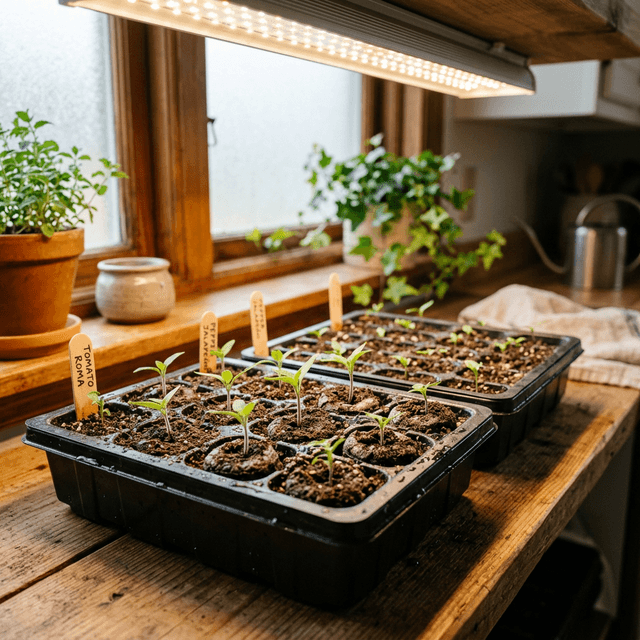
- Distance: keep lights no more than 4 inches above the tops of your seedlings — 2 inches is ideal. Raise the lights as the plants grow.
- Hours: give seedlings 12–16 hours of light a day. A simple outlet timer makes this effortless.
- Type: inexpensive LED shop lights or fluorescent fixtures both work; what matters most is keeping them close.
8) Damping Off: Why Seedlings Suddenly Collapse
Damping off is the sudden death of tiny seedlings, caused by disease organisms at the surface of the potting mix. A seedling looks fine one day and topples over at the soil line the next.
To prevent it:
- Use sterile seed-starting mix and clean containers.
- Keep the mix warm — cool soil makes seedling disease more likely. Bottom heat helps.
- Keep the mix moist but not soggy.
9) Thinning, Feeding, and Potting Up
Thin with scissors
Once seedlings develop their first true leaves, keep the healthiest one in each cell and snip the rest off at soil level. Pulling them out can damage the roots of the one you keep.
Feed lightly
Seedlings in soilless mix benefit from a weak, general-purpose, water-soluble fertilizer at ¼ strength, no more than once a week.
Pot up when they outgrow their cells
Move seedlings that outgrow their cell packs into containers 1–2 inches wider in diameter.
10) Hardening Off: Don’t Skip It
Seedlings raised indoors have never felt sun, wind, or cold nights. Moving them straight outside can scorch or stunt them. Toughen them up over two weeks:
- Two weeks before planting, set seedlings outside for a few hours in the shade, during the warmth of the afternoon, out of the wind.
- Bring them back in before temperatures drop at night.
- Each day, leave them out a little longer and give them a little more direct sun.
- By the end of two weeks, they should be outside all day and ready to plant.
A cold frame works too: put the seedlings inside and vent the lid a bit farther each day.
11) Common Seed-Starting Mistakes
- Starting too early — especially tomatoes.
- Lights too far away — the cause of most leggy seedlings.
- Using garden soil instead of seed-starting mix.
- Overwatering — soggy mix invites damping off and fungus gnats.
- Skipping hardening off.
Troubleshooting a tray right now? See How to Start Seeds Indoors Without Raising Weak Seedlings and how to stop fungus gnats.
12) Frequently Asked Questions
When should I start tomato seeds indoors?
About 5–6 weeks before you plan to transplant them, which is after your last spring frost. Starting earlier usually gives you leggy, root-bound plants.
How far should grow lights be from seedlings?
No more than 4 inches above the tops of the seedlings, and ideally about 2 inches, for 12–16 hours a day. Raise the lights as the plants grow.
Why are my seedlings tall and floppy?
Almost always too little light. Move the lights closer, run them longer, and turn windowsill trays daily if you have no lights.
Can I use potting soil or garden soil to start seeds?
Use a sterile seed-starting mix. Garden soil compacts in small containers and can carry the organisms that cause damping off.
Do I need a heat mat?
Not always, but warm mix speeds germination and helps prevent damping off. Keep the room above 60°F at a minimum.
How long does hardening off take?
About two weeks. Start with a few hours of afternoon shade, out of the wind, and give the plants a little more time and sun each day.
13) Sprouty’s Seed-Starting Checklist
- ☐ Last frost date looked up for your ZIP
- ☐ Start dates counted back from transplant
- ☐ Old seed tested (20 seeds, 75% or better)
- ☐ Containers with drainage holes, cleaned if reused
- ☐ Sterile seed-starting mix
- ☐ Lights 2–4 inches above seedlings, 12–16 hours a day
- ☐ Mix kept warm and moist, never soggy
- ☐ Thinned with scissors at the first true leaves
- ☐ ¼-strength feeding, once a week at most
- ☐ Two weeks of hardening off before planting
Sources
- University of Minnesota Extension · Starting seeds indoors
- University of Maryland Extension · January gardening tips
- University of Maryland Extension · February gardening tips
- University of Maryland Extension · March gardening tips
Keep Growing With Sprouty
Find your frost dates with the Frost & Heat Planner, see what to sow outdoors this month in What to Plant Now, follow the month-by-month tasks in the Garden Calendar, and read the spring Start Seeds Indoors section.