
Editor's note (October 2026): This article was substantially revised. The original claimed dry coco coir actively pulls water out of living aerial roots and promised specific attachment and growth timelines. Those claims went beyond the evidence, so they have been removed or qualified, and the comparison below is now framed around what each support type can realistically do.
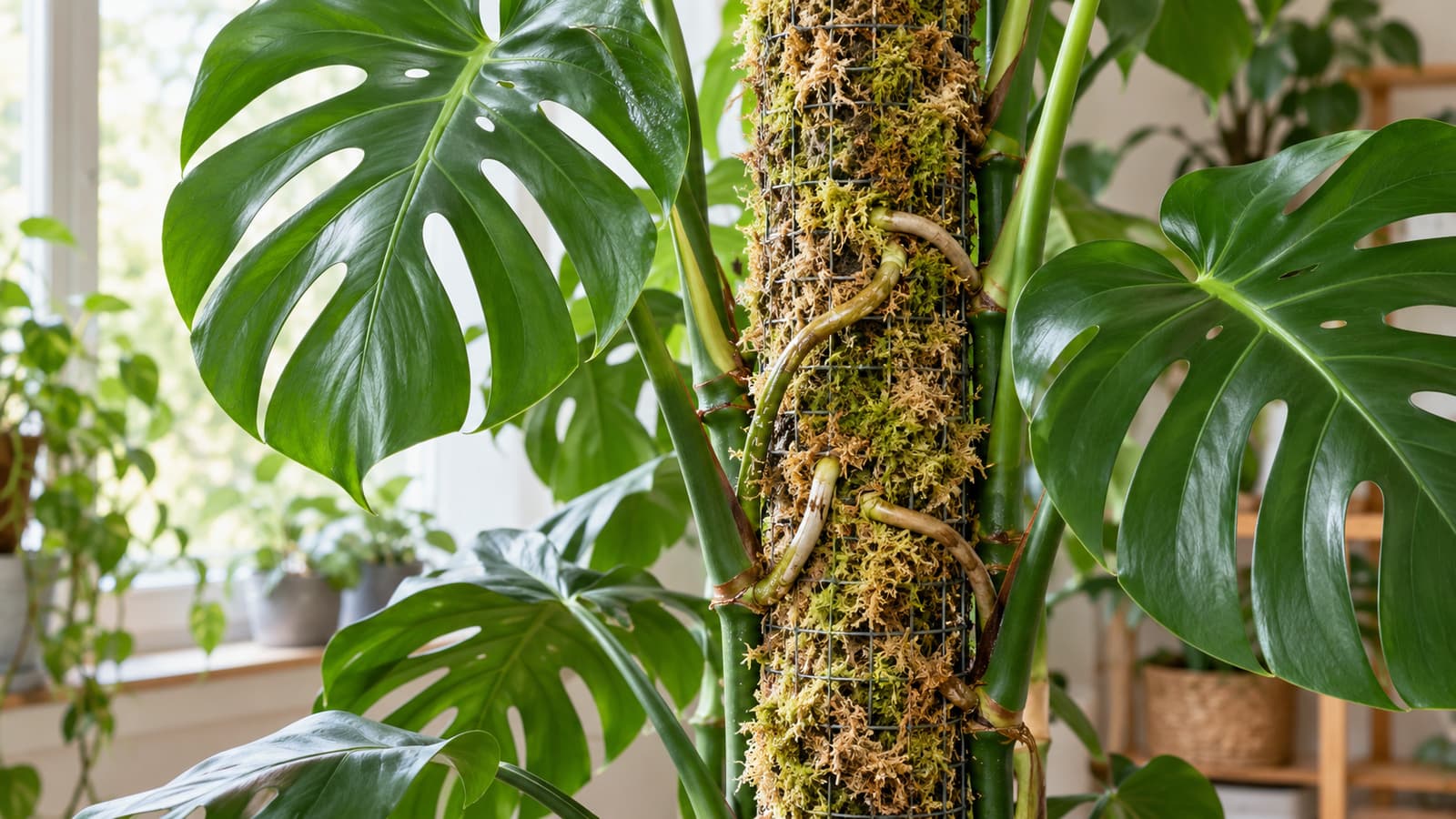
A moss pole can provide both climbing support and a moist surface for aerial roots, but those are separate goals. Sphagnum poles can retain moisture when maintained; coir poles and stakes can still support a tied climbing plant. Choose the design you can manage consistently, and check the main pot's moisture separately from the pole.
🌿 Sophie: "Sprouty, my Monstera's aerial roots are just dangling in the air, ignoring the pole completely. Is my pole broken?"
🌱 Sprouty: "Not broken — probably just dry. But first, let's figure out what job you actually hired that pole to do."
Do You Need Anchorage, Rooting, or Both?
A moss pole has two jobs, and most frustration comes from expecting both when you've only set up one:
- Anchorage — holding the plant upright as it climbs. Any sturdy support works here: a coir pole, a wooden stake, a trellis. NC State's Monstera growing guidance emphasizes giving the plant something sturdy to climb, describing how Monsteras attach to trees in their natural habit. A dry pole with the vines tied to it still does this job. (NC State Extension: Monstera deliciosa)
- Rooting surface — a consistently moist surface that aerial roots can grow into. This is the harder job, and it's where support types genuinely differ. Only a pole you keep damp — in practice, sphagnum moss — gives aerial roots something worth attaching to.
Decide which job matters to you before you buy or build. If you just want an upright, tidy Monstera, a simple stake and some plant ties will do. If you want aerial roots to anchor into the support the way they grip tree trunks in the wild, you need moisture — and a maintenance routine to sustain it.
Coco Coir vs. Sphagnum: A Fair Comparison
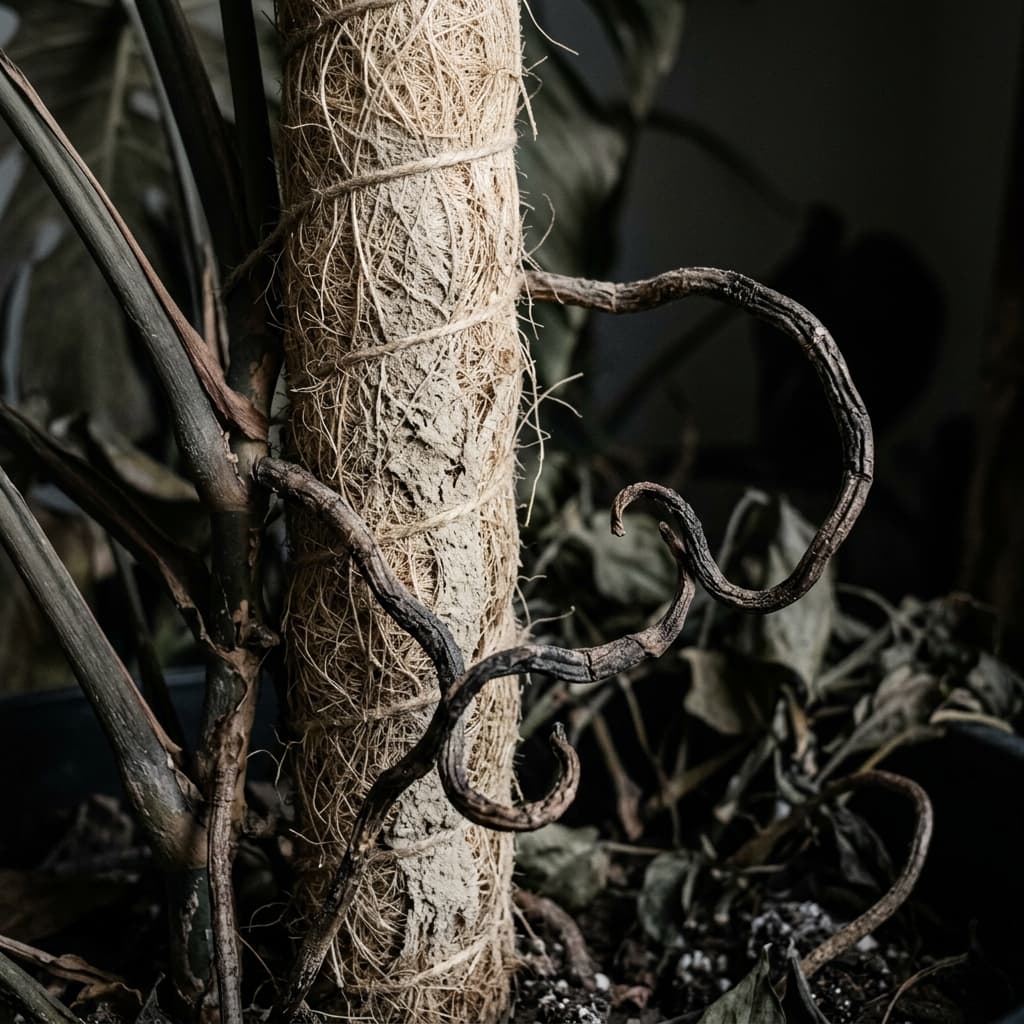
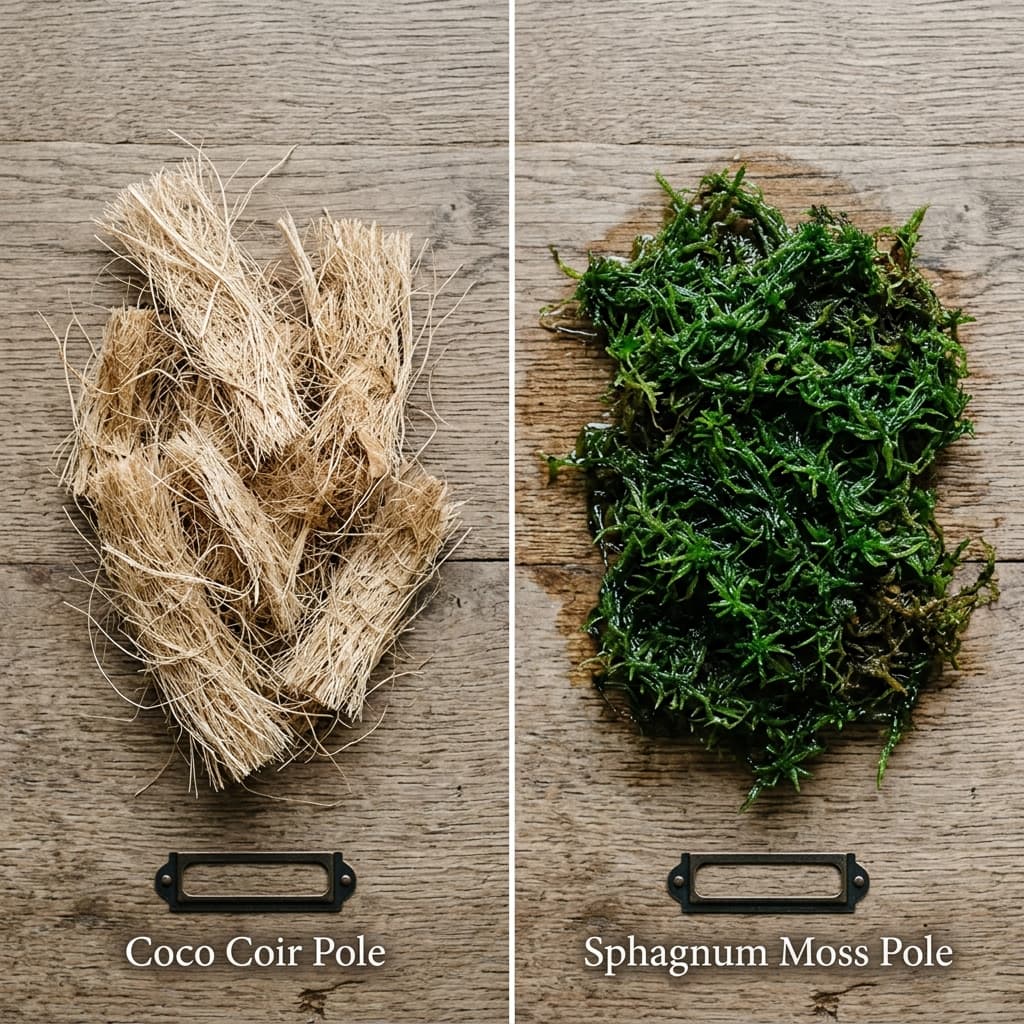
Let's clear up the biggest misconception first: dry coco coir does not "suck the life" out of aerial roots. There is no demonstrated mechanism by which a dry coir pole actively extracts water from living root tissue and kills it. What is true is narrower and still useful — coir poles dry out quickly indoors and hold little sustained moisture, so they rarely provide the damp surface aerial roots are looking for. That's a limitation of the design in practice, not a biological attack.
| Coco coir pole | Sphagnum moss pole | Plain stake / trellis | |
|---|---|---|---|
| Moisture retention | Low — dries quickly indoors; hard to keep damp | High when maintained — sphagnum can hold up to 20 times its dry weight in water and releases it slowly | None — support only |
| Aerial root attachment | Unlikely unless kept damp and roots guided to it | Best chance — roots can grow into loose, moist fibers, similar to how they grip bark | Roots won't root into it; tie vines for support |
| Maintenance | Low — which is the appeal, and the limit | Higher — rewet regularly; watch runoff into the pot | Minimal |
| Mess & runoff | Low | Can drip and shed fibers; excess water drains into the pot | Low |
| Stability | Varies — thin poles can lean as the plant grows | DIY poles can wobble — anchor the core deeply | Usually good |
| Cost | Cheap and widely sold | Moss plus materials; cost varies by source | Cheapest |
Two honest tradeoffs that rarely make it into the debate: sphagnum moss is harvested from peatlands, so buy from reputable sources and consider whether the maintenance is worth it for your setup. And a coir pole is not "useless" — if your goal is simply keeping a Monstera upright, a dry coir pole with the stems tied to it does that job fine.
Why Aerial Roots May Not Attach
If your aerial roots are ignoring the pole, run through these before blaming the product:
- The pole is dry. The most common reason. Press your finger against it — a pole that can host roots feels cool and slightly damp, not dusty-dry.
- The roots were never guided to it. Aerial roots don't seek out poles on their own indoors the way marketing suggests. Gently tie or position young, flexible roots against a damp surface.
- Low ambient humidity. In dry indoor air, aerial root tips desiccate before they can engage with anything. NC State notes aerial roots emerging along Monstera stems as part of its climbing habit — they evolved for humid air. (NC State Extension: Monstera adansonii)
- Damaged root tips. Brown, dried-out root tips are dead tissue — they won't reattach or turn green again. Watch for new root growth instead.
- Unrealistic expectations. Even with a perfect setup, attachment takes time, and growth rate depends on light, feeding, and the plant's maturity — not just the pole.
DIY Sphagnum Pole: Build It Stable, Mind the Runoff
A sphagnum jacket around your existing coir pole is the lowest-disruption upgrade — soak the pole, pack wet long-fiber sphagnum moss around it, and hold it in place with fishing line or natural twine. No repotting required.
Building from scratch gives you a better result for a new plant or a repot:
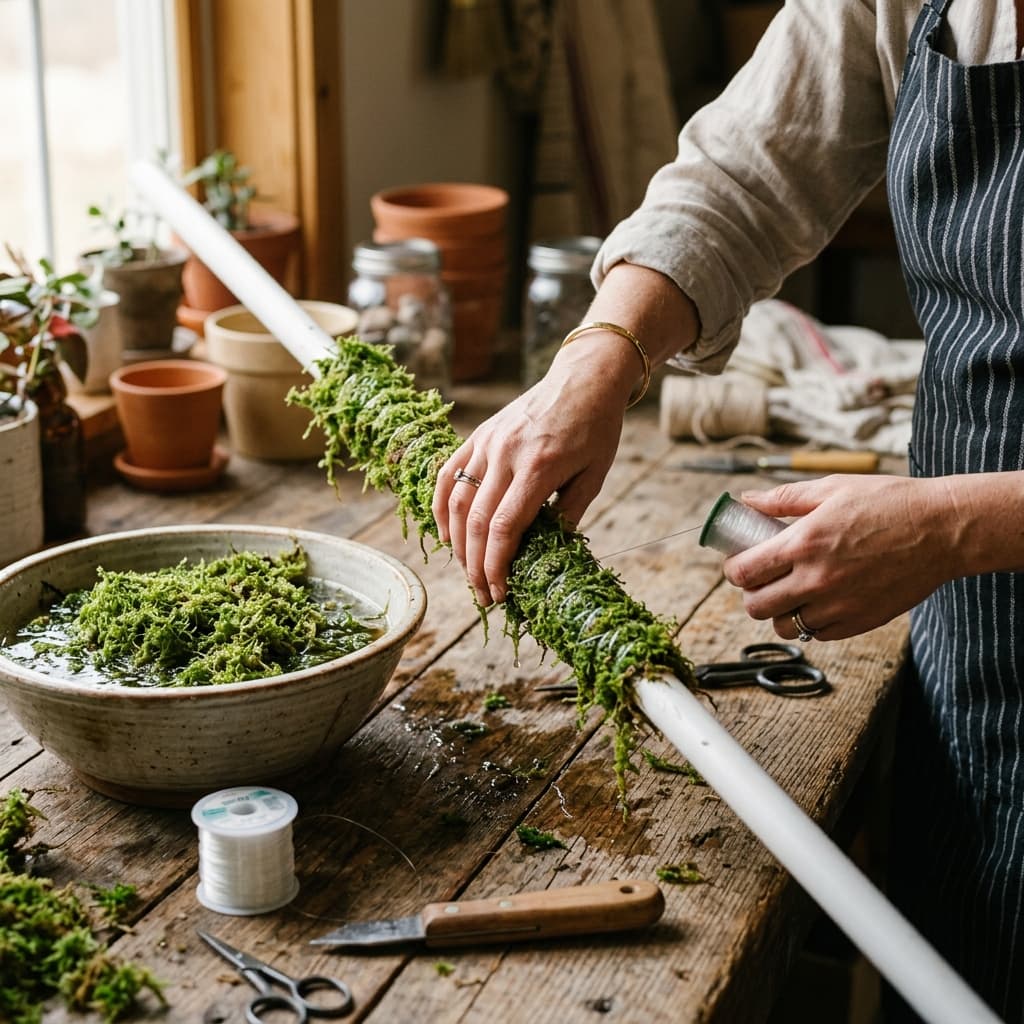
What you need:
- A length of ½-inch PVC pipe — lightweight and won't rust
- Long-fiber sphagnum moss (the stringy kind, not peat moss)
- Clear monofilament fishing line or natural jute twine
- A bucket of water
How to build it:
- Soak the dry sphagnum in a bucket of water for 15–20 minutes until fully saturated
- Pack the soaked moss against the PVC pipe in thick layers — an inch or more all around
- Spiral fishing line or twine from bottom to top to hold the moss firmly to the pipe
- Keep wrapping until the moss doesn't shift when you shake the pole
- Soak the whole thing once more before inserting it into the pot
⚠️ Stability and runoff — read before you plant it
Anchor deeply. Push the PVC core well into the potting mix — a top-heavy pole with a climbing Monstera will lean or topple if it's shallow. For large plants, consider a heavier pot for ballast.
Plan for runoff. Watering the pole sends water down into the pot. Do not automatically water the pole every time you water the plant — judge the pot's moisture independently, or you'll keep the root zone soggy while trying to keep the pole damp.
Keep the Pole Moist Without Soaking the Pot
This is where most sphagnum poles quietly fail: the pole and the pot are on different schedules, and they need to stay that way.
- Water the pole directly by pouring slowly down from the top until it drips — but only when the moss feels dry, not on a fixed schedule with the plant.
- Check the pot separately. Stick a finger into the potting mix. If the pot is still moist from pole runoff, skip watering the plant even if the pole needed a drink.
- The squeeze test: grab the pole gently. It should feel like a damp sponge — not dripping, not dusty.
- In dry homes (winter heating, air conditioning), the pole will dry faster than you expect. Mist the moss itself — not the leaves — between waterings.
Chronically soggy potting mix invites root problems that no pole can fix. If your leaves start yellowing, check your watering balance first — our yellow-leaf guide walks through the diagnosis, and the same waterlogging principle applies to roots sitting in stagnant water in LECA setups.
What Changes to Watch Over Time
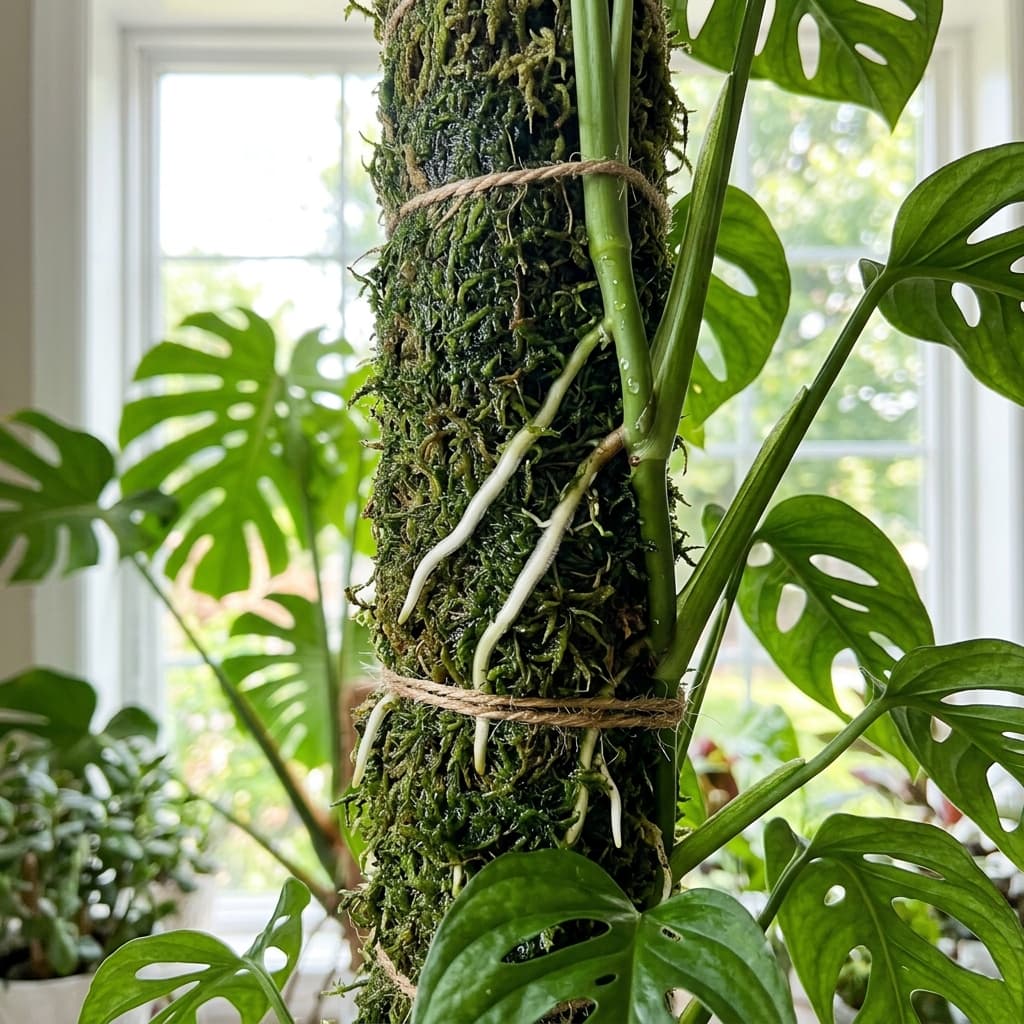
With a consistently moist sphagnum pole, over weeks to months you may notice aerial roots reaching toward the pole and new root hairs branching into the fibers. Leaf growth can improve as the plant gains a supplemental water and nutrient pathway — but be honest with yourself about the other variables. Light, feeding, pot size, and the plant's maturity all shape growth far more than the pole alone. No support product guarantees faster leaves or bigger fenestrations on a schedule.
What you should not expect: brown, dried root tips turning green and resuming growth. Dead tissue is dead — new growth comes from new roots.
🌿 Sprouty's Bottom Line
A moss pole has two jobs: hold the plant up, and give aerial roots something moist to grow into. A dry coir pole or a plain stake handles the first job fine. Only a sphagnum pole you actually keep damp handles the second — and keeping it damp without waterlogging the pot is the real skill. Pick the support that matches the job you need and the maintenance you'll actually do.
Quick Reference: Monstera Support Cheat Sheet
- ❌ Dry coir pole, expecting root attachment: dries too fast indoors to serve as a rooting surface — fine as a climbing stake if vines are tied
- ⚠️ Misted coir pole: dries quickly between mistings; not a sustainable way to keep a rooting surface damp
- ✅ Sphagnum moss pole, kept moist: best chance of aerial root attachment — but budget for regular rewetting and watch pot runoff
- ✅ Coir pole + sphagnum jacket: solid upgrade without repotting — pack wet sphagnum around the existing pole and secure it
- 🏆 PVC + sphagnum DIY pole: cheap, light, customizable — anchor it deeply so it stays upright as the plant climbs
- 📌 Remember: pole moisture and pot moisture are separate checks. Never let a damp pole keep the root zone soggy.
Save this one for your next repot: "A moss pole has two jobs. Decide which one your plant needs."