Gardening can feel magical when it’s going well — and completely confusing when it’s not.
One person tells you to water every day. Another says never water on a schedule. One guide says plant in full sun. Another says afternoon shade is fine. Then you buy a plant, bring it home with hope in your heart, and three weeks later you’re staring at a yellow leaf wondering whether you’re doing everything wrong.
You’re not.
You’re just new.
And that’s exactly what this guide is for.
This is your practical, friendly, not-too-fussy introduction to gardening. Whether you want to grow herbs on a balcony, vegetables in raised beds, flowers near your front door, or a little bit of everything, this guide will help you start the right way.
You do not need a big yard.
You do not need expensive tools.
You do not need to know everything before you begin.
You just need a good foundation.
Let’s build that together.
Table of Contents
Why gardening is worth starting
Choosing the right kind of garden
Understanding sunlight
Knowing your climate and season
Getting to know your soil
Choosing what to grow first
Seeds vs seedlings
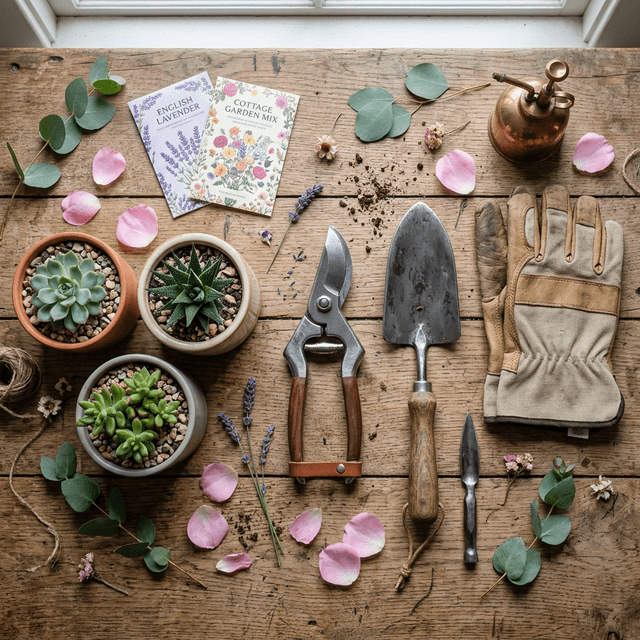
Essential beginner tools
How to prepare your growing space
Planting basics
Watering the right way
Feeding and fertilizing
Mulch, compost, and soil health
Common pests and plant problems
Beginner mistakes to avoid
A simple first-garden plan
Frequently asked questions
Sprouty’s beginner checklist
1) Why Gardening Is Worth Starting
Gardening gives you more than plants.
It gives you a reason to step outside. It teaches patience. It helps you notice seasons, weather, light, and small progress. Even a tiny garden can make a home feel more alive.
It also gives you something many people are quietly craving: a connection to real life that grows slowly and honestly.
A garden does not need to be perfect to be meaningful.
A few pots of basil. A tomato plant. Some marigolds. A raised bed with lettuce and spinach. That’s already a garden. That already counts.
Sprouty’s Tip:
Start with the goal of learning, not impressing. A successful first garden is not the prettiest one. It’s the one that teaches you enough to keep going.
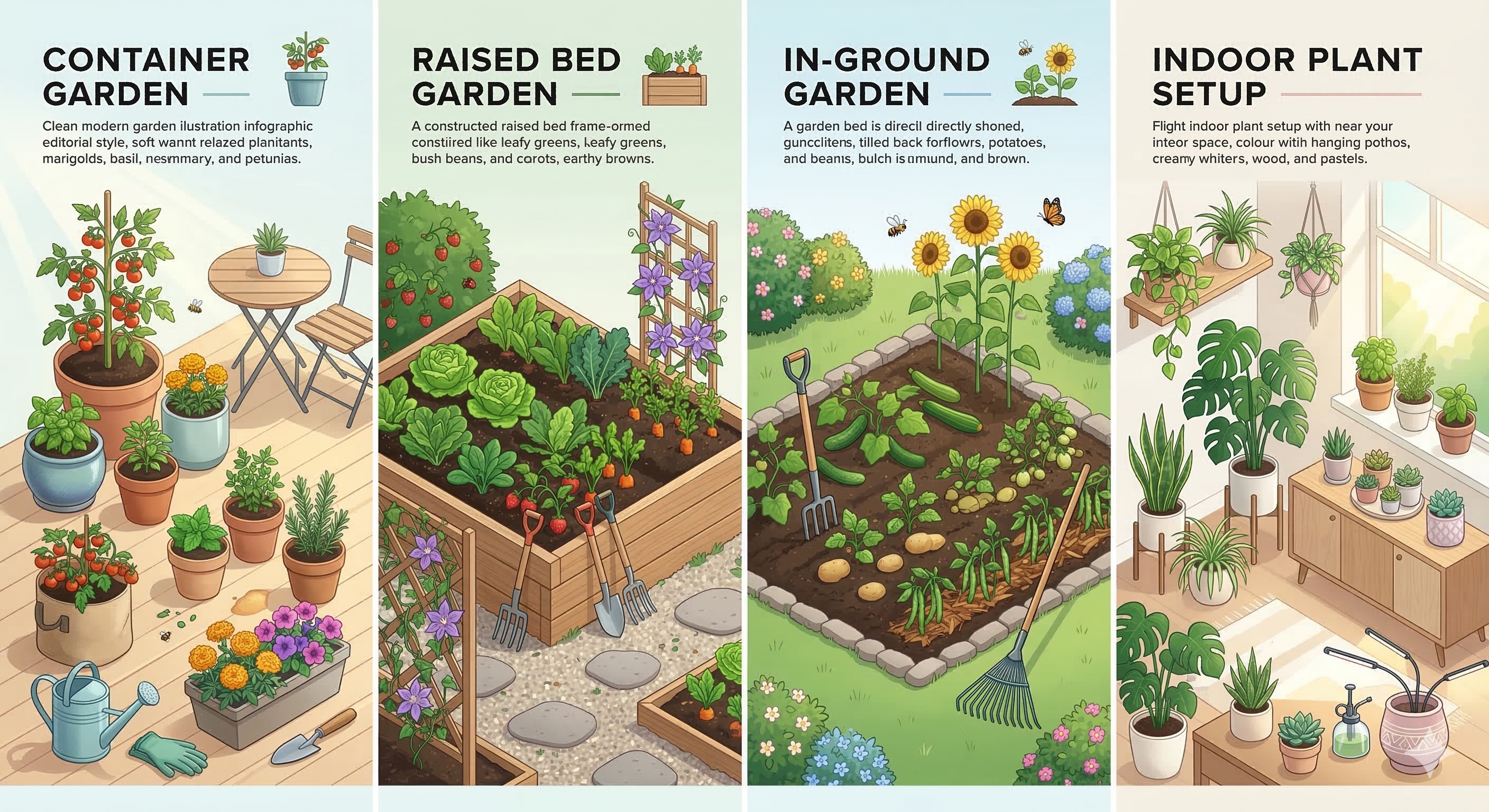
2) Choosing the Right Kind of Garden
Before you buy plants, seeds, or tools, decide what kind of garden fits your life and your space.
There is no single “best” kind of garden. There is only the best match for you.
Container Gardening
This is perfect for balconies, patios, porches, apartments, and small spaces. Containers are beginner-friendly because they’re easier to manage, easier to observe, and easier to adjust.
Good for:
herbs
lettuce
peppers
tomatoes
flowers
dwarf plants
Raised Bed Gardening
Raised beds are great if you have yard space and want more control over soil quality, drainage, and layout. They often look organized and are easier on the back than in-ground gardening. If that setup sounds right for you, read our full guide to Raised Bed Gardening for Beginners.
Good for:
vegetables
herbs
flowers
companion planting
small kitchen gardens
In-Ground Gardening
This is the classic backyard garden. It can work beautifully, but it depends more on your existing soil quality and drainage.
Good for:
larger gardens
perennial beds
shrubs
native plants
bigger planting areas
Indoor Gardening
Indoor gardening includes houseplants, windowsill herbs, seed starting, and small-space growing. It’s a wonderful way to bring greenery into your home and practice plant care year-round.
Good for:
houseplants
herbs
seedlings
small-space plant lovers
3) Understanding Sunlight
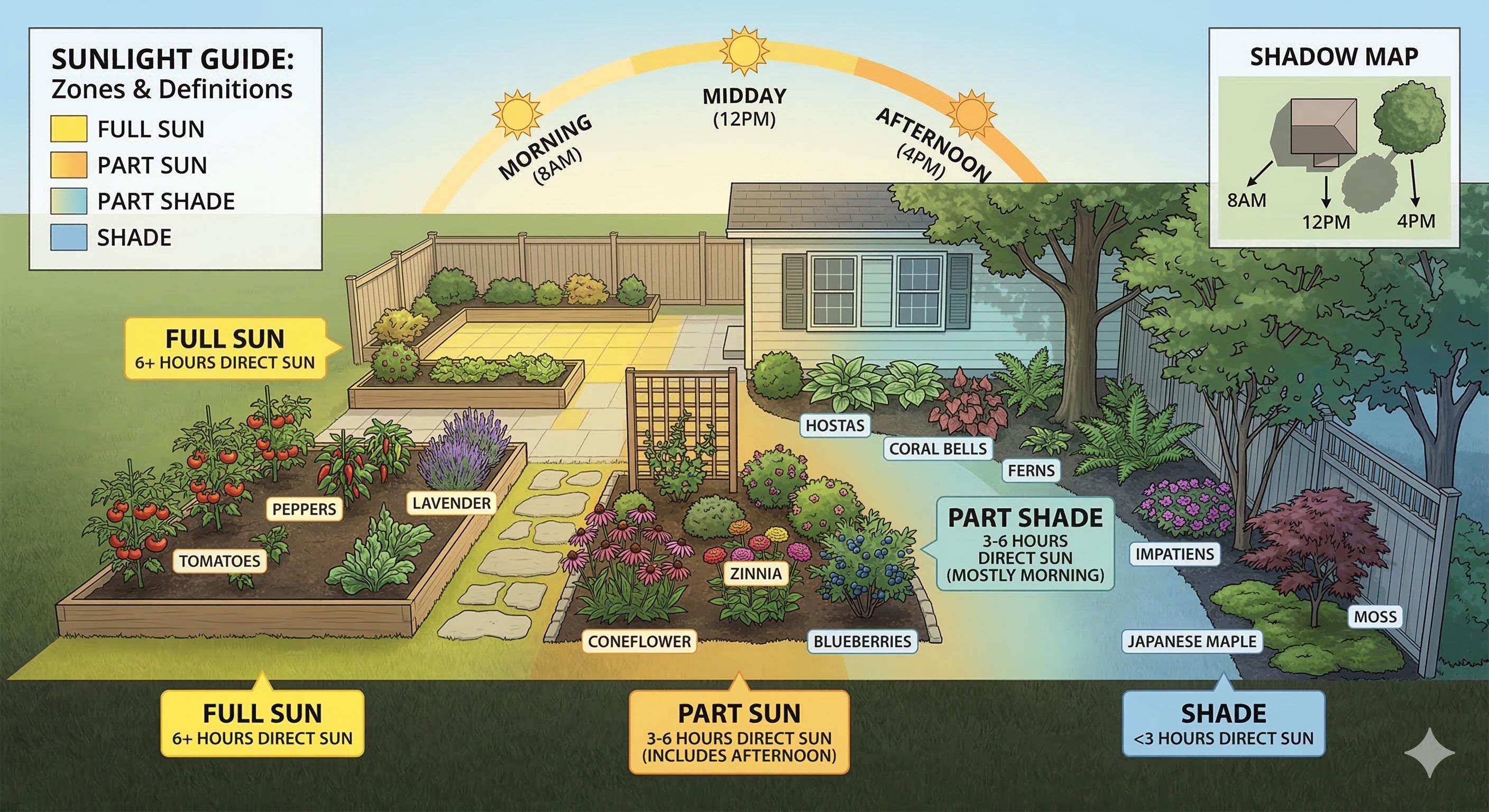
Sunlight is one of the most important parts of gardening.
A plant label may say full sun, part sun, partial shade, or full shade. Those words matter a lot.
Full Sun
Usually means about 6 to 8 or more hours of direct sunlight each day.
Best for:
tomatoes
peppers
cucumbers
basil
many flowers
most fruiting vegetables
Partial Sun / Part Shade
Usually means around 3 to 6 hours of direct sun, often with some protection from harsh afternoon heat.
Best for:
lettuce
spinach
cilantro
some herbs
many leafy greens
Full Shade
Usually means very little direct sun, though there may still be bright indirect light.
Best for:
shade-loving ornamentals
some foliage plants
specific woodland plants
How to Check Your Light
Do not guess. Watch the space.
Notice:
where the morning sun falls
where the afternoon sun is strongest
which spots stay shaded most of the day
whether nearby walls, fences, or trees block light
This one habit will save you from many beginner mistakes.
Sprouty’s Tip:
A sunny-looking spot is not always a sunny spot. Count actual direct sunlight hours before choosing plants.
4) Knowing Your Climate and Season
Plants do not grow by calendar alone. They grow according to local climate, temperature, and season.
That means what works in one region may fail in another, even if the advice sounds reasonable.
Frost Dates
Your last spring frost and first fall frost help define your growing season.
These dates influence:
when to start seeds
when to plant warm-season crops
how long summer crops have to mature
Hardiness Zone
Hardiness zones help gardeners understand which perennial plants are likely to survive winter in their region. If you’re new to the idea, start with our guide on Understanding Plant Hardiness Zones.
Seasonal Timing
Cool-season plants and warm-season plants are not interchangeable.
Cool-season favorites:
lettuce
spinach
peas
kale
cilantro
radishes
Warm-season favorites:
tomatoes
peppers
cucumbers
basil
squash
beans
If you’re gardening in spring, two especially helpful tools are What to Plant Now and the Garden Calendar. Both use your ZIP to make seasonal timing much easier to understand.
5) Getting to Know Your Soil
Soil is not just dirt. It is the foundation of your garden.
Healthy soil helps roots grow, water move properly, nutrients stay available, and plants become stronger overall. Weak soil leads to weak results, even when everything else looks right.
There are three simple things beginners should understand first.
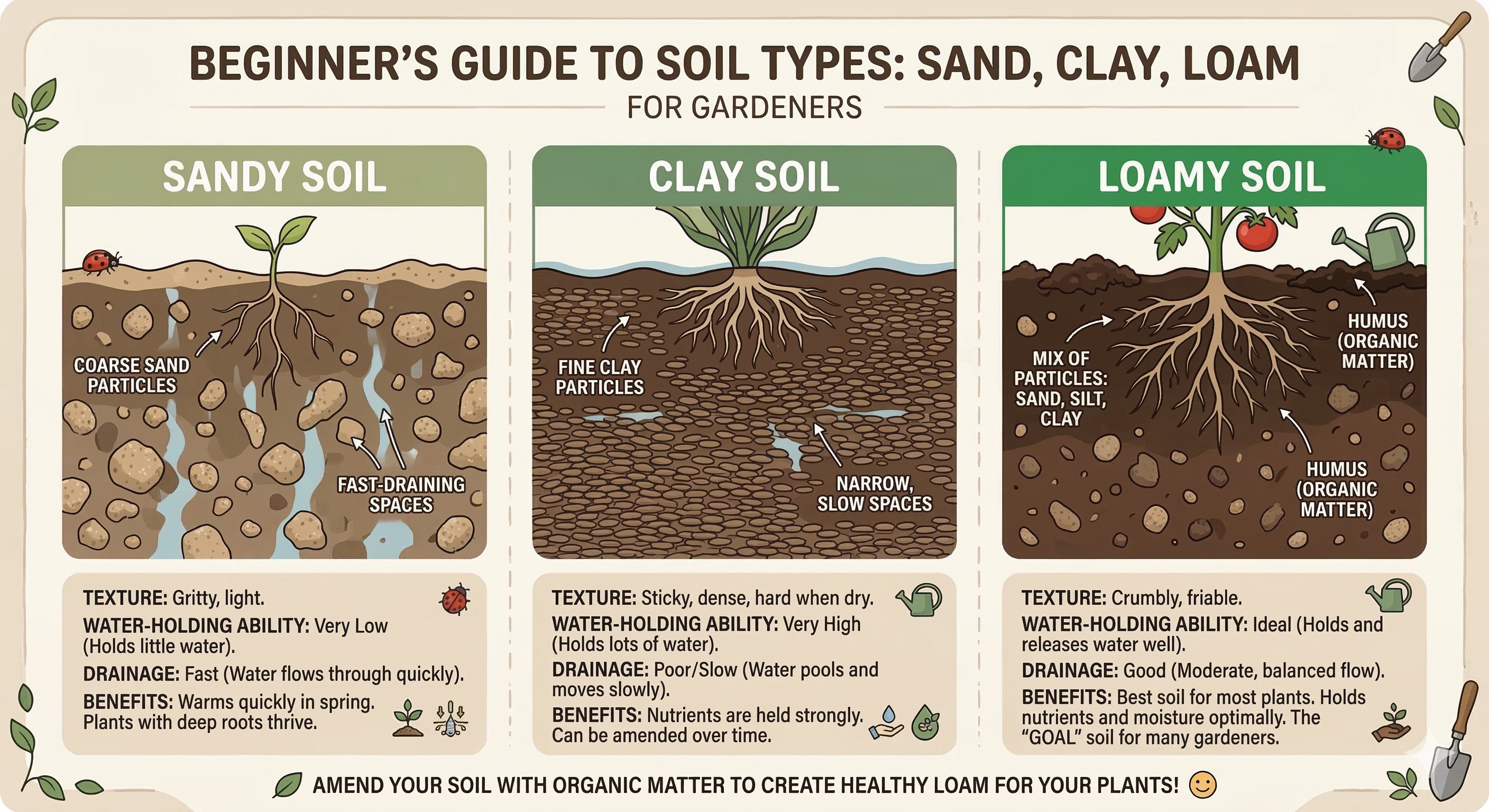
Texture
Soil may be sandy, clay-heavy, silty, or loamy.
sandy soil drains quickly
clay soil holds water longer
loamy soil is often ideal because it balances drainage and moisture
Drainage
Plants do not want constantly soggy roots. If water sits too long, roots can struggle.
A simple test: water the area and watch what happens. If water pools for a long time, drainage may need improvement.
Soil pH
Soil pH affects how well plants can access nutrients. Many plants prefer slightly acidic to neutral soil, but needs can vary. For a deeper explanation, read Understanding Soil pH: The Complete Guide.
Soil Improvement Basics
Most beginner gardens improve with:
compost
mulch
organic matter
time and consistency
You do not need perfect soil on day one. You do need to start feeding it.
6) Choosing What to Grow First
This is where many beginners go wrong: they try to grow everything.
A better strategy is to grow a few things that are easy, useful, and rewarding.
Best Beginner Vegetables
lettuce
radishes
spinach
bush beans
kale
Swiss chard
peas
Best Beginner Herbs
basil
mint
parsley
chives
cilantro
thyme
Best Beginner Flowers
marigolds
zinnias
nasturtiums
calendula
sunflowers
A great first garden usually includes:
one leafy green
one herb
one easy flower
one fun or favorite plant
That combination gives you beauty, food, and motivation.
If you want a simple seasonal shortlist before buying anything, What to Plant Now is a great place to start.
Sprouty’s Tip:
Grow at least one plant you are excited about, even if it is not the easiest. Joy matters too.
7) Seeds vs Seedlings
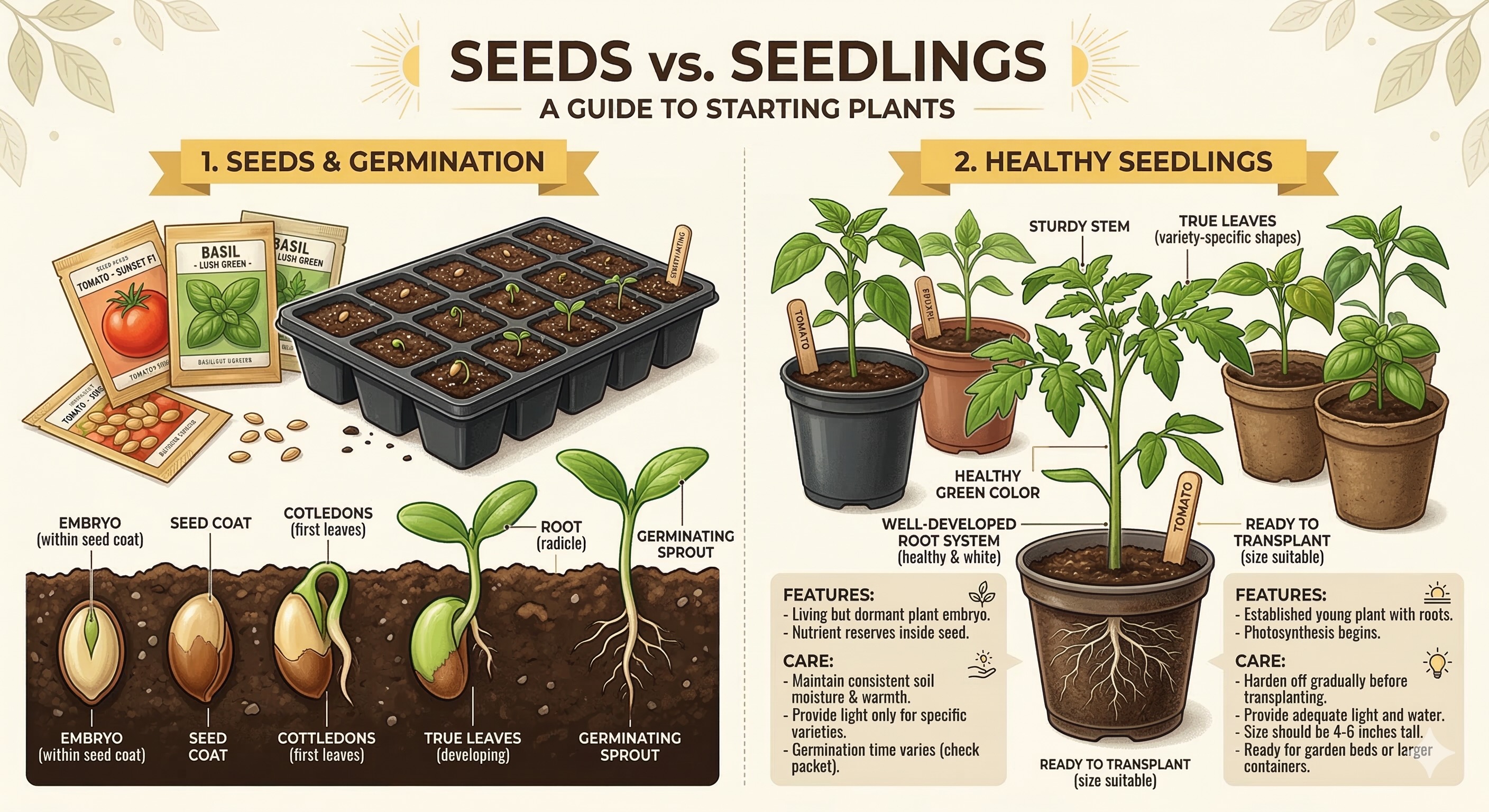
Should you start from seed or buy young plants?
Both are good. The right choice depends on your confidence, timing, and patience.
Seeds
Seeds are affordable and offer more variety, but they require patience and attention in the early stage.
Best for:
radishes
lettuce
carrots
beans
peas
zinnias
marigolds
Seedlings / Starts
These are young plants already started for you. They give quicker results and are often easier for beginners.
Best for:
tomatoes
peppers
basil
many flowers
plants with a longer growing time
Beginner Rule
Start with a mix:
direct sow a few easy seeds
buy a few healthy seedlings
That gives you both the learning experience and a faster sense of success.
8) Essential Beginner Tools
You do not need a shed full of equipment.
A small set of reliable tools is enough.
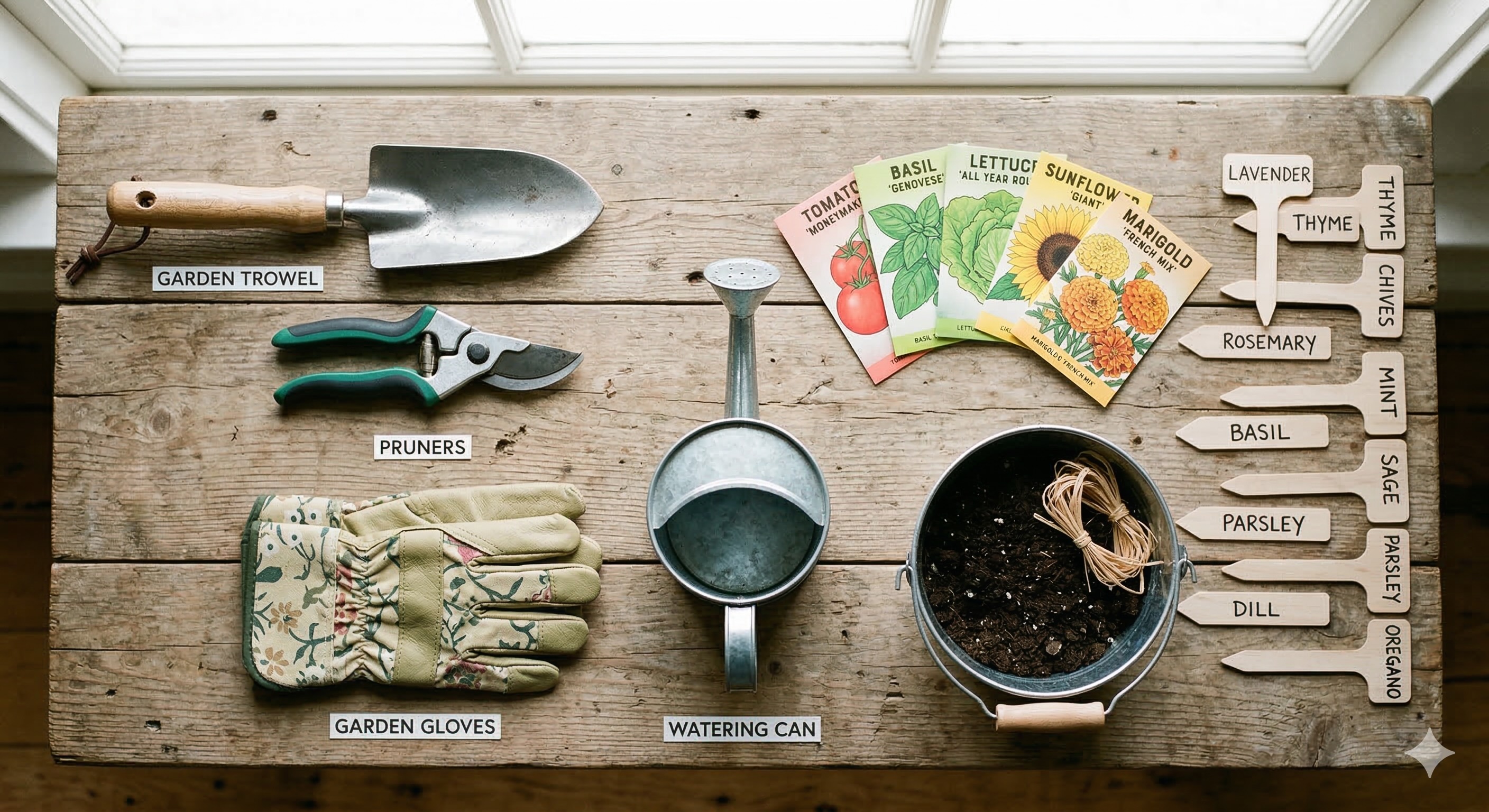
Start With These
hand trowel
gardening gloves
watering can or hose with gentle spray
pruners or garden scissors
small shovel
containers or grow bags if needed
plant labels
a bucket or basket
Helpful But Optional
kneeling pad
soil scoop
moisture meter
watering wand
trellis or plant support
raised bed frame
Sprouty’s Tip:
Buy fewer, better tools. A comfortable trowel and good pruners matter more than ten cheap gadgets.
9) How to Prepare Your Growing Space
Once you know your light, climate, and plant choices, prepare the area.
For Containers
choose containers with drainage holes
use quality potting mix, not yard soil
place containers where light matches plant needs
water thoroughly after planting
For Raised Beds
choose a sunny spot
fill with quality garden soil mix
level the surface
plan spacing before planting
water well after setup
If you want a more detailed walkthrough, see Raised Bed Gardening for Beginners.
For In-Ground Beds
remove weeds and grass
loosen compacted soil
mix in compost
level the area
avoid planting into hard, crusted ground without amending
Spacing Matters
Seedlings look tiny. Mature plants do not stay tiny.
Crowding creates:
poor airflow
more disease pressure
weaker growth
harder harvesting
A little extra space now saves frustration later.
10) Planting Basics
This is the part where gardening starts to feel real.
When Planting Seeds
follow seed packet depth guidance
do not bury tiny seeds too deep
water gently
keep soil evenly moist while germinating
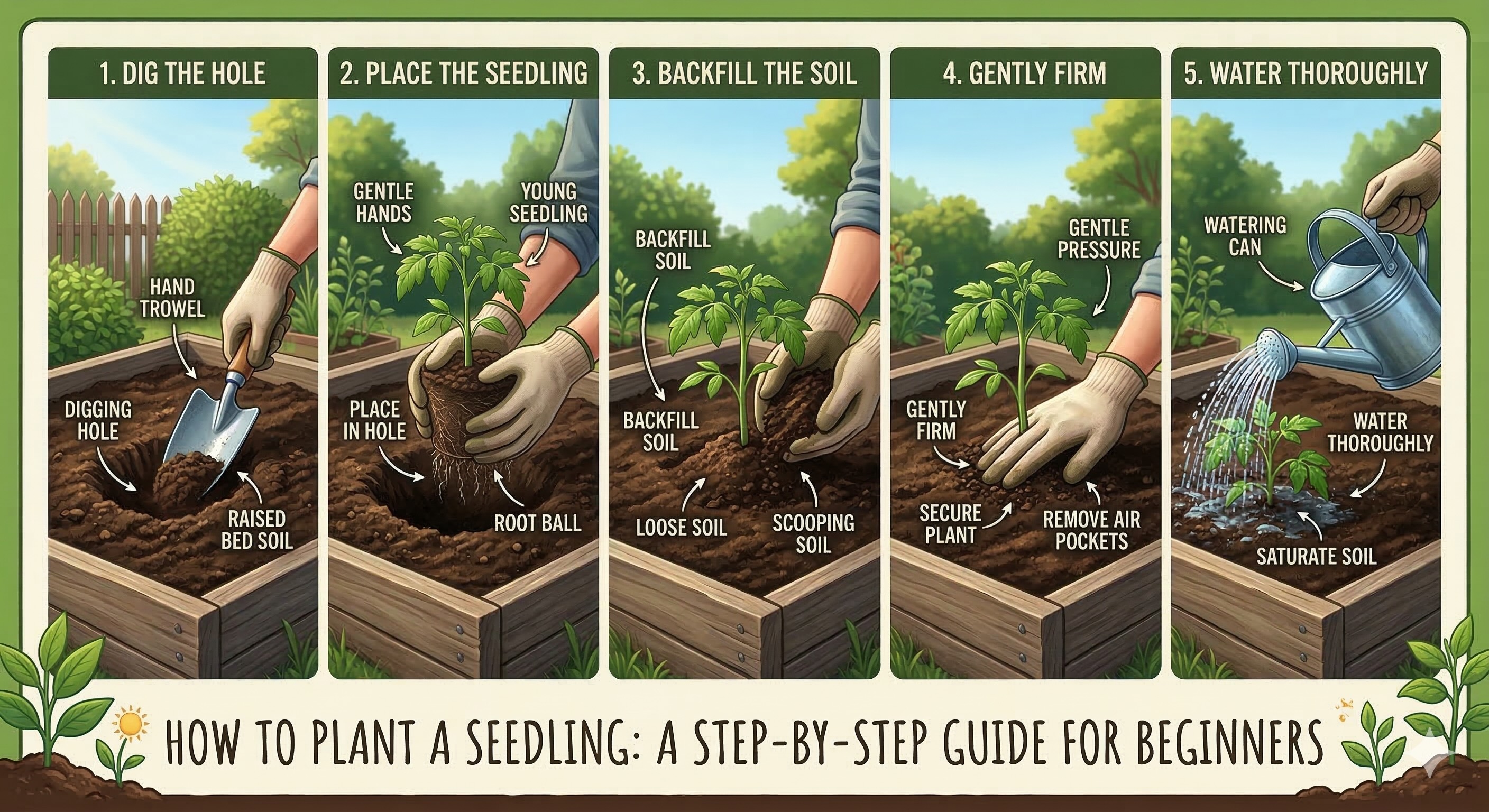
When Planting Seedlings
water them before planting
loosen roots gently if crowded
plant at the correct depth
firm soil gently around roots
water well after planting
General Rule
Planting too deep is a common beginner mistake. Most plants want roots covered, not stems buried excessively.
Sprouty’s Tip:
After planting, slow down. Water well, step back, and let the plant settle. New plants do not need constant fussing every hour.
11) Watering the Right Way
Watering sounds simple, but it causes more beginner confusion than almost anything else.
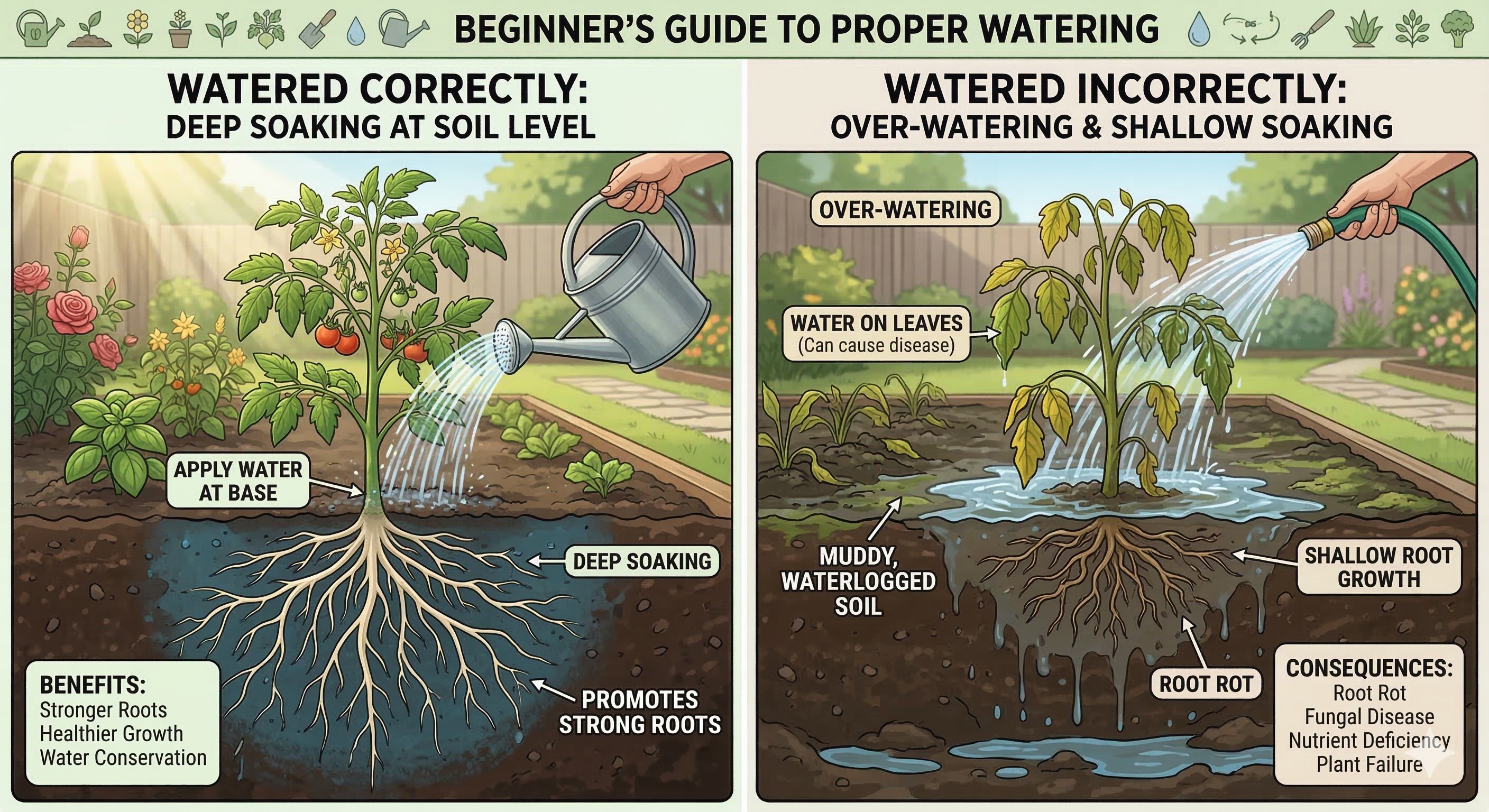
Too little water stresses plants. Too much water can be just as harmful.
Better Watering Principles
Water deeply, not constantly.
Check soil before watering again.
Water the root zone, not just the leaves.
Morning is usually the best time.
Signs a Plant May Need Water
dry soil a few inches down
drooping leaves
wilting in cool times of day, not just hot afternoons
lighter container weight
Signs You May Be Watering Too Much
yellowing leaves
soggy soil
slow growth
musty smell
drooping despite wet soil
Container Rule
Containers dry out faster than in-ground beds. Check them more often.
Garden Bed Rule
Water less often, but more deeply, so roots grow downward.
12) Feeding and Fertilizing
Plants need nutrients, but more fertilizer does not mean more success.
Think of fertilizer as support, not magic.
The Main Nutrients
Plants commonly need:
nitrogen for leafy growth
phosphorus for roots and flowers
potassium for overall strength
Beginner-Friendly Rule
Start gently. Healthy soil and compost often do more than aggressive feeding.
Organic Matter Matters
Adding compost improves soil structure and helps support nutrient availability over time. Fallen leaves are a free way to add it — see Don’t Rake Healthy Fallen Leaves: They Are Winter Mulch.
Don’t Overfeed
Too much fertilizer can cause:
weak, overly soft growth
poor flowering
salt buildup
plant stress
Sprouty’s Tip:
Feed the soil, not just the plant. Long-term gardening gets easier when the soil gets healthier each season.
13) Mulch, Compost, and Soil Health
Healthy gardens are built from the ground up.
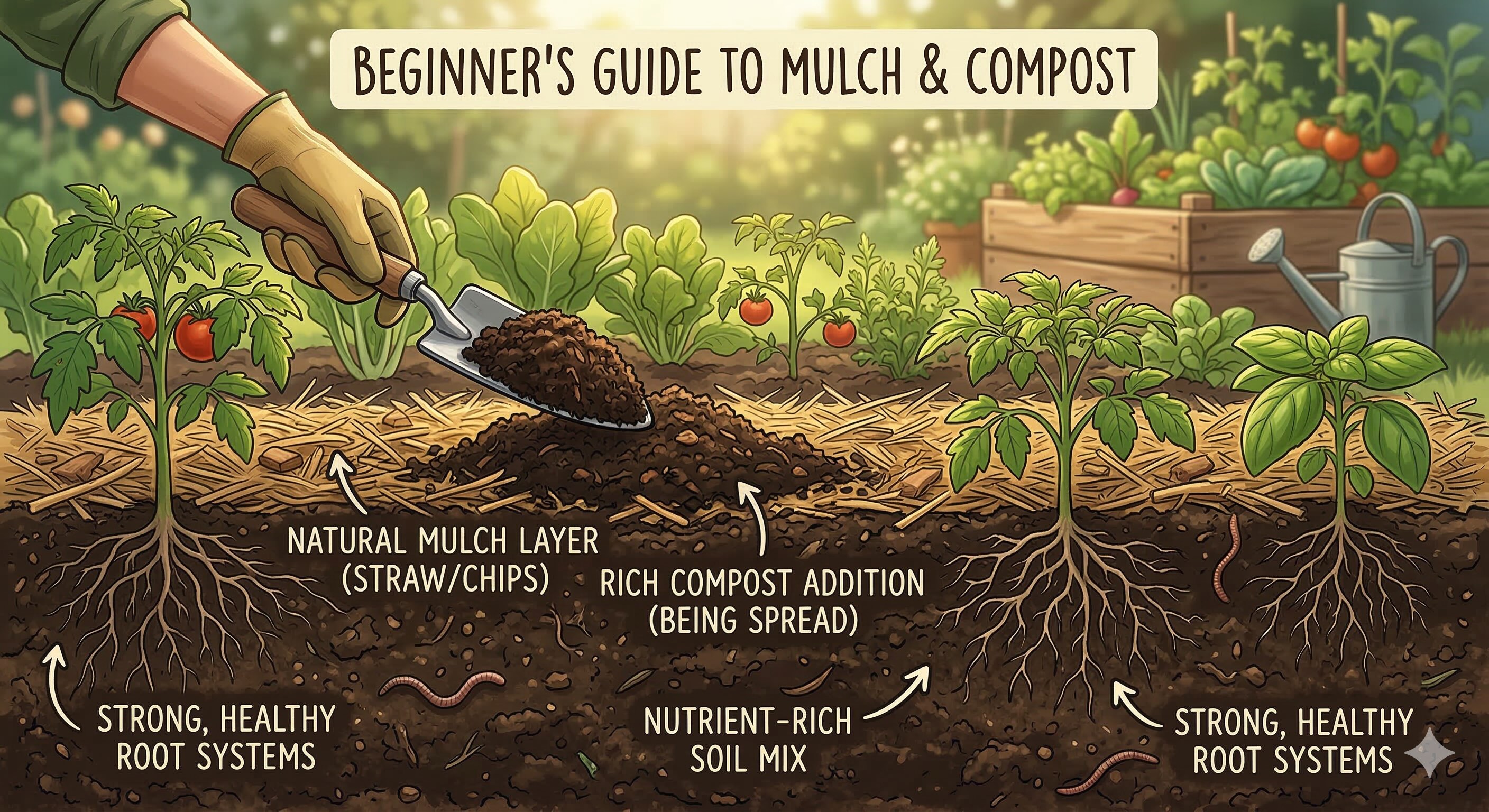
Mulch Helps By
holding moisture
reducing weeds
protecting soil
moderating temperature
slowly improving soil over time, depending on material
Examples:
straw
shredded leaves
bark
compost
untreated grass clippings in moderation
Compost Helps By
feeding soil life
improving texture
adding organic matter
supporting plant health naturally
If you want to get better at this part of gardening, Understanding Soil pH: The Complete Guide is one of the best next reads after this guide.
A simple beginner mindset: soil is not a one-time setup. Soil gets better with care.
14) Common Pests and Plant Problems
Every gardener sees problems eventually. That is normal.
The goal is not to avoid every issue forever. It is to notice problems early and respond calmly.
Common Beginner Problems
yellow leaves
drooping leaves
chewed leaves
slow growth
spots on leaves
weak seedlings
plants that flower poorly
leggy growth
What to Check First
Before assuming the worst, check:
sunlight
watering
drainage
soil condition
plant spacing
recent temperature changes
Many “pest problems” are really care or environment problems.
Beginner Pest Response
Start simple:
inspect leaves closely
look under leaves too
remove badly damaged leaves
spray off small pests with water when appropriate
avoid reaching for strong chemicals first
If your goal is a healthier, more balanced garden overall, a pollinator-friendly setup can help attract beneficial insects too. Our guide on How to Start a Pollinator Garden is a great next step.
15) Beginner Mistakes to Avoid
Here are the biggest ones.
1. Starting too big
A small successful garden beats a giant stressful one.
2. Ignoring sunlight
Plants cannot negotiate with poor light.
3. Overwatering
This is probably the most common beginner mistake.
4. Planting everything at once
A better garden grows from pacing, not panic.
5. Crowding plants
Airflow and root space matter.
6. Using poor soil
Plants struggle when soil is compacted, exhausted, or constantly soggy.
7. Quitting too early
Every gardener has failures. They are part of the process.
Sprouty’s Tip:
A dead plant is not proof that you are bad at gardening. It is often just tuition.
16) A Simple First-Garden Plan
Here is a very manageable first garden.
Option A: Small Balcony or Patio Garden
Grow:
basil
mint in a separate pot
lettuce
marigolds
Why this works:
small footprint
quick results
beautiful and useful
easy to monitor daily
Option B: Small Raised Bed Garden
Grow:
lettuce
spinach
basil
bush beans
marigolds
Why this works:
mix of edible and floral
simple care
forgiving plants
strong beginner confidence builder
If you’re setting this up in spring, What to Plant in March can help you decide what to start now.
Option C: Front-Yard Flower and Herb Bed
Grow:
zinnias
calendula
basil
thyme
pollinator-friendly flowers
If you love the idea of a garden that supports bees and butterflies too, read How to Start a Pollinator Garden.
Beginner Season Plan
Week 1: Choose your space and observe sunlight
Week 2: Prep soil or containers
Week 3: Buy plants and sow easy seeds
Week 4: Water, watch, and learn
That is enough. Truly.
17) Frequently Asked Questions
Do I need a backyard to start gardening?
No. Containers, patios, balconies, windowsills, and small beds all count.
Is gardening expensive to start?
Not necessarily. A few containers, potting mix, seeds or seedlings, and basic tools are enough.
Should beginners grow vegetables or flowers first?
Either works. A mix of both is often ideal because flowers add color and pollinator support, while vegetables and herbs feel useful.
How often should I water my plants?
It depends on the plant, soil, weather, and container size. Check soil first instead of watering by habit.
What is the easiest thing to grow first?
Lettuce, radishes, basil, marigolds, and pothos are great beginner choices depending on your space.
What if I make mistakes?
You will. Every gardener does. That is not failure. That is how the learning happens.
18) Sprouty’s Beginner Checklist
Use this as a quick-start action list.
Before You Plant
choose your garden type
check sunlight honestly
understand your season
pick just a few beginner-friendly plants
gather basic tools
While Planting
use the right soil
do not crowd plants
water thoroughly after planting
label what you plant
keep expectations simple
After Planting
check soil before watering again
watch for growth and changes
pull small weeds early
add mulch if appropriate
celebrate small wins
Final Encouragement
You do not need to feel ready enough to start gardening.
Read enough to avoid the biggest mistakes, then begin small and pay attention. That is how gardening becomes real. Not from memorizing everything, but from noticing what happens when living things grow in your care.
A garden is built one choice at a time.
One pot. One seed. One leaf. One lesson.
That is more than enough for a beautiful start.
Sources and Further Reading
- Extension Foundation · Find Cooperative Extension in your state
- University of Minnesota Extension · Raised bed gardens
- University of Minnesota Extension · Starting seeds indoors
Keep Growing With Sprouty
Once you finish this guide, these are the best next steps: